The oldest letters
Circles, crosses and dots
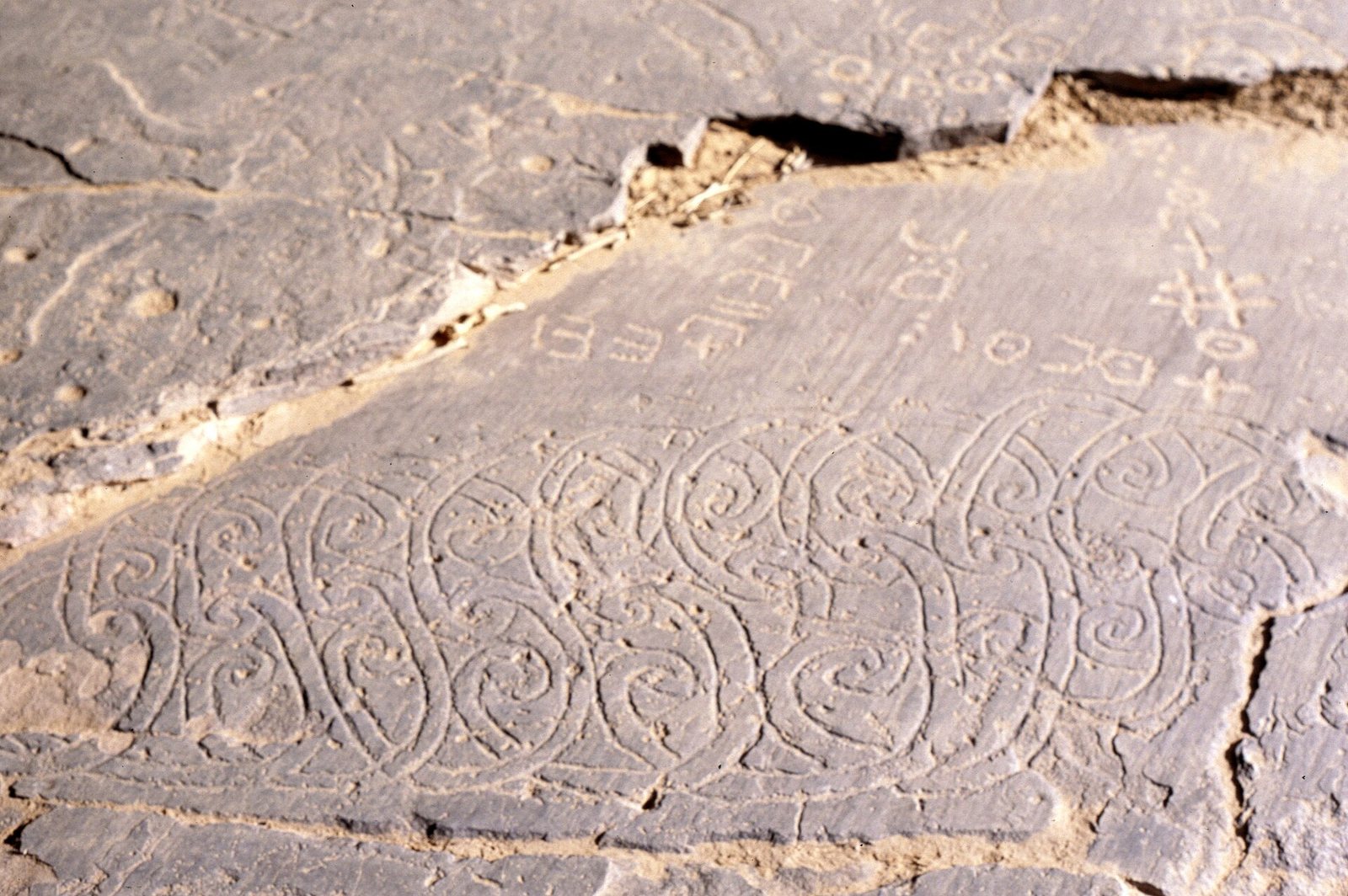
Before the Phoenicians brought their alphabet to Carthage, North Africa already had one of its own. Libyco-Berber inscriptions — the ancestor of Tifinagh — run across rock faces from Morocco to the Sahara, some more than two and a half thousand years old. The Amazigh were writing their own name in stone while Rome was still a village.
The script is unmistakable: not the loops of Arabic or the ladders of Latin, but a spare geometry of circles, dots, crosses and lines — an alphabet that looks like a constellation. A bilingual inscription at Dougga, in Tunisia, let scholars begin to read it; but for most of two millennia the letters survived on cliff faces, tombs and jewellery rather than in books.
One people never stopped using it at all. Among the Tuareg of the Sahara, Tifinagh remained a living, everyday script — and, tellingly, it was the women who kept it, teaching children to trace the letters in the sand. While the cities took Arabic and later French, the desert held the line.
Kept in stone and sand
The thread that never broke
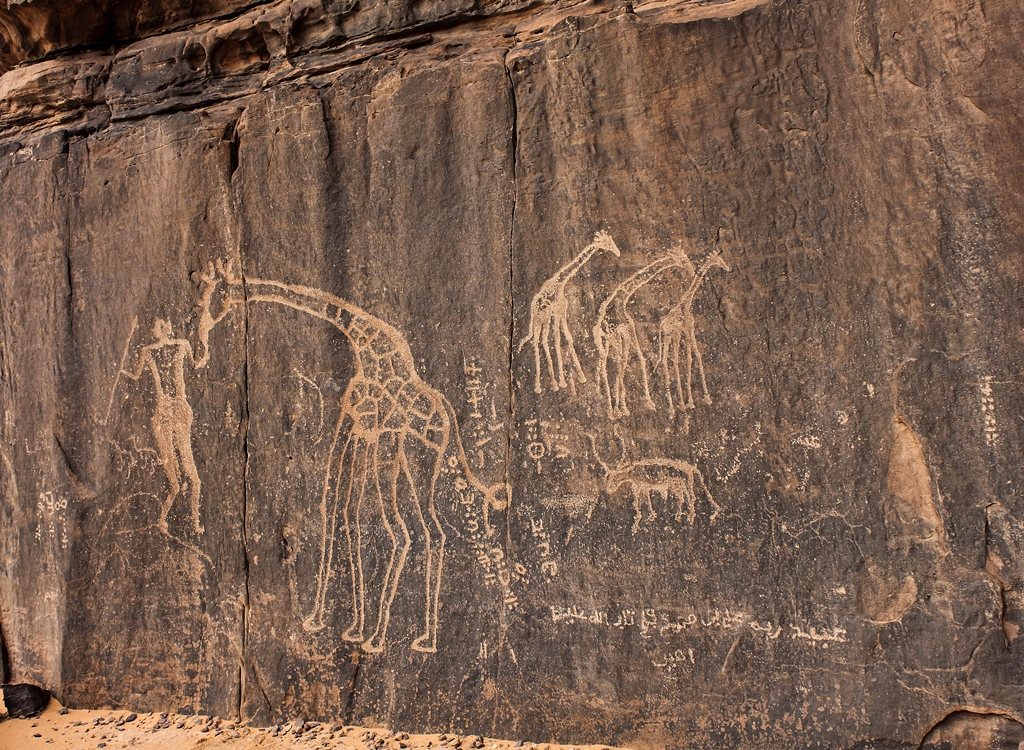
Walk the rock walls of the Tassili and you find Tifinagh letters carved beside giraffes and cattle from a wetter, greener Sahara — script and rock art sharing the same stone across thousands of years. These were not dead monuments: for the Tuareg the same characters stayed in use for love-notes, names, poems and messages scratched on rock at a well.
That unbroken thread is why the revival, when it came, was not an invention. The Amazigh did not have to reconstruct their alphabet from scratch, the way some nations must. They had only to carry it back from the margins — the desert, the tattoo, the carpet border — into the centre of public life.
We did not invent our letters in a committee. We remembered them.An Amazigh teacher, on the Tifinagh revival
One script, many lands
Where the letters live
From the Atlas to Siwa, communities two thousand kilometres apart recognise the same letters. The Tuareg who preserved them lie further south, beyond this frame.
The burial, then the return
From the rock to the road sign
Independence did not free the script; at first it buried it deeper. Arab-nationalist states treated Tamazight and its alphabet as a threat to unity — the very word 'Amazigh' was subversive in 1970s Algeria. The turning point was protest: Kabylia's Berber Spring of 1980, and the Black Spring of 2001 in which security forces killed more than a hundred, made language rights a cause with martyrs.
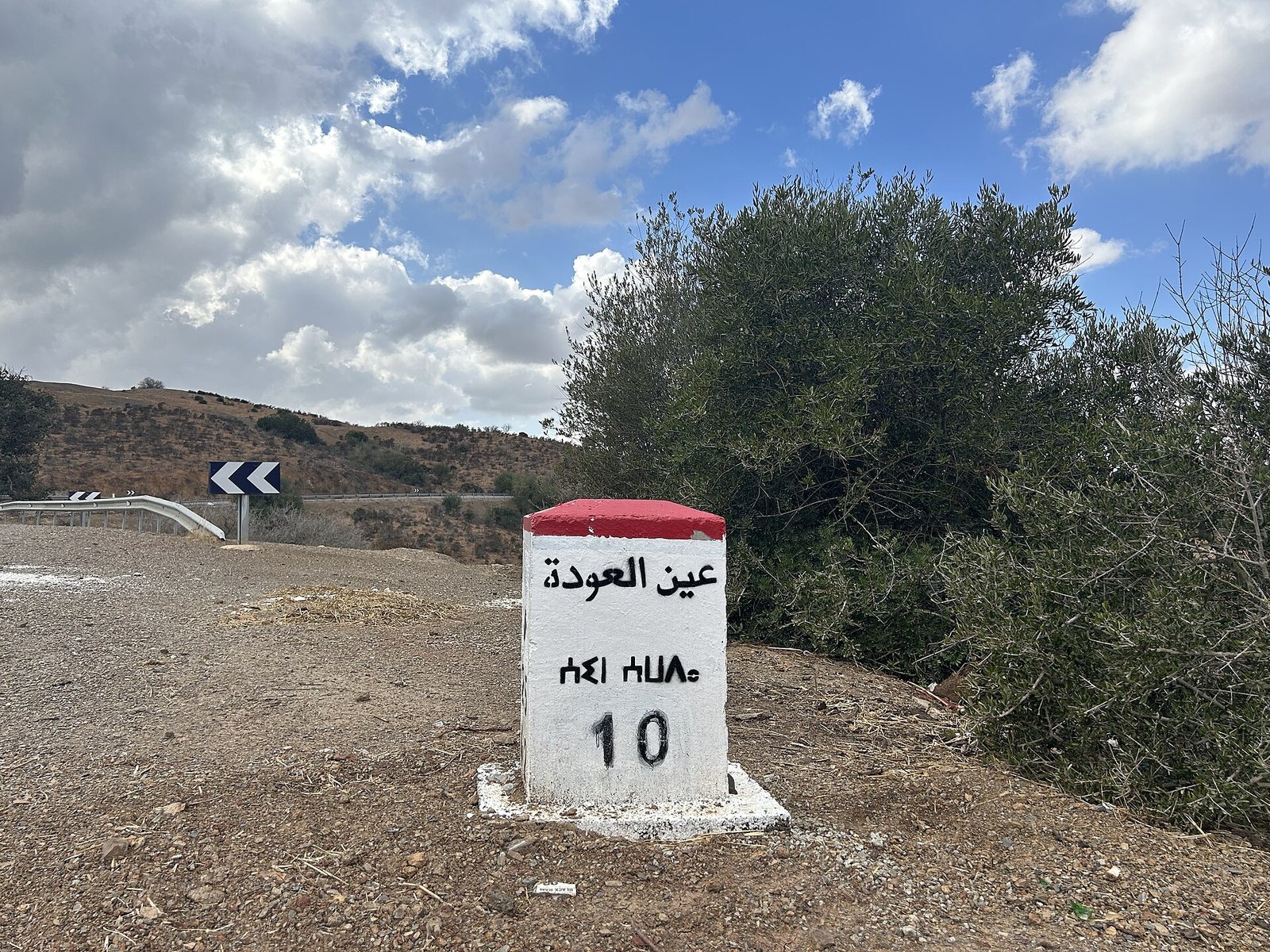
Then the letters came back into daylight. In 2003 Morocco's royal institute, IRCAM, adopted a standardised Neo-Tifinagh and put it into primary schools. The 2011 constitution made Tamazight an official language; Algeria followed in 2016. Tifinagh now marks the façades of ministries that once denied the people existed — and, quietly, the ordinary furniture of a country: the bilingual road sign at the edge of town.
The schoolroom
Taught to the young again
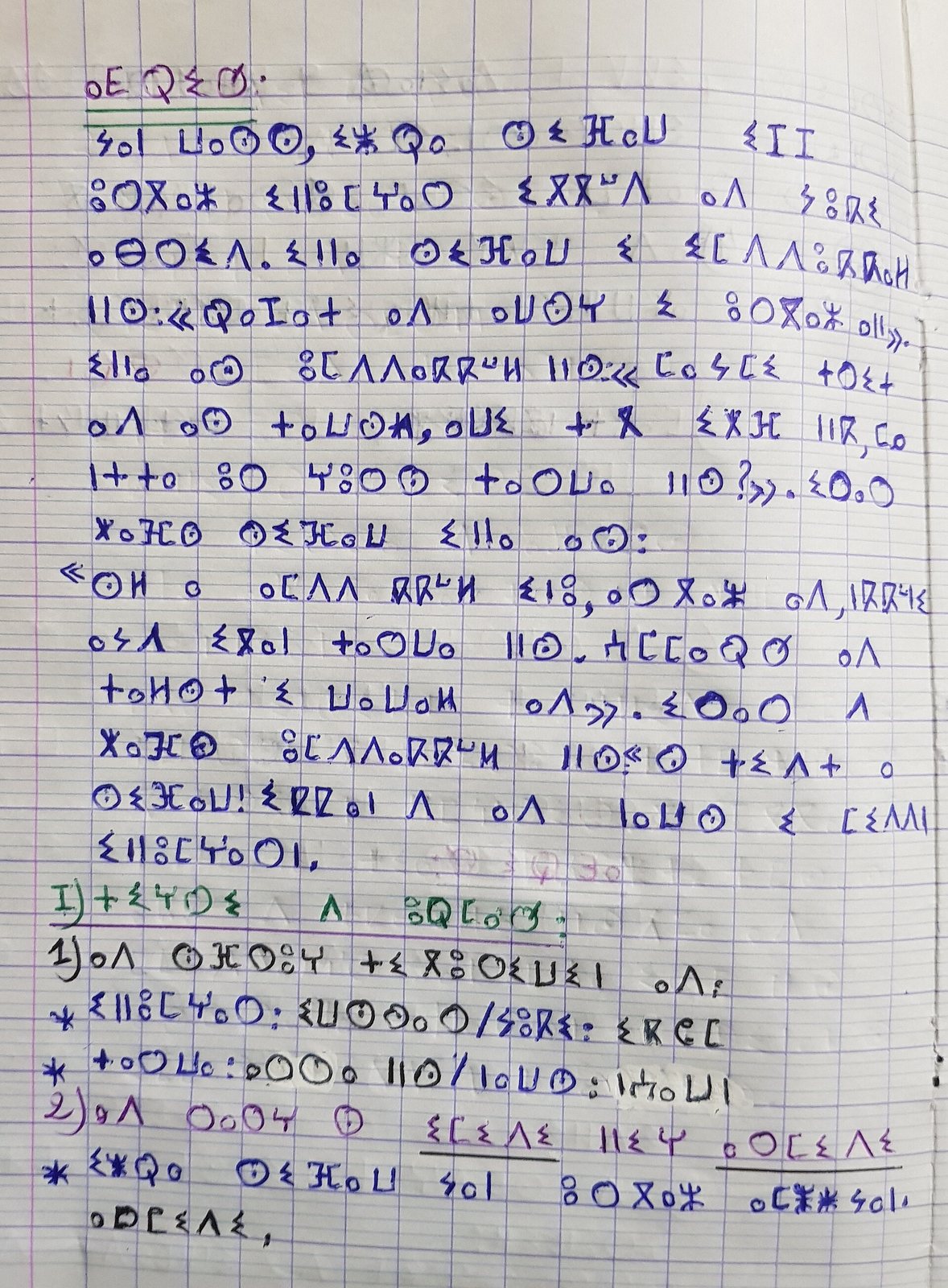
The real measure of a revived script is not the ministry wall but the exercise book. Across Morocco, children now fill lined notebooks with Tifinagh — the same circles and dots their ancestors cut into cliffs, now learned in rows between margins, corrected in red pen. The letter ⵣ (yaz), a standing figure with raised arms, heads the schoolbooks; it is also the sign sprayed on walls and flown on the Amazigh flag, one character carrying a whole people's claim: we are here, and these are our letters.
Whether Tifinagh truly lives again depends on what happens in those notebooks. A script is safe when children argue in it, pass notes in it, grow bored writing it out. On current evidence — from Rabat's classrooms to the Rif's schoolyards — the letters that survived on rock for two and a half thousand years are being handed, once more, to people young enough to keep them for the next.
The letters through time
Timeline
- ~2,500 yrs agoLibyco-Berber. Inscriptions from Dougga to the Sahara; the Amazigh write their own name in their own script.
- Antiquity–todayThe Tuareg thread. Only the Tuareg keep Tifinagh in unbroken everyday use, the letters taught in the sand.
- 1980The Berber Spring. A banned lecture in Kabylia ignites the modern Amazigh identity movement.
- 2003IRCAM & Neo-Tifinagh. Morocco's royal institute standardises the alphabet and takes it into primary schools.
- 2011 / 2016Official. Tamazight becomes an official language in Morocco, then Algeria; Tifinagh goes up on the state's walls.
- TodayOn the schoolroom wall. ⵣ heads the textbooks; the oldest alphabet in Africa is handed to a new generation.