The rise
The English of the ancient world
Around 700 BC something unusual happened: the Assyrian empire, whose own language was Akkadian, adopted the tongue of a conquered people for its paperwork. Aramaic was alphabetic, fast to write, and everyone's second language — and it never gave the job back.
For the next thousand years Aramaic was the region's connective tissue. Persian kings issued decrees in it from the Nile to the Indus; Judeans returning from Babylon brought it home, which is why parts of the books of Daniel and Ezra — and the Talmud, and the Kaddish — are Aramaic; and when a carpenter's son preached in Galilee, he preached in its western dialect. Talitha koum. Eloi, Eloi, lama sabachthani. The Gospels quote him in the original.
Aramaic's alphabet worked even harder than its words: adapted and readapted, it became the ancestor of Hebrew's square script, of Arabic's flowing one, and — carried down the Silk Road — of scripts as far away as Mongolia.
The survivors
Four branches on one old tree
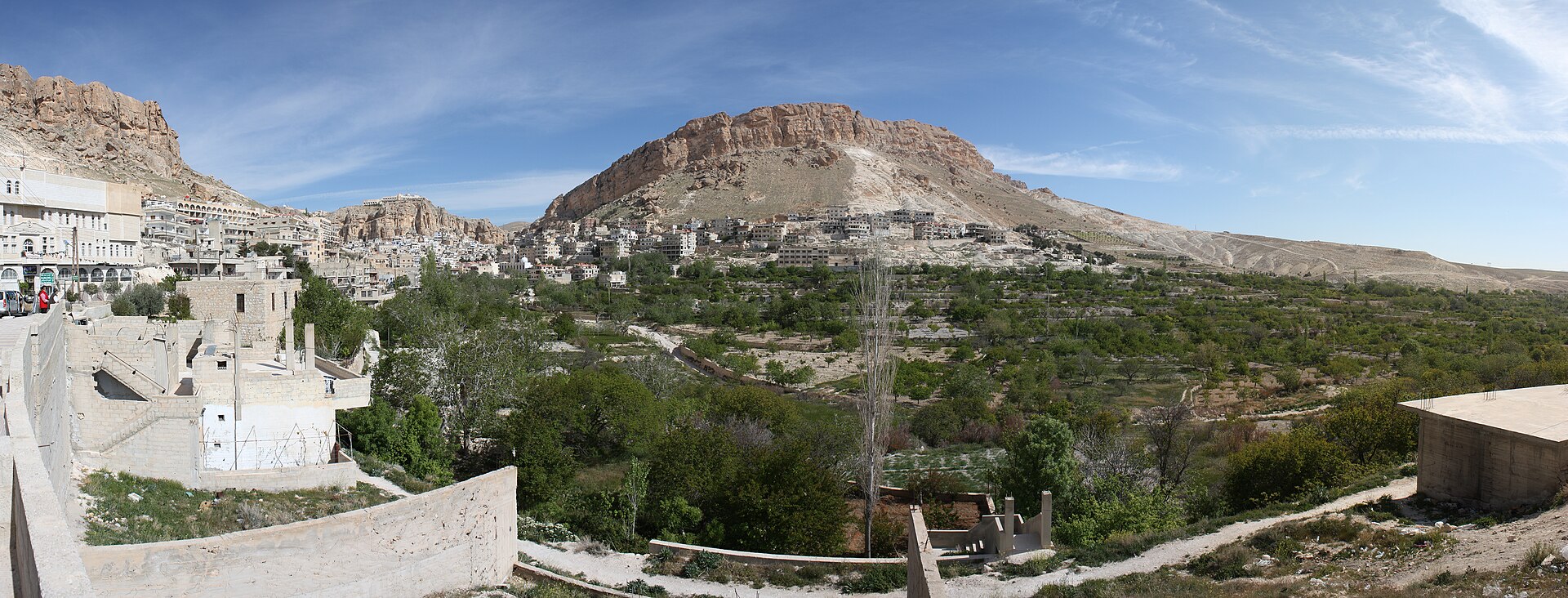
Arabic slowly replaced Aramaic in the streets after the 7th century — everywhere except the margins: mountains, marshes and minority faiths. Four branches survive. Suret (Northeastern Neo-Aramaic), the largest, is the language of Assyrian and Chaldean Christians from the Nineveh Plains to Urmia. Turoyo lives in the Syriac Orthodox villages of Tur Abdin in Turkey. Neo-Mandaic, rarest of all, survives among a few hundred Mandaeans in Ahvaz. And Western Neo-Aramaic — the branch closest to what Jesus spoke — survives in just three villages of Syria's Qalamun mountains — Maaloula and its two smaller neighbours.
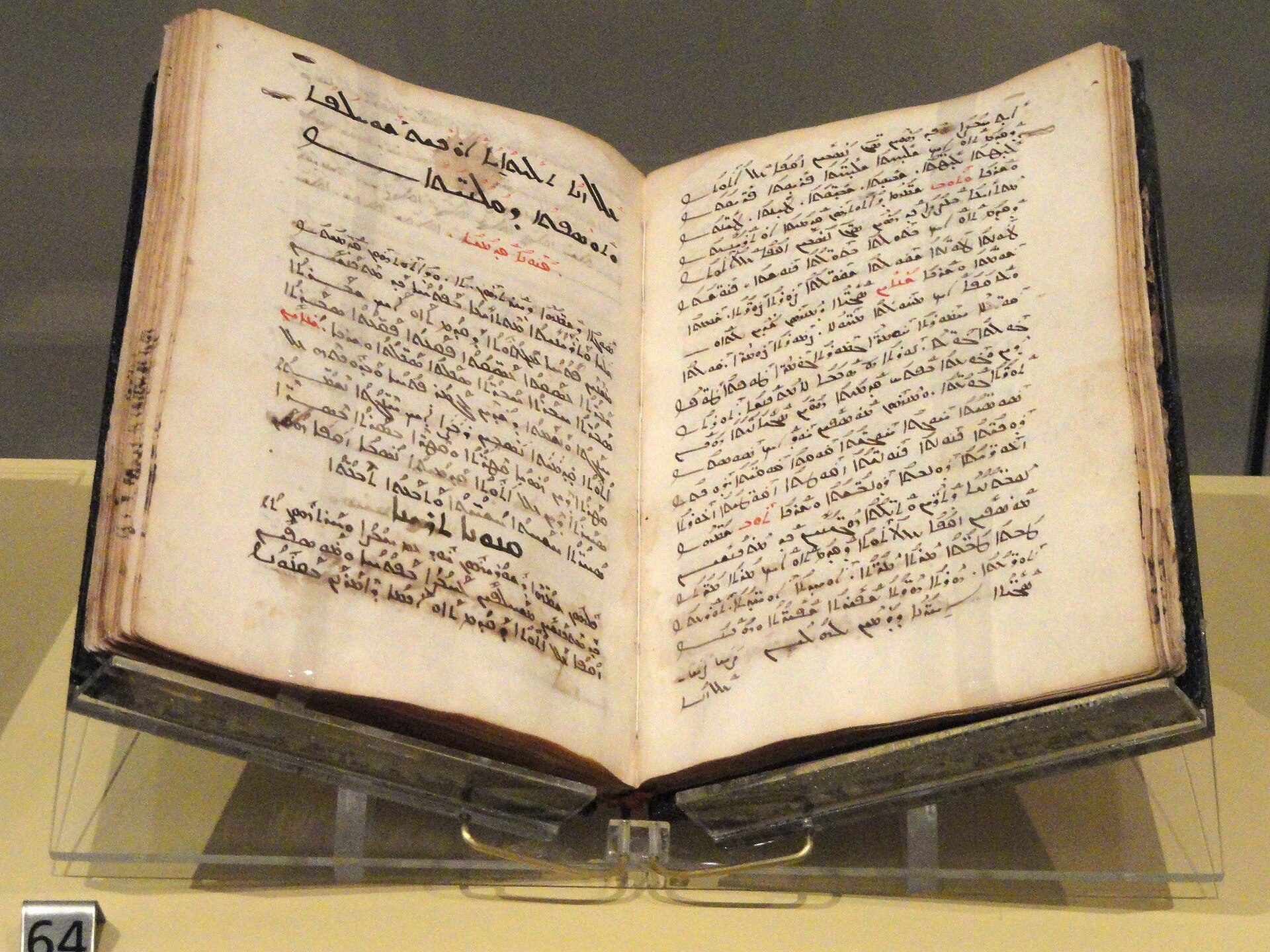
Each branch kept a script and a liturgy alongside the kitchen language: Syriac's elegant Estrangela and Serto hands still fill church books from Mosul to Södertälje.
A language is not words. It is the last room of the house that was never conquered.A Maaloula saying, freely rendered
The geography
Where Aramaic still wakes up
The last Aramaic-speaking districts. Every zone is also a diaspora source: more Suret is now spoken in Chicago and Södertälje than in any single homeland town.
What remains, branch by branch
Estimated first-language speakers
Estimates compiled from linguistic surveys (Ethnologue, endangered-language programmes), 2010s–2020s. UNESCO classes every branch as endangered; Neo-Mandaic and Western Neo-Aramaic as severely so.
View as table
| Where | Estimate |
|---|---|
| Suret (Assyrian/Chaldean) | ≈500,000 |
| Turoyo (Tur Abdin & diaspora) | ≈60,000 |
| Western Neo-Aramaic (Maaloula) | ≈10,000 |
| Neo-Mandaic (Ahvaz) | ≈500 |
The near-death
Maaloula, 2013
The 20th century did what thirteen previous ones had not: Sayfo massacres emptied Tur Abdin, Ba'athist Arabisation banned Syriac teaching in Iraq, and emigration drained the villages. Then, in 2013, the war came to the last Western Aramaic town itself — Maaloula was overrun by jihadist fighters, its monasteries shelled, its people scattered to Damascus.
The town was retaken and partly rebuilt; perhaps half its people have returned. Its language institute, founded in 2007 to teach the alphabet of Jesus's dialect to the town's own children, reopened. Old women in Maaloula still bless visitors in the tongue; whether their grandchildren will is the open question of this whole story.
The counter-attack
Apps, satellites and stubborn grandmothers
Against the tide: Suret is now an official language of Iraq's constitution, taught in dozens of Nineveh Plains schools; Sweden broadcasts and publishes in it; diaspora start-ups have built Aramaic keyboards, online dictionaries and children's cartoons; and Tur Abdin's monasteries have begun teaching Turoyo summer schools for diaspora teenagers who come back with Instagram accounts and leave with the alphabet.
Linguists call a language safe when children quarrel in it. By that measure Aramaic is not safe anywhere — but in Ankawa's schoolyards and Södertälje's playgrounds, the quarrelling continues, three thousand years on.