The war
A century of conquest
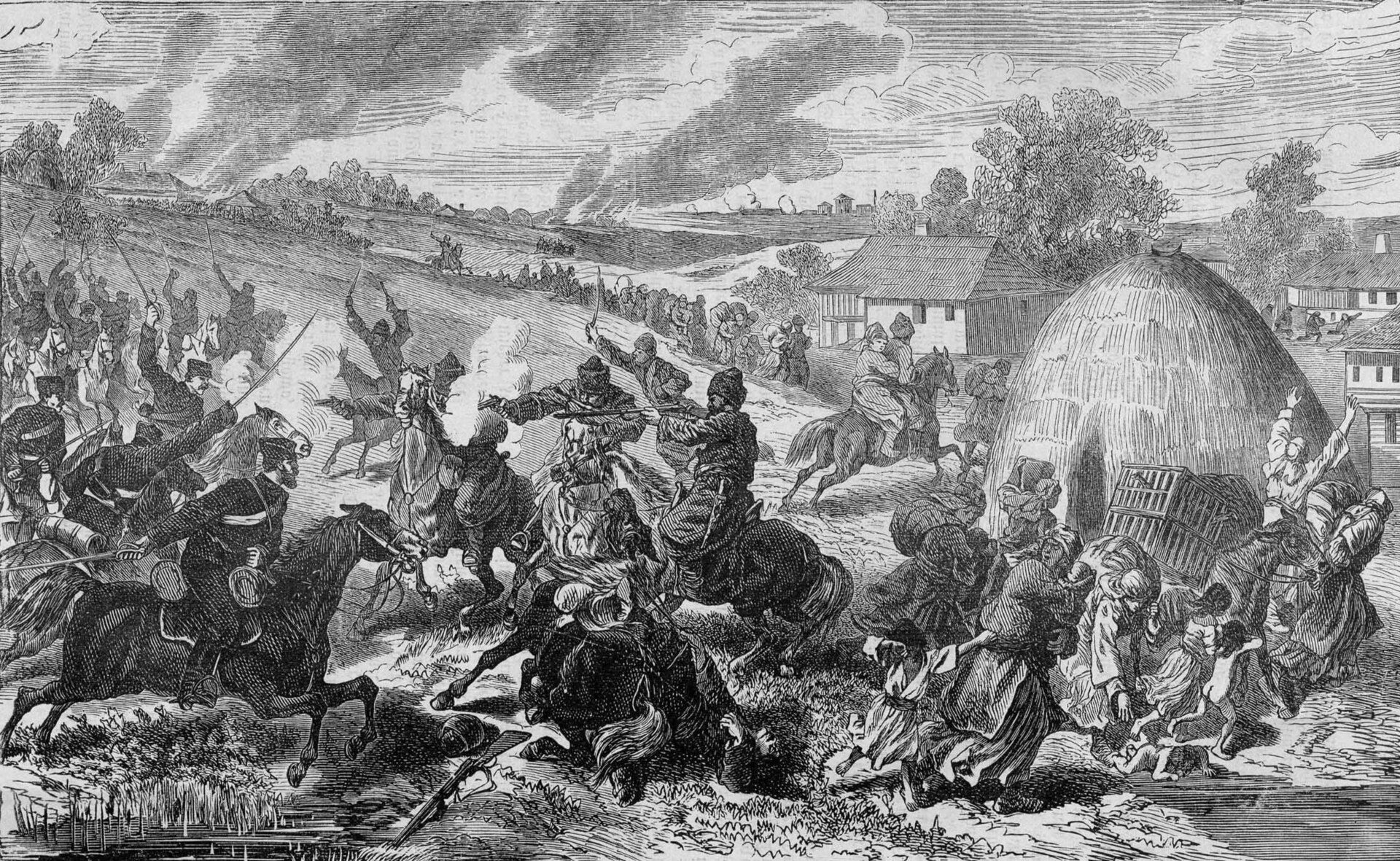
Russia's drive to the warm seas met, in the northwest Caucasus, the peoples who called themselves Adyghe — and who had no intention of moving. The Russo-Circassian war lasted, by the usual count, from 1763 to 1864: the longest war Russia ever fought.
The mountains made the resistance famous across Europe — 'Circassian' became a romantic byword for doomed courage — but by the 1860s the empire had changed methods: not defeating the mountaineers but removing them. General Yevdokimov's plan was explicit: villages burned, valleys cleared one by one, populations driven to the Black Sea coast with a choice of resettlement on the steppe or exile to the Ottoman sultan.
Almost all chose the sultan. On the beaches at Tuapse, Sochi and Anapa, hundreds of thousands waited through the winter of 1863–64 for boats — starving, typhus-ridden, burying their dead in the sand. Contemporary Russian officers' accounts spare no detail; Circassians commemorate 21 May 1864, the day the war was declared won, as the day of their genocide.
The crossing
The drowned and the saved
Ottoman and chartered boats, packed far past capacity, ferried the exiles to Trabzon, Samsun and Varna through 1864 and after. Estimates of the whole catastrophe — deportation deaths, drownings, epidemics in the landing camps — run from several hundred thousand to well over a million; scholars commonly say that of perhaps 1.5 million Circassians, no more than a tenth remained in the Caucasus.
The Ottoman Empire, losing Muslim populations in the Balkans, received the exiles deliberately: refugee commissions settled them along strategic frontiers — the Balkan passes, the Anatolian interior, and the desert edge of Syria — where hardened mountaineers would double as border guards. It is why the Circassian map of today looks like a military engineer drew it: a line of villages down the empire's exposed flanks.
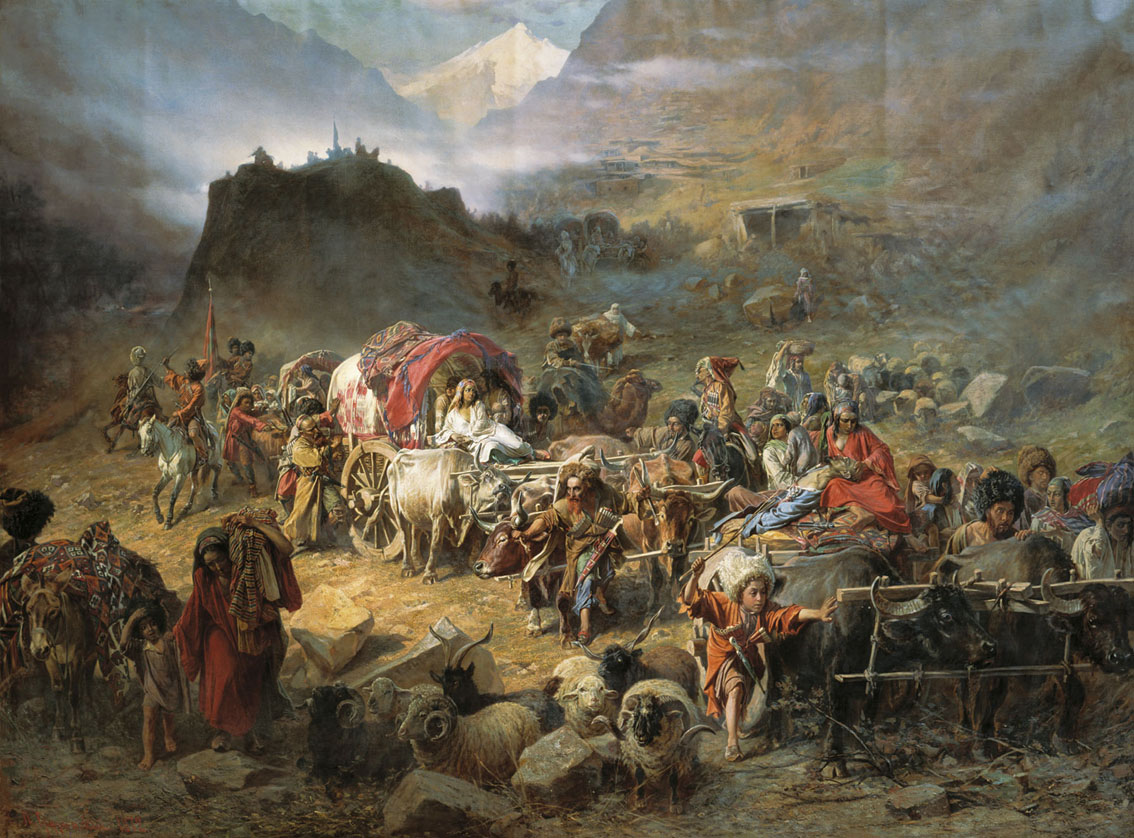
The sea took the weak. The empire took the land. We kept the khabze.Circassian exile memory of 1864
The routes
From the beaches to the desert's edge
Deportation and settlement routes, 1864–1878, drawn after the Ottoman refugee commission's settlement pattern. Indicative paths, not exact itineraries.
The rebuilding
Cities from ruins
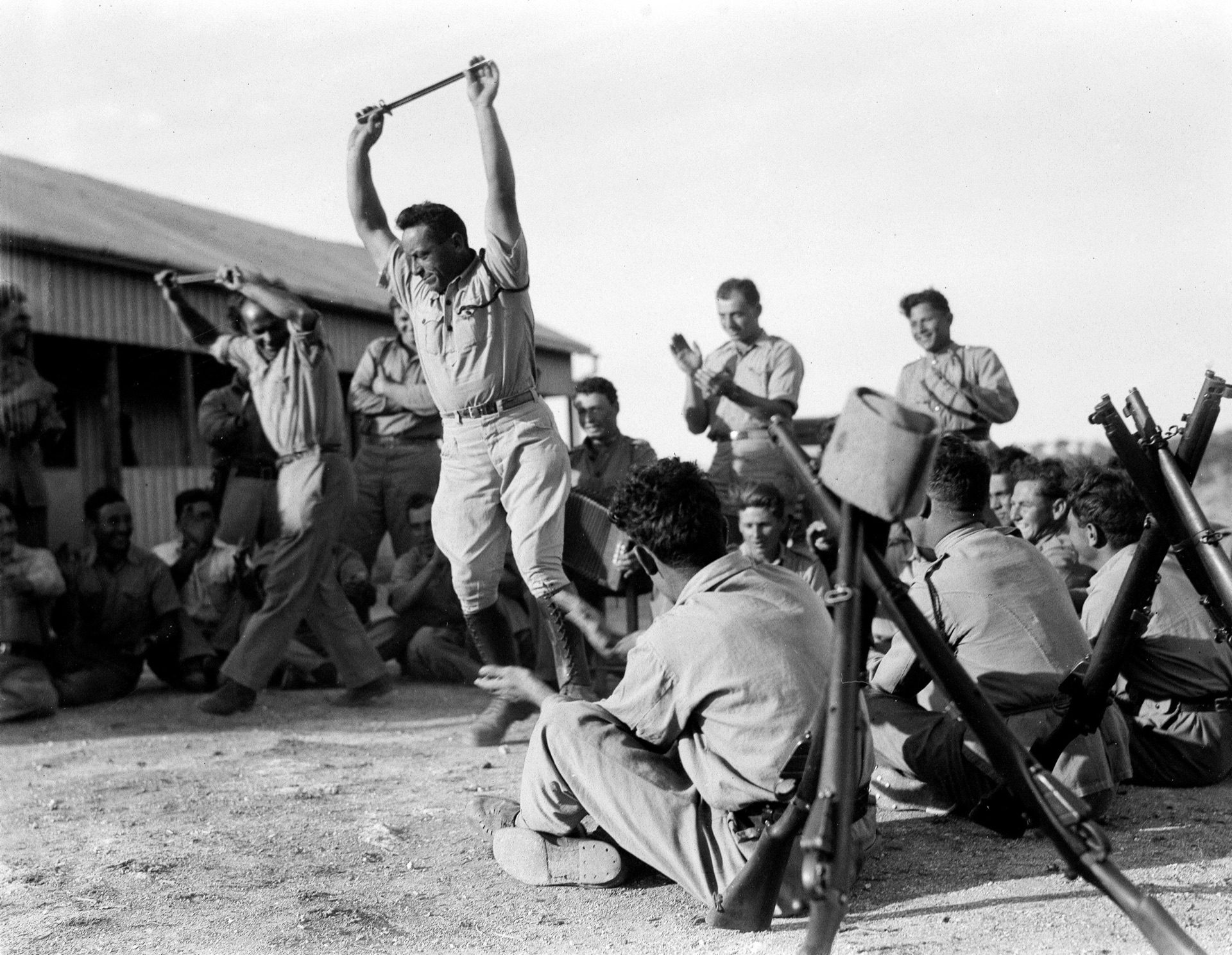
The exiles' military discipline became a civil talent. At Amman in 1878, Circassian families raised the first houses among Roman ruins uninhabited for centuries — draining land, planting orchards, carting stone from the ancient theatre. When the Hashemite emirate arrived in 1921, the Circassians provided its guard, officers and administrators; their descendants still keep the ceremonial watch over Jordan's kings.
The same pattern repeated at Quneitra in the Golan, across the Anatolian plateau, and in the Galilee villages of Kfar Kama and Rehaniya — where Adyghe remains the language of the schoolyard, the best-preserved dialect anywhere outside the Caucasus.
One expulsion, six generations
Timeline
- 1763–1864The Russo-Circassian war. A century of conquest ends with Yevdokimov's clearance plan.
- 21 May 1864Victory declared at Qbaada. The date Circassians worldwide commemorate as genocide day.
- 1864–67The ships. Hundreds of thousands cross to Trabzon, Samsun and Varna; typhus and drowning take uncounted lives.
- 1878Amman refounded. Circassian settlers build among the Roman ruins; Quneitra and the Golan villages follow.
- 1921The Hashemite compact. Circassians staff the new Transjordan's guard and administration.
- 2011–Return, reversed. Syrian Circassians fleeing war use Russia's repatriation channels — exile's road, run backwards after 150 years.
The reckoning
A memory still on the move
Only Georgia has formally recognised the events of 1864 as genocide; Russia has not, and the 2014 Winter Olympics at Sochi — held on the deportation shore, in the anniversary year — turned Circassian remembrance into a global campaign. Every 21 May, from Amman to Istanbul to New Jersey, processions walk toward the sea.
The diaspora the ships created now outnumbers the homeland ten to one. Its demands are precise: recognition, the right of return, and the survival of a language UNESCO lists as endangered everywhere it is spoken. The khabze — the code the exiles refused to leave on the beach — remains the thing every Circassian community, on every continent, still holds in common.