The root
A Zoroastrian dawn
Nowruz means simply 'new day', and the idea is Zoroastrian to the bone: creation renews itself each spring, and humanity's job is to help — clean the house, settle the quarrels, jump the fire, plant the green.
The festival is older than its first records: Persepolis itself may have been built partly as a Nowruz stage, where subject nations of the Achaemenid empire filed past the king with new year's tribute. Zoroastrian cosmology gave the day its architecture — the guardian spirits (fravashis) return to visit, so houses must shine; fire purifies the old year's misfortunes; the sprouting lentils on the table hold next year's luck.
Islam absorbed what it could not replace. The caliphs kept Nowruz as a fiscal new year; Persian poets made it the great metaphor of renewal; and the festival simply continued, wearing each new empire like a change of clothes.
The table and the fire
Seven S's and a Tuesday of flames
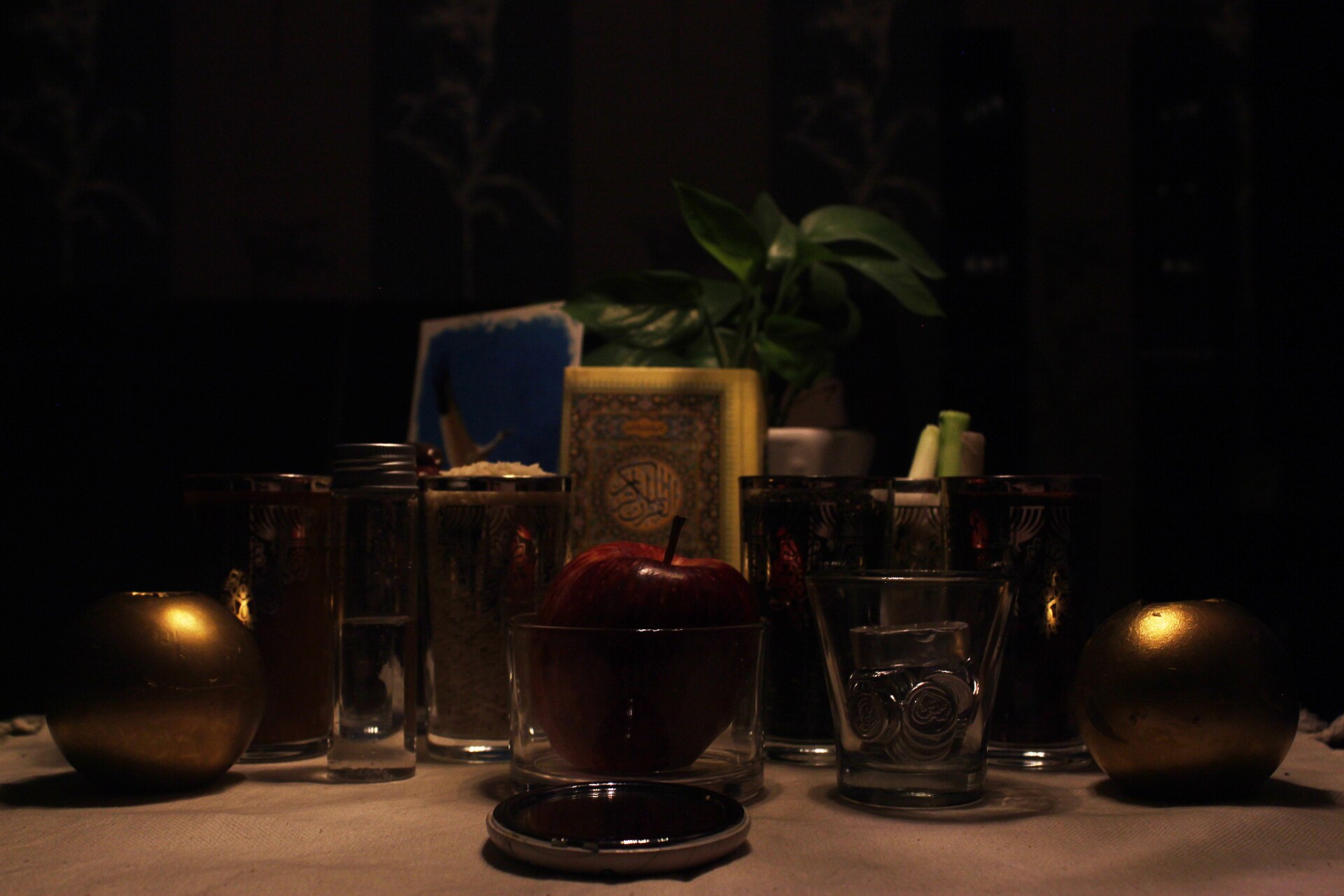
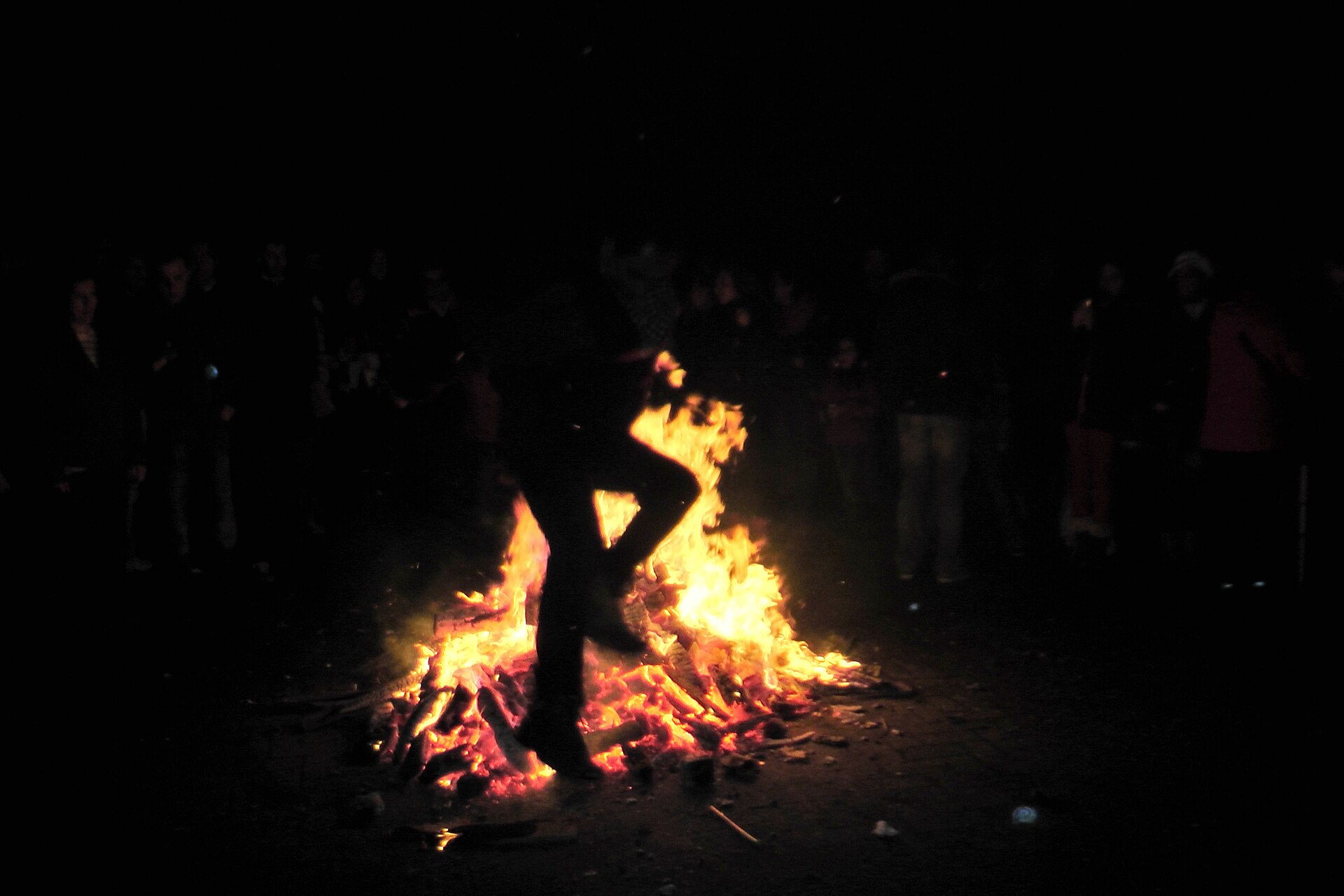
Iran's Nowruz is a fortnight of choreography. On the last Tuesday night of the old year — Chaharshanbe Suri — bonfires line the streets and everyone jumps: my yellow to you, your red to me, sickness traded for the fire's health. The table carries the haft-sin: seven items beginning with S, from sprouts (rebirth) to sumac (the sunrise), plus mirrors, goldfish and poetry.
Thirteen days later the festival ends outdoors — Sizdah Bedar, the picnic that empties every Iranian city — because the thirteenth day's luck must be spent in green places, and the sprouted greens are thrown to running water, carrying the year's misfortunes downstream.
Zahhak fell, Kawa lit his fire on the mountain — and every spring since, someone has needed telling again.The Kurdish Newroz, in one sentence
The mountain's version
Newroz: the political spring
The Kurds fused the Iranian new year with their founding legend: the blacksmith Kawa slaying the tyrant Zahhak and signalling liberation with a hilltop fire. That fusion made Newroz combustible in the political sense too — banned for decades in Turkey and Ba'athist Syria, where lighting a spring fire became an act of defiance and, some years, a lethal one. Legalisation came grudgingly and partially; the millions who fill Diyarbakır's Newroz ground each March are attending both a festival and a demonstration.
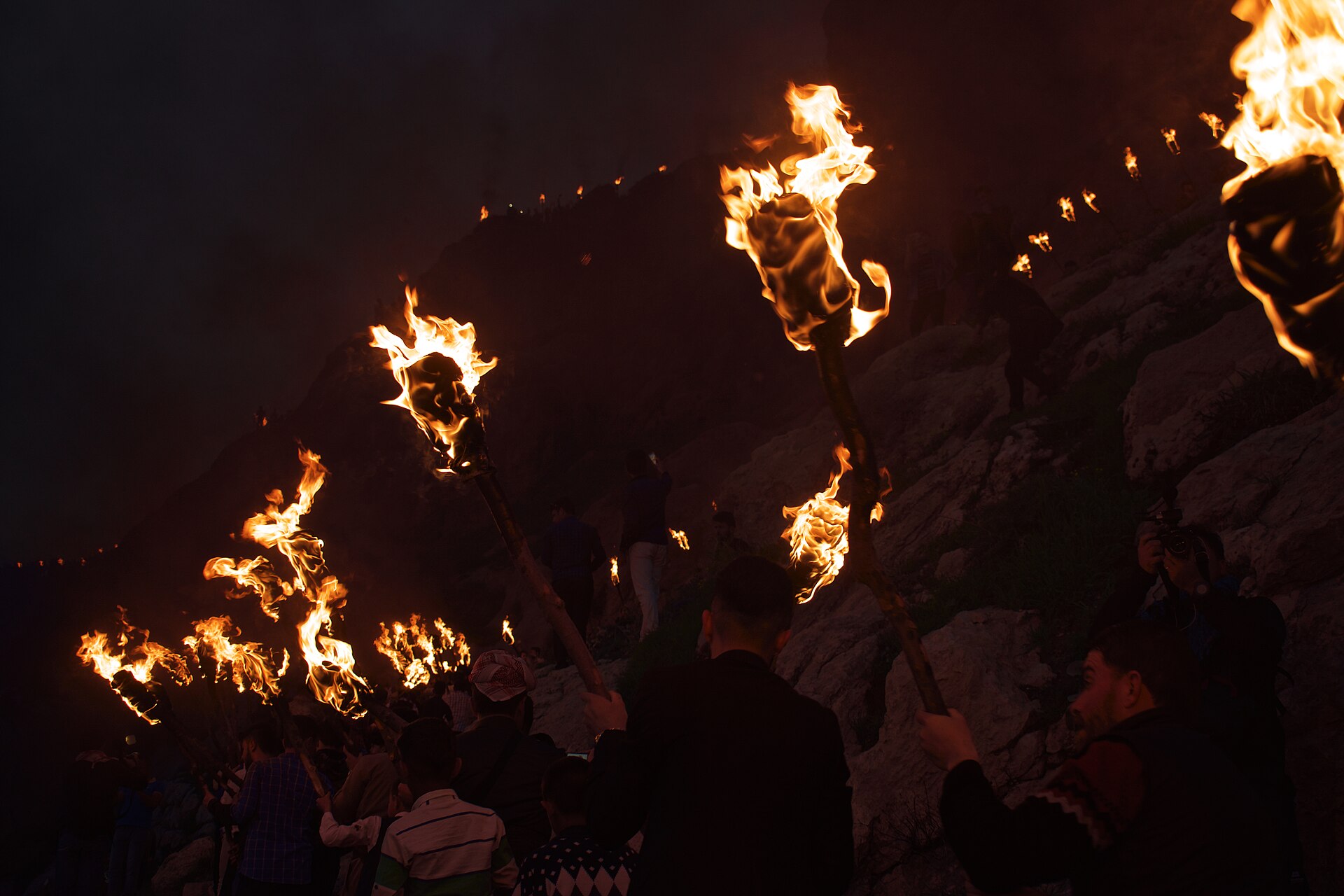
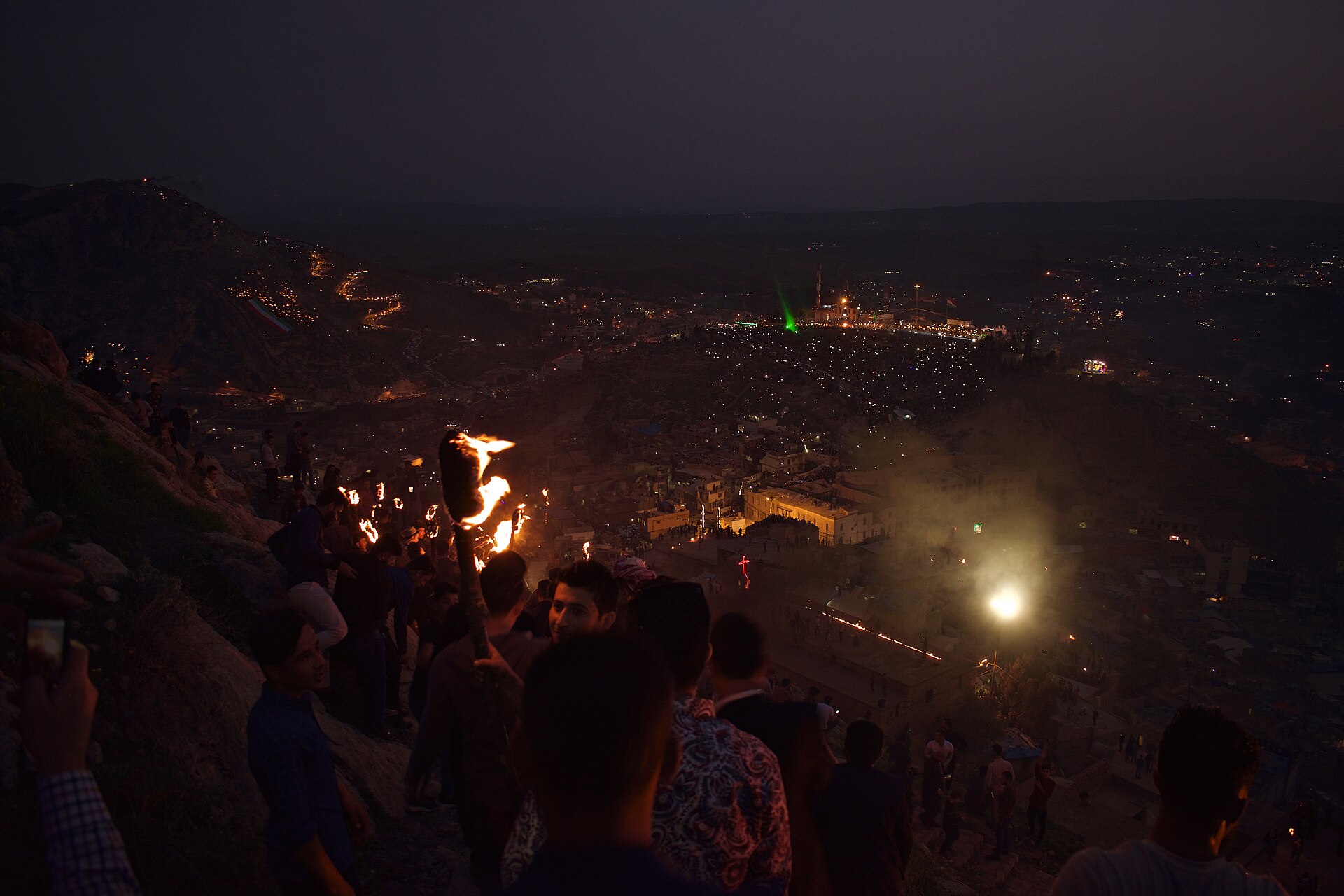
At Akre in Iraqi Kurdistan, the celebration takes its most spectacular form: chains of torch-bearers zig-zagging up the mountainside at dusk, until the whole slope runs with fire — Kawa's signal, scaled to a town.
One equinox, many homes
Who lights the fires
The Nowruz world within this atlas's frame — it continues east through Central Asia to the Uyghurs, and the UN lists twelve countries as its heartland.
The shared claim
Everyone's, which is the point
Nowruz belongs to Zoroastrians as liturgy, to Iranians as identity, to Kurds as resistance, to Baha'is as holy day (Naw-Rúz ends their nineteen-day fast), to Alevis as Sultan Nevruz — the birthday of Ali in their reckoning — and to Turkmen, Azeris, Tajiks and a dozen others as simply the new year. In 2010 the United Nations made it an international day; UNESCO lists it as shared intangible heritage of twelve states, a diplomatic formula for 'stop arguing about whose it is.'
For the minorities of this atlas, that shared quality is the treasure. On one day a year, the Yarsani villager, the Zoroastrian priest, the Kurdish student and the Baha'i engineer are doing the same thing at the same hour for reasons each would explain differently — which is as close as the region comes to a common inheritance no one had to convert to.