The vow
A faith that cannot bear arms
Most of the religions in this atlas permit their followers to defend themselves. Mandaeism does not. Its law forbids violence outright — a Mandaean may not carry a weapon even to save his own life. Nobility in peace; in war, a fatal exposure.
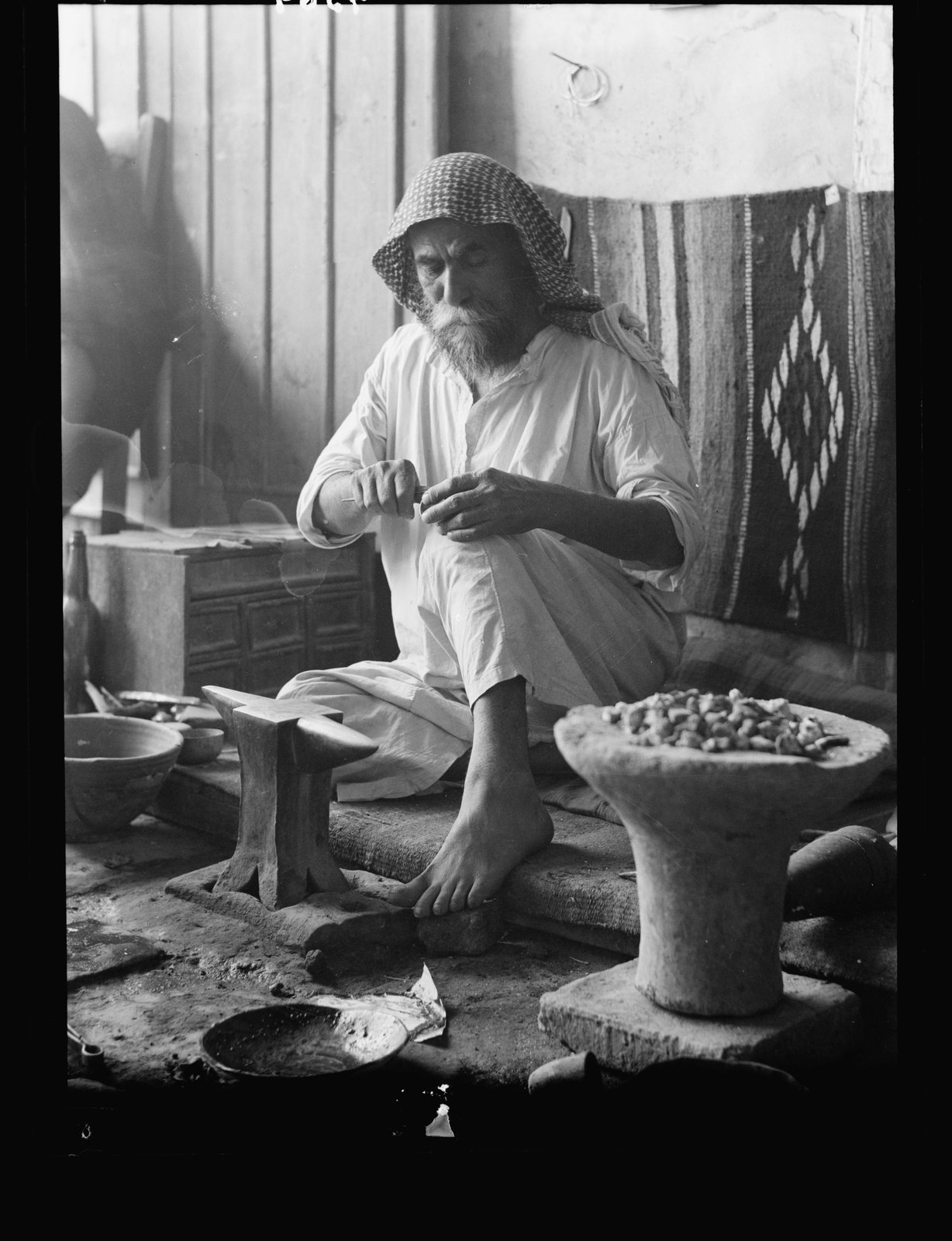
A people who will not fight must still eat, and over the centuries the Mandaeans of southern Iraq poured their skill into a trade that rewards patience rather than force: the working of silver and gold. The choice fit the faith. Metalwork is slow, precise, solitary — closer to prayer than to commerce — and it left no blood on anyone's hands.
The specialisation ran so deep that in Ottoman and modern Iraq the two words nearly merged. To be Mandaean — Sabi, in the local usage — was, for most outsiders, to be the silversmith at the end of the row, the quiet man who could turn a coin into a bracelet. Whole market lanes in Baghdad, Amarah and Basra were theirs by reputation and by inheritance, passed from father to son at the same low bench.
The craft
Amara: writing in black on silver
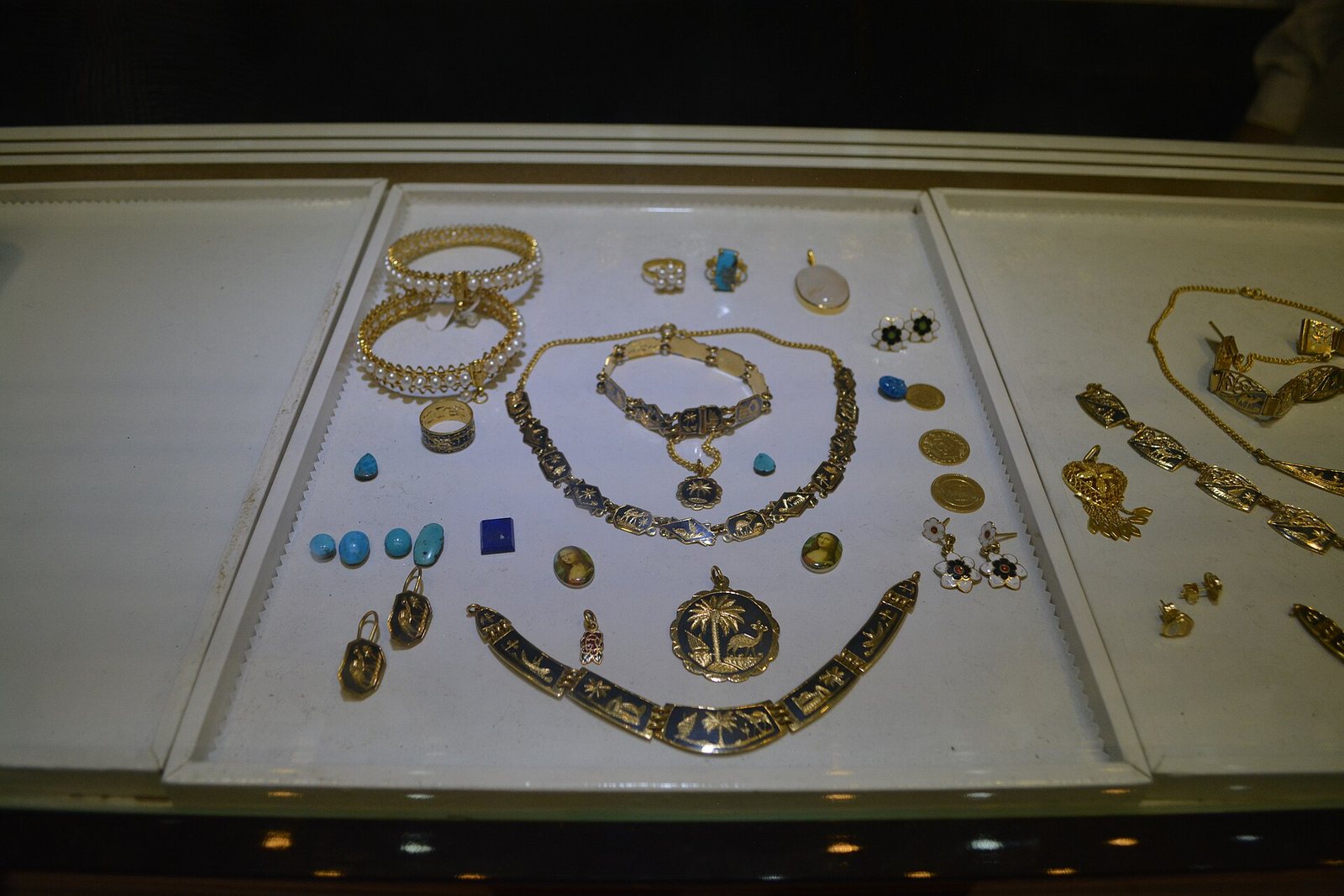
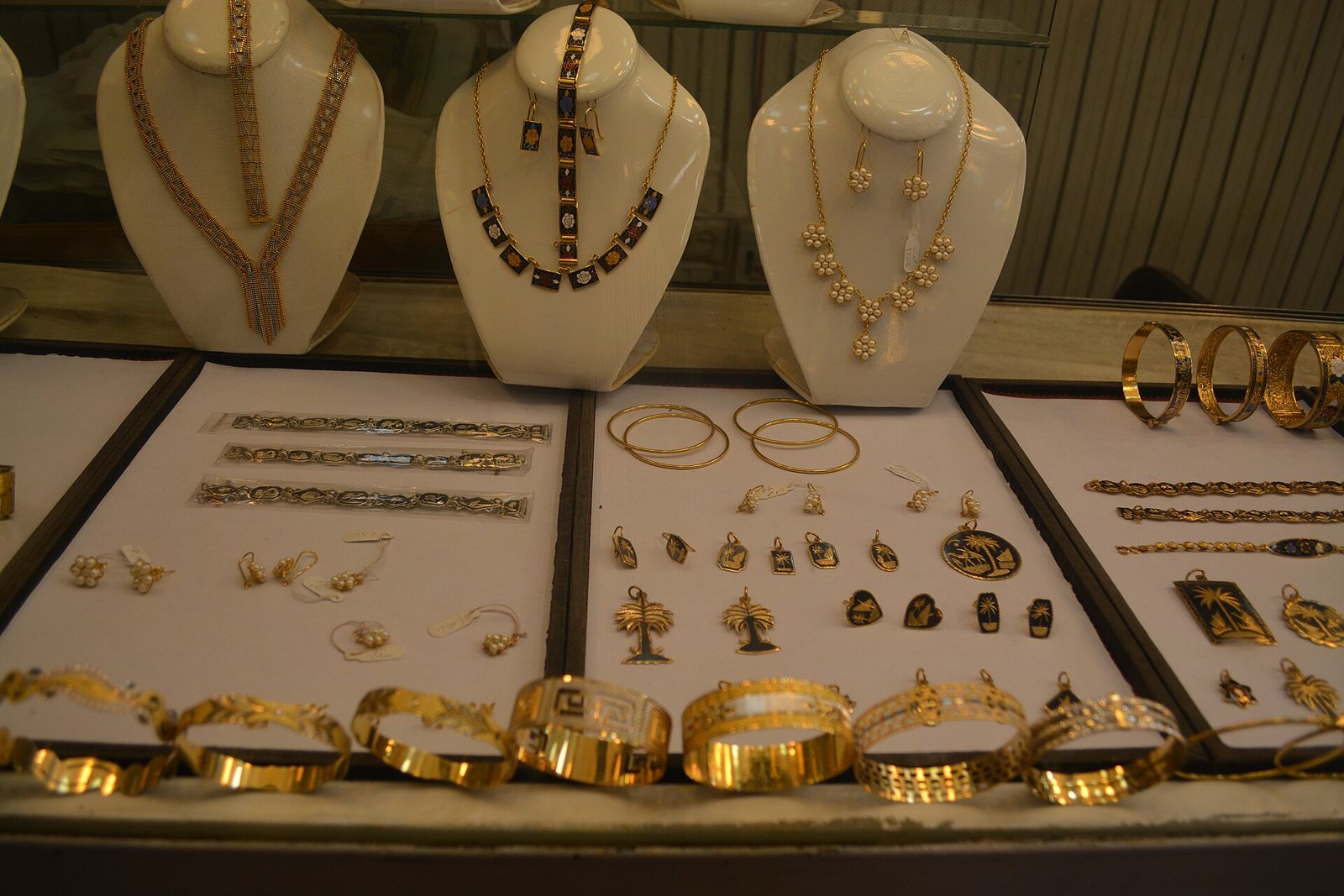
The Mandaeans' signature was a technique of contrasts: niello, a black metallic inlay burnt into engraved silver so that the design reads jet-black against bright metal. Iraqis called the finest of it amara, after Amarah — the marsh town whose smiths perfected it. Onto rings, boxes, bracelets and belts they cut miniature worlds: date palms, reed boats, marsh birds, the Tigris itself, inked in black and prized across the Ottoman lands.
It was a portable art, and a discreet one — wealth you could wear, made by a community that had learned to keep a low profile. The same hands that could not hold a sword could raise, from a flat sheet of silver, a whole landscape of the rivers they lived on.
A Mandaean may not lift a weapon. So he lifted a hammer instead.On the craft born of a pacifist faith
The river workshops
Where the anvils rang
The Mandaean silver trade followed the water — Baghdad and Amarah above all — until 2003 scattered the workshops abroad.
The exodus
The trade scatters
After 2003 the very visibility that the craft required became a death sentence. Mandaean goldsmiths were known, unarmed and assumed to be rich: perfect targets for the kidnappers and militias who filled the vacuum in Baghdad and Basra. Shops were looted, jewellers seized for ransom or murdered at their counters, and the community that could not, by faith, fight back did the only thing left to it — it left.
Roughly nine in ten of Iraq's Mandaeans have gone since 2003. The old river quarters fell silent; the benches emptied. Today a Mandaean silversmith is as likely to work in Sydney, Detroit or a Swedish town as in Baghdad — reopening under new signage, teaching amara to a much thinner line of apprentices than the rivers once supplied.
The bench through time
Timeline
- AntiquitySilver on the rivers. Mandaean smiths work the towns of the lower Tigris and Euphrates, bound to the water their faith requires.
- Ottoman eraAmarah niello. Black-inlaid silver from the marsh town of Amarah is prized across the empire.
- 20th centuryThe Baghdad quarter. The capital's river-facing jewellery suq is, by reputation, a Mandaean monopoly of skill.
- 2003Targeted and emptied. Kidnappings and killings fall hardest on the visible, unarmed goldsmiths; the community begins to flee.
- TodayThe craft in exile. Masters reopen in Sydney, Sweden and the United States, teaching amara to a shrinking number of the young.
The apprentice line
Can a craft outlive its country?
A trade transmitted at the bench, father to son, is only ever one uninterested generation from ending. Dispersal is its enemy: scattered across four continents, marrying out, drawn toward easier and better-paid professions, the diaspora's young have every reason to let the graver lie. The worry is not that the last Mandaean will vanish, but that the last one who can cut amara will.
And yet. The community that rebuilt its priesthood from two novices after a cholera epidemic is practised at surviving bottlenecks. Diaspora associations fund workshops; a handful of young Mandaeans are relearning niello from grandfathers over video calls; museums now collect the marsh-scene silver as heritage. The hammer that a Mandaean took up because he could not take up a sword may, in the end, prove harder to kill.