Legend & origins
The keepers of the true mountain
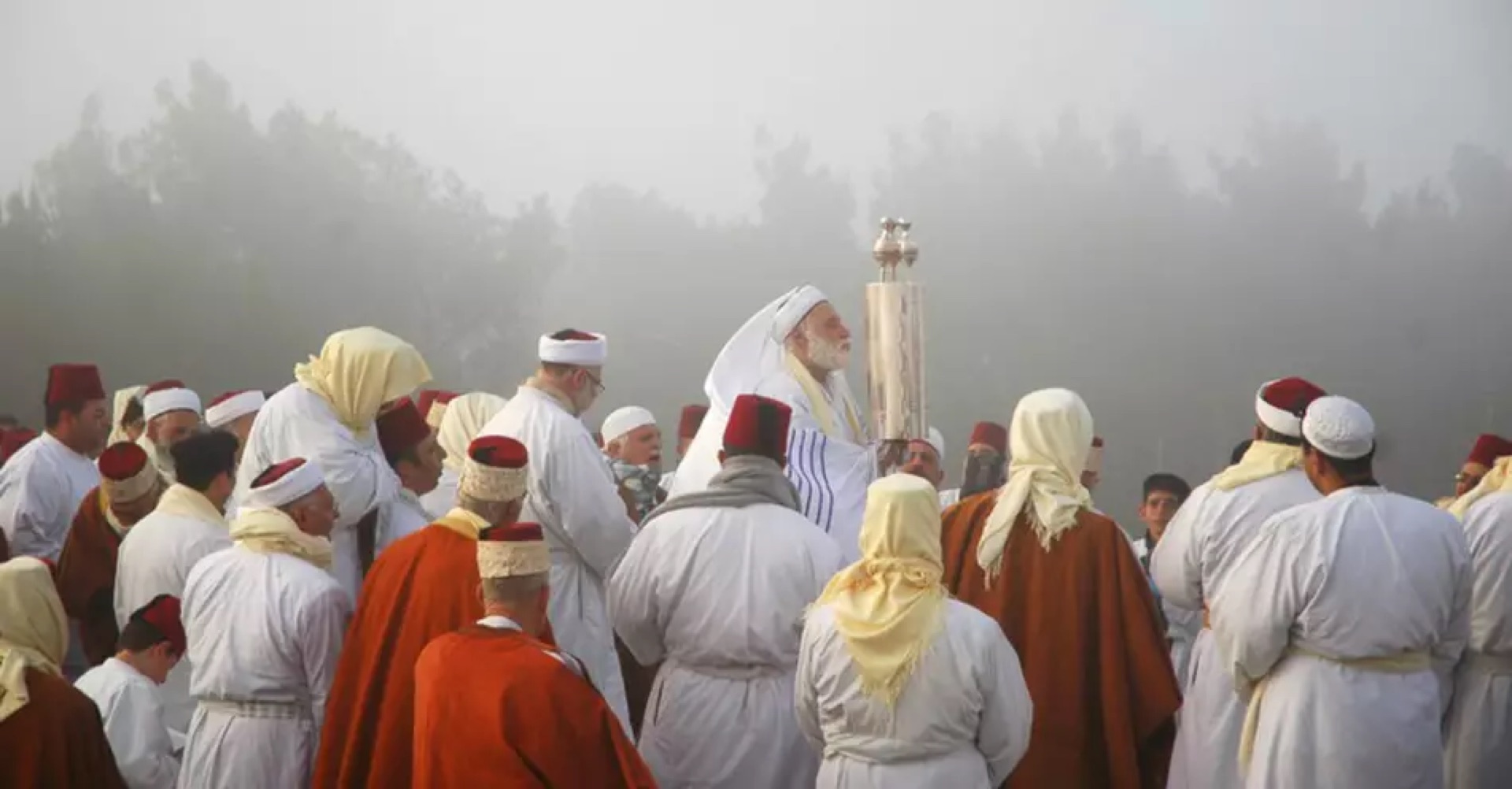
Where Jewish tradition centres on Jerusalem, Samaritans hold that God's chosen place was always Mount Gerizim, above Shechem — today's Nablus. They call themselves Shamerim, “the keepers”: keepers of the original Torah, on the original mountain, by the original priesthood.
Their account: when Israel entered the land, the sanctuary stood at Gerizim, and only a wayward priesthood carried worship off to Shiloh and then Jerusalem. The Jewish account, written in Kings, calls them foreign settlers planted by Assyria. Modern genetics and scholarship suggest something closer to the Samaritans' own claim — a population continuous with ancient Israel, sharing deep ancestry with Jews, whose schism hardened between the 5th and 2nd centuries BC, when the Hasmoneans destroyed the Gerizim temple.
They were once a nation: perhaps a million across Byzantine Palestine, with synagogues from Damascus to Thessaloniki, until the crushed revolts of the 5th–6th centuries and centuries of conversion pressure ground them down. By 1919 a census counted 141 souls. That the community now approaches 900 makes it, proportionally, one of the fastest-growing religions on earth — from the very edge of extinction.
What sets them apart
Exodus, performed annually
Alone among the world's communities, the Samaritans still keep the Torah's central rites literally, publicly and completely — a living controlled experiment in what Israelite religion looked like before the Bible was finished.
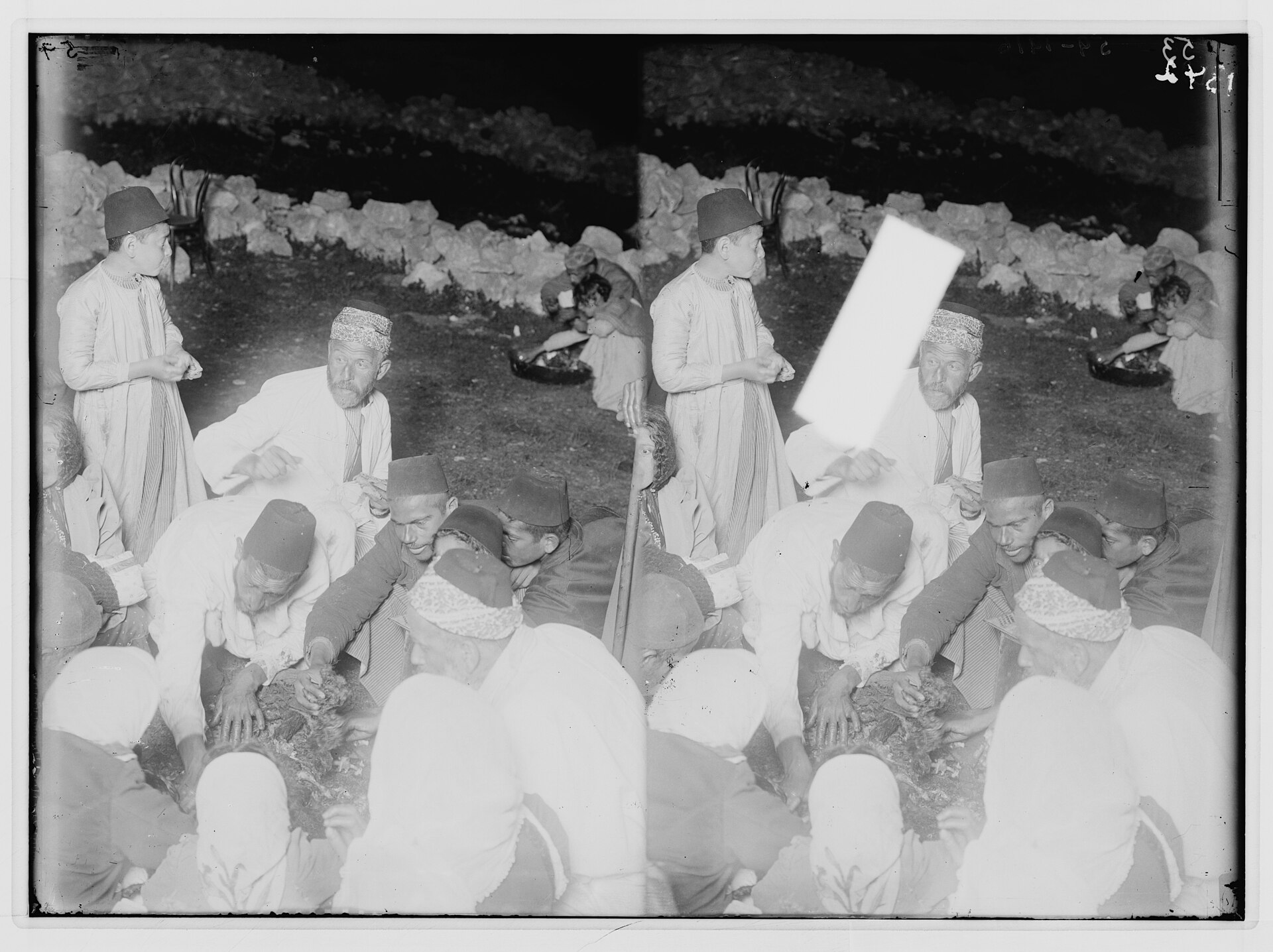
Passover with the knife
On the 14th of Nisan the whole community gathers on Gerizim; sheep are sacrificed at sundown, roasted in pits and eaten before midnight — the only continuous performance of the biblical Passover on earth.
The oldest alphabet in use
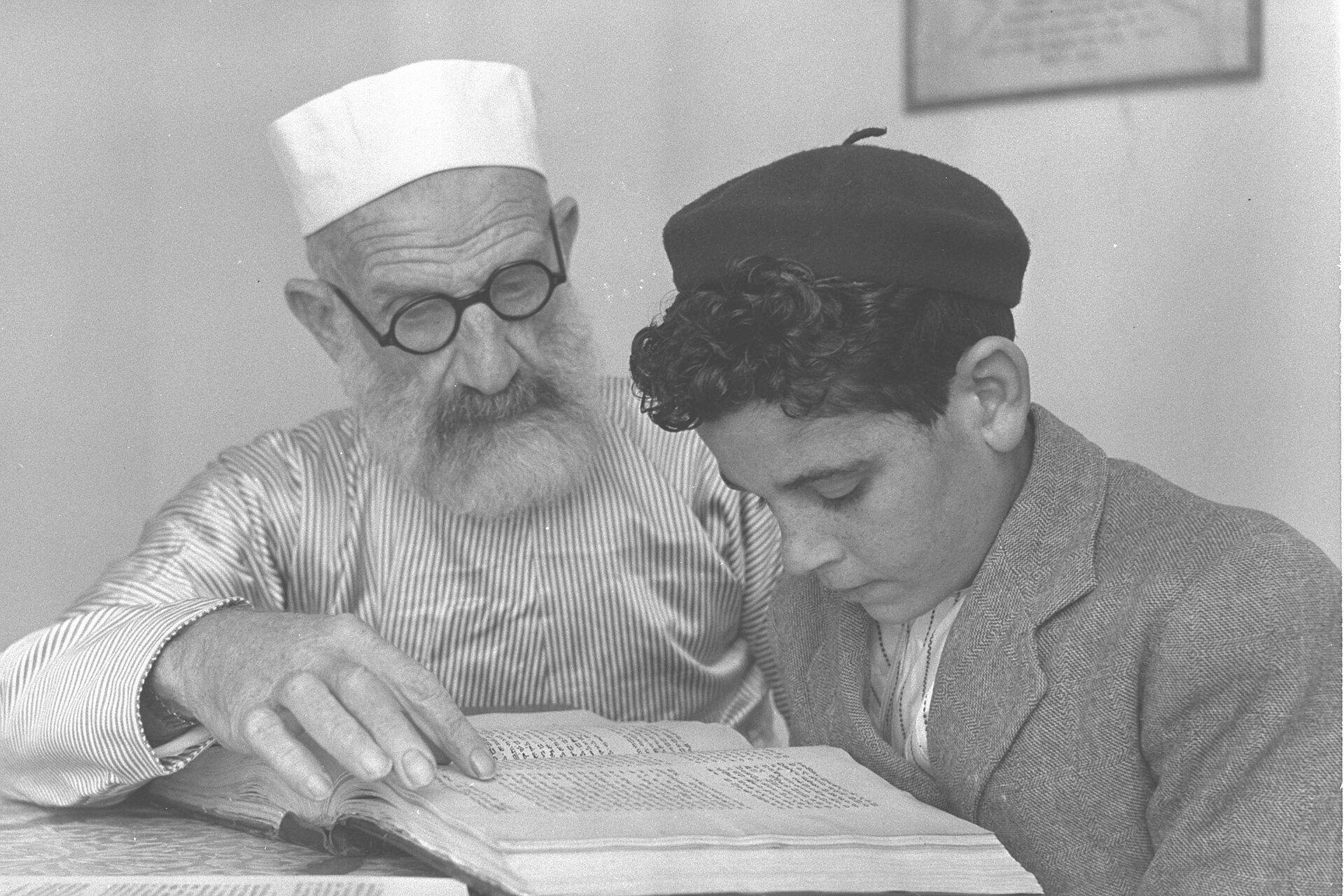
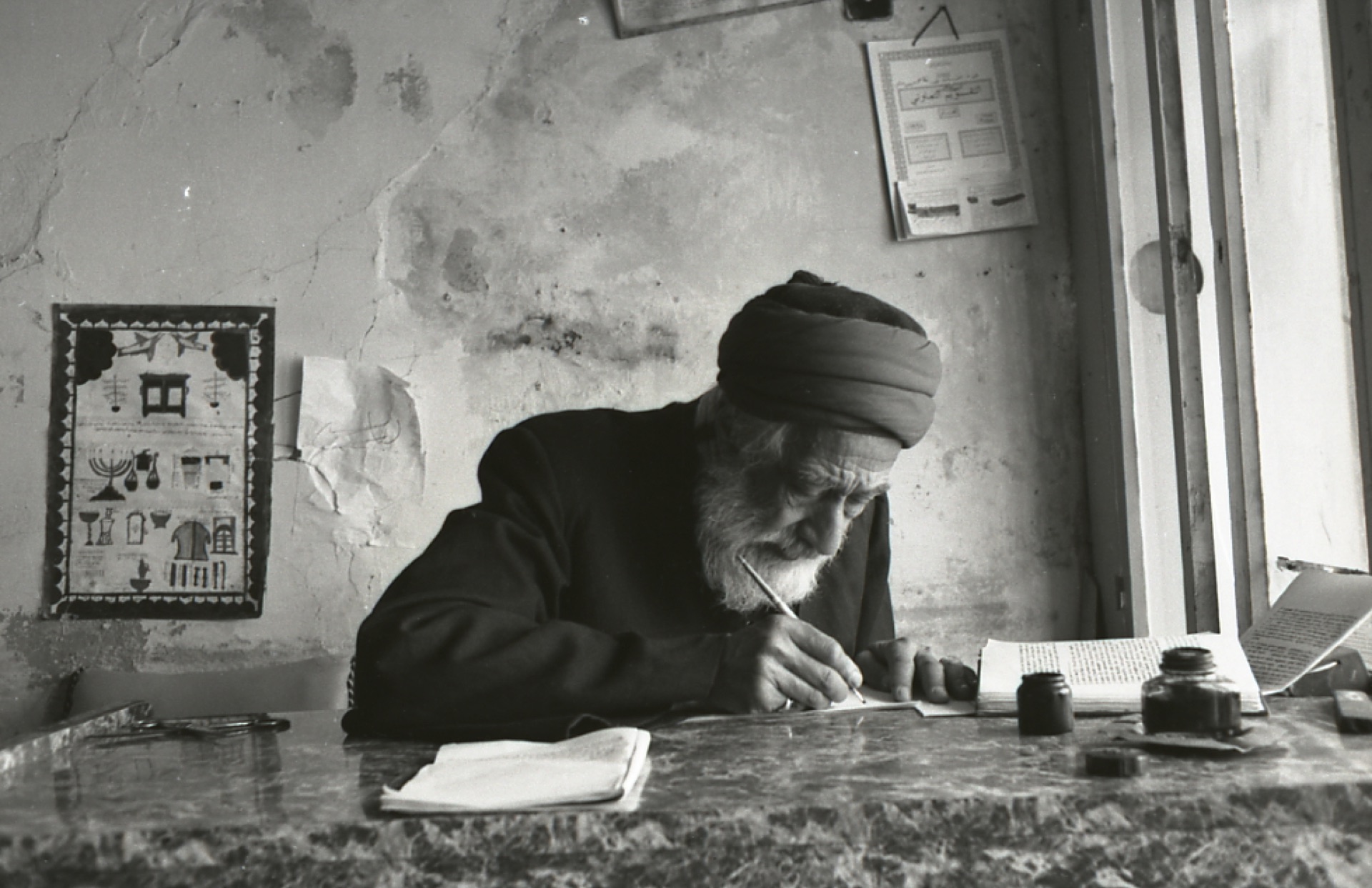
Samaritan script descends directly from palaeo-Hebrew, the letters of the First Temple era — abandoned by Jews after Babylon, kept by the keepers.
A priesthood, not a rabbinate
Religion runs through the high priest — by tradition the 130th-plus in descent from Aaron — not through scholars: law as inheritance rather than debate.
Four commandment-level identities
One ID case study in survival: most Gerizim Samaritans hold Palestinian and Israeli documents at once, vote in both systems, and keep the community scrupulously neutral in the conflict around it.
Today
Nine hundred people, two addresses, one bridge
Half the community lives at Kiryat Luza, the village on Gerizim's summit above Nablus — inside the West Bank, praying in Arabic-accented Hebrew, their high priest received by Palestinian presidents. The other half lives in Holon, south of Tel Aviv, serving in the Israeli army and speaking modern Hebrew. Every Passover reunites them on the mountain: one people commuting across the region's hardest border.
Survival's arithmetic remains delicate. A community of 900 built from 141 carries the genetic weight of its bottleneck — countered in recent decades by carefully screened marriages and, remarkably, brides from outside (including from Ukraine and Russia) who convert into a community that historically never accepted anyone. The Samaritans have outlasted Assyria, Byzantium, and their own near-extinction; their wager is that they can outlast the conflict whose seam line runs through their living room.
A nation of nine hundred is not small. It is concentrated.Samaritan self-description, often repeated at Gerizim
Geography
Where they live
The entire Samaritan world: one mountain village and one Israeli suburb, forty miles apart.
Through time
Timeline
- 8th–5th c. BCThe schism forms. Northern Israelites around Shechem and returning Judeans diverge over the true sanctuary.
- c. 110 BCGerizim's temple destroyed. The Hasmonean John Hyrcanus razes the sanctuary; the rift with Judaism becomes final.
- 484–572 ADThe Samaritan revolts. Byzantine suppression kills or converts hundreds of thousands; the nation begins its long shrinking.
- 1919141 souls. The British census finds the community at its historical minimum.
- 1963Holon founded. A second Samaritan quarter grows near Tel Aviv; the community now spans the Green Line.
- Today≈900 and growing. High birth rates and screened marriages rebuild the nation — one Passover at a time.
The whole nation, counted
Individuals — the entire people
The Samaritans are the only community in this atlas with no diaspora at all: every member lives at one of two addresses. From 141 people in 1919 to ≈900 today.
View as table
| Where | Estimate |
|---|---|
| Kiryat Luza (Mt Gerizim) | ≈460 |
| Holon | ≈440 |
What they gave the region
The good Samaritan, and the oldest text
The community's name became the world's shorthand for kindness through one parable — a Samaritan the hero precisely because his people were despised. Scholarship owes them more concretely: the Samaritan Pentateuch, preserved in its palaeo-Hebrew script, is one of the Bible's oldest independent witnesses, indispensable to every serious edition of the text; and their unbroken priestly tradition preserves pronunciations and rites scholars use to reconstruct Israelite religion itself.
On the ground they model something rarer: the only community holding both Israeli and Palestinian documents, trusted by both sides, crossing the region's hardest border every Passover as if it were a garden gate.
Looking forward
Growth at the edge of arithmetic
From 141 souls to about 900, the Samaritans are — proportionally — among the fastest-growing religious communities on earth, and the only one in this atlas with no diaspora to manage. Genetic counselling and brides who convert in (from as far as Ukraine) have loosened the ancient bottleneck; a new generation runs museums, hosts researchers and posts the Passover livestream.
The risks are political, not demographic: Gerizim sits in the West Bank's most volatile geography, and the community's studied neutrality gets harder each decade. Their own reading is longer: they have watched Assyria, Rome, Byzantium and five empires since from the same mountaintop.
The emblem
The seven lamps
The seven-branched menorah of the Tabernacle — rendered in the Samaritans' palaeo-Hebrew visual world — appears in their ancient synagogue mosaics on and around Gerizim. For the keepers, it burns for the sanctuary that stood, they insist, on their mountain.
Go deeper