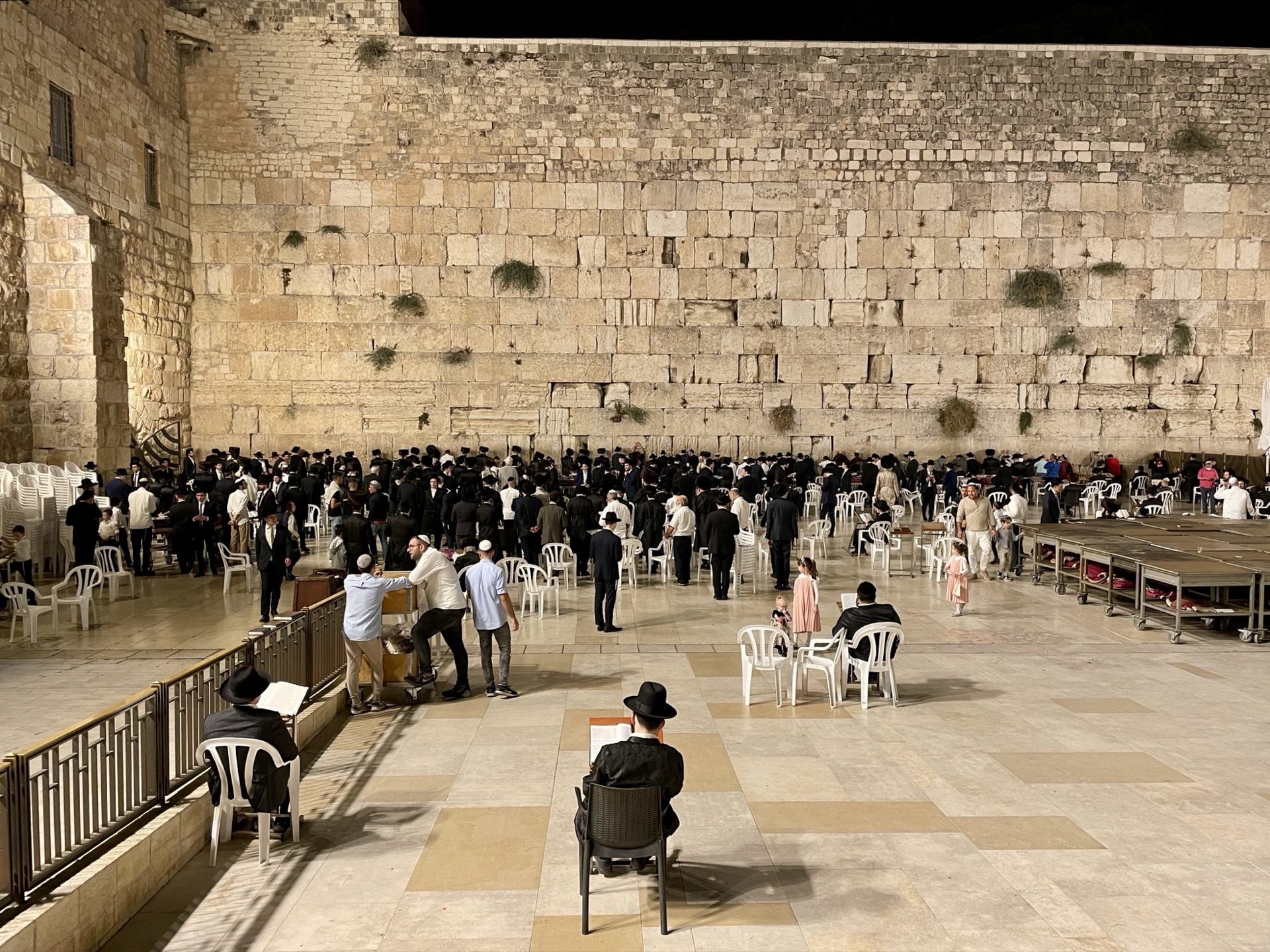
Legend & origins
By the rivers of Babylon
The Middle Eastern diaspora begins with a river and a harp: “By the rivers of Babylon, there we sat down and wept.” The exiles of 586 BC did more than weep — within a few generations Babylon had become Judaism's second heart, and it stayed so for 1,500 years.
It was in the yeshivot of Sura and Pumbedita, near the Euphrates, that the Babylonian Talmud was compiled — the text that still structures Jewish law everywhere. Every corner of the region grew its own Jewish civilisation: Yemen's poets and silversmiths, whose liturgy preserves the oldest Hebrew pronunciation; Morocco's sages and saints, whose tombs draw pilgrims still; Baghdad, where Jews were roughly a third of the city around 1900; Salonika-facing Istanbul and Izmir, where Ladino-speaking Sephardim rebuilt Spain in exile after 1492; Isfahan and Shiraz, Jewish since Cyrus freed the Babylonian captives.
The 20th century ended almost all of it. Between 1948 and the 1970s — under pressure of pogroms (Baghdad's Farhud of 1941 killed nearly 200), state expulsions, property confiscations and the pull of the new state — some 850,000 Jews left the Arab world, and most of Iran's community followed after 1979. Operation Magic Carpet flew Yemen's Jews out en masse in 1949–50; Operation Ezra and Nehemiah emptied Iraq by 1952. Twenty-six centuries of Judeo-Arabic civilisation relocated, within one generation, almost entirely to Israel.
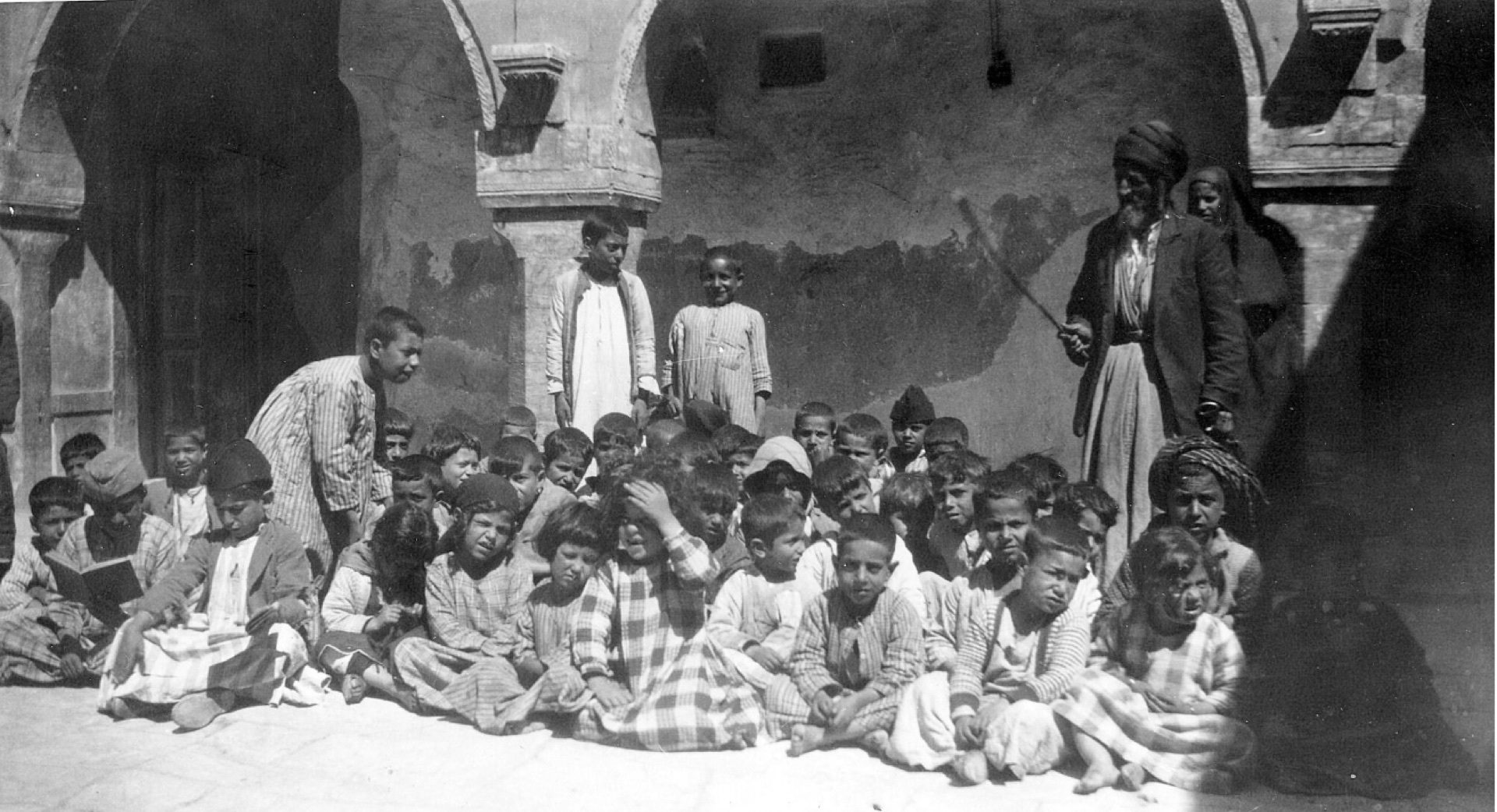
What sets them apart
Continuity as a civilisation
What sets the region's Jewish story apart is sheer layered depth: liturgies, dialects and legal traditions that grew in Middle Eastern soil for as long as writing has existed there.
The Babylonian inheritance
The Talmud Bavli — compiled by the Euphrates — remains the operating system of Jewish law; the titles of its academies' heads (Gaon) still echo in Jewish institutions worldwide.
Mizrahi liturgies
Yemenite, Iraqi, Moroccan and Persian rites keep distinct melodies, pronunciations and poetry — Yemen's is held closest to ancient Hebrew; the piyyut revival has made these traditions Israel's unexpected pop heritage.
Saints and pilgrimages
The hillula — festive pilgrimage to a sage's tomb, Moroccan style — transplanted to Israel wholesale: Baba Sali's tomb at Netivot draws hundreds of thousands each year.
The remnant communities
Istanbul's synagogues, Tehran's kosher butchers (Iran still holds the region's largest Jewish community outside Israel, with a reserved MP), Djerba's Ghriba pilgrimage in Tunisia: small numbers, unbroken threads.
1948 — today
The gathering and its remainders
A necessary nuance first: within Israel, Jews are the majority — some 7.3 million people, a state's worth — and so fall outside this atlas's definition there. It is everywhere else in the region that the Jewish story remains a minority story, and it is those communities this page is really about: the remnants of a world that once counted a million people from Casablanca to Tehran.
The remnants hold, each in its own register. Iran's Jews — the region's largest community outside Israel, with a reserved MP, synagogues, kosher butchers and schools in Tehran, Shiraz and Isfahan — live a guarded life between constitutional recognition and constant suspicion. Turkey's Sephardim sustain Ladino's last newspaper from Istanbul. Morocco, alone in the Arab world, cultivates its Jewish heritage as national patrimony — museums, restored synagogues, royal patronage — for a community now under 2,000. Djerba's islanders keep the Ghriba pilgrimage through attack after attack. Each is tiny; each refuses, so far, to be the last chapter — and several Gulf states, since 2020, have begun openly hosting Jewish communal life for the first time in half a century.
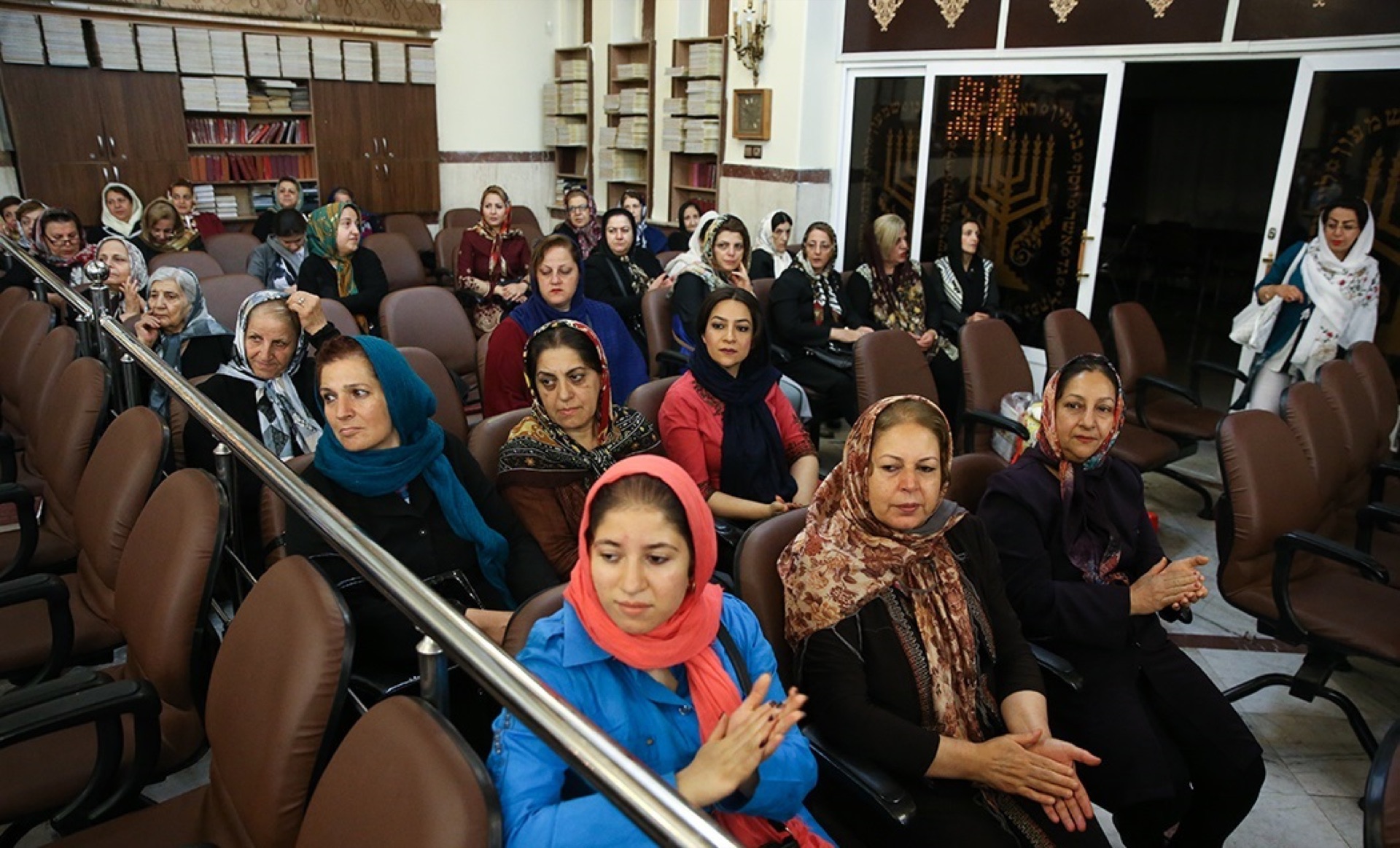
If I forget thee, O Jerusalem, let my right hand forget her cunning.Psalm 137 — sung first by the exiles of Babylon
Geography
Where they live
The Jewish Middle East after the great uprooting: Israel at the centre, ancient remnants at the edges.
Through time
Timeline
- 586 BCThe Babylonian exile. Jerusalem falls; by the rivers of Babylon the diaspora's institutions are invented.
- c. 500 ADThe Talmud sealed. Sura and Pumbedita complete the text that structures Jewish law to this day.
- 1492Sepharad relocates. Spain's expelled Jews rebuild in Istanbul, Izmir, Salonika and North Africa under Ottoman protection.
- 1941The Farhud. Baghdad's pogrom kills nearly 200 — the beginning of the end of Iraqi Jewry.
- 1948–72The great departure. ≈850,000 Jews leave the Arab world; Yemen, Iraq and Libya empty almost entirely.
- 1979Iran's revolution. Most of Persian Jewry emigrates; a guarded remnant remains with a reserved MP.
- Today≈7.3 million and the remnants. Israel holds the region's Jews; Iran, Turkey, Morocco and Djerba keep the old addresses alive.
After the gathering
Estimated population
Israel's figure is its Jewish population (2024). Remnant-community figures are community estimates. The worldwide diaspora is led by the United States (≈6 million).
View as table
| Where | Estimate |
|---|---|
| Israel | ≈7.3 million |
| Iran | ≈12,000 |
| Türkiye | ≈13,000 |
| Morocco & Tunisia | ≈3,000 |
| Diaspora (worldwide) | ≈8 million |
What they gave the region
The region's co-author
Jewish contributions are so woven into the region's fabric that unpicking them is impossible: Baghdad's finance and its beloved chalghi music (the Kuwaity brothers wrote the Iraqi songbook), Yemen's silverwork, Morocco's cuisine and saints' festivals, Iran's oldest wine poetry, Istanbul's printing (the empire's first press was Sephardi, 1493). Judeo-Arabic produced philosophy's golden bridge — Maimonides wrote in it — and the region's languages are salted with each other's words because Jewish traders spoke them all.
In Israel, the Mizrahi majority carried these worlds forward: the region's food, music and humour now flourish inside the state that gathered the exiles — an irony history seems to enjoy.
Looking forward
Remnants, and a cautious reopening
Outside Israel the arithmetic is stark: communities of thousands where there were millions, sustained by stubbornness and, increasingly, by heritage diplomacy — Morocco restoring synagogues, Egypt renovating Alexandria's Eliyahu Hanavi, the Gulf's new congregations since the Abraham Accords. Iran's community will remain the bellwether: the region's largest, oldest, and most exposed to every turn of geopolitics.
Whether these remnants are epilogue or seed depends on the region's politics more than its Jews. The communities themselves have made their intention plain by staying: Djerba still holds the Ghriba, Tehran still fills Yusef Abad, and the old addresses remain occupied.
The emblem
The Magen David
The six-pointed star — Magen David, 'shield of David' — rose from medieval manuscript ornament to community seal (Prague, 1354) to the universal Jewish emblem. In this atlas it stands for the region's oldest continuous minority — and its most transformed.