Legend & origins
The evangelist, the martyrs' calendar, and the desert
Christian Egypt begins, by tradition, with a sandal strap. Mark the Evangelist, landing at Alexandria around 42 AD, stopped at a cobbler to mend his shoe; the cobbler Anianus became his first convert and second bishop, and the Church of Alexandria was born.
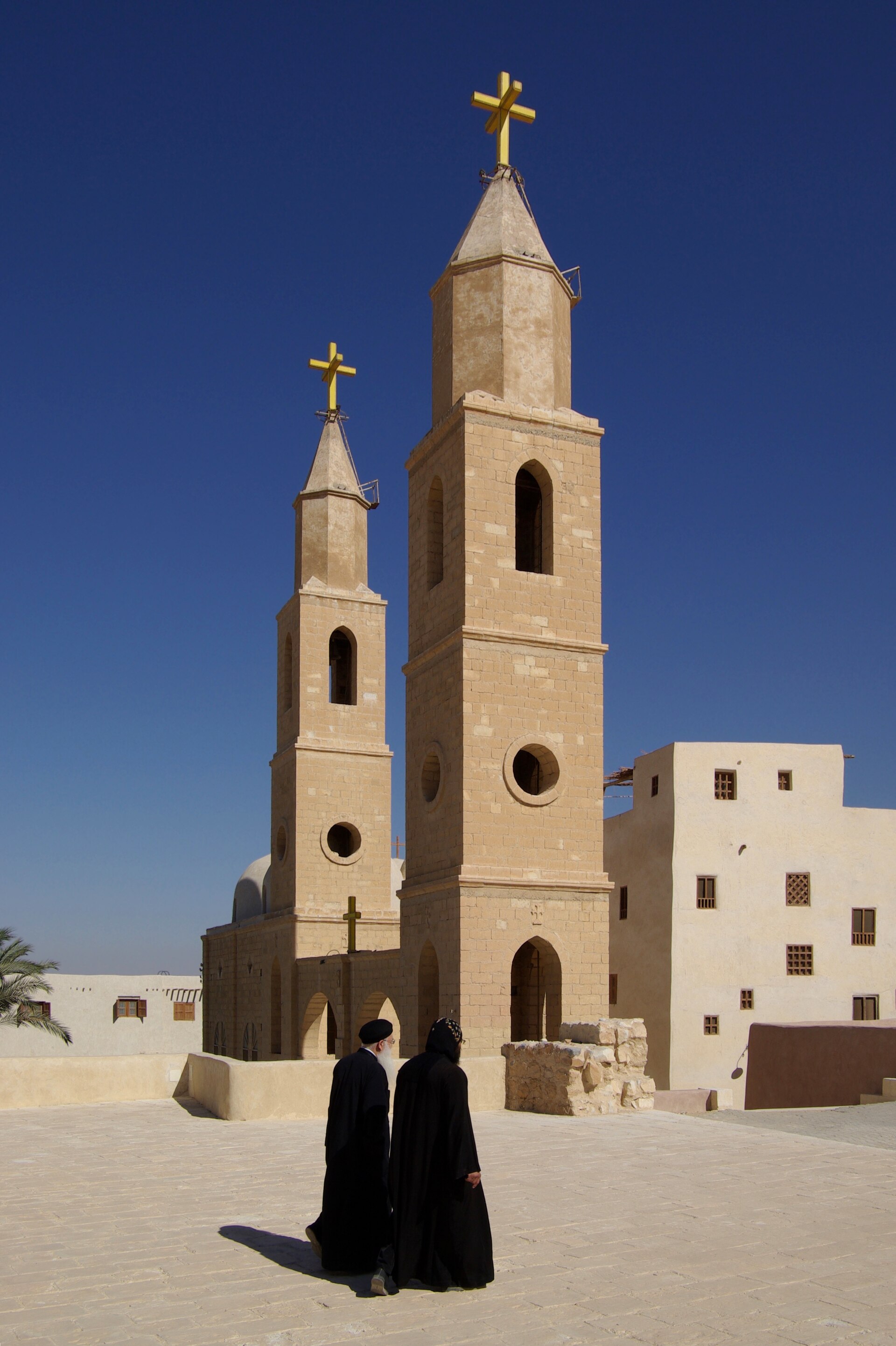
Within three centuries Egypt had given Christianity two of its defining inventions. The first was theology's great school, Alexandria's Didascalia, where Origen and Athanasius argued the faith into shape. The second was the monastery: when Anthony walked into the Eastern Desert around 270 AD, he founded a way of life that spread from Egypt to Ireland and Ethiopia. The Coptic Church still calls itself the church of the martyrs — its calendar counts years not from Christ's birth but from 284 AD, the accession of Diocletian, whose persecution cut deepest in Egypt.
After the Council of Chalcedon in 451 the Copts went their own doctrinal way — miaphysite, in the textbooks; simply orthodox, in their own — and after the Arab conquest of 641 they became, over slow centuries of jizya and pressure, a minority in their own country. They kept the country's oldest name for themselves: gyptios, Egyptian, Copt. And they kept the language: Coptic, the final stage of the tongue of the hieroglyphs, faded from the streets by the medieval period but never from the altar — it was Coptic that handed Champollion the key to the Rosetta Stone.
What sets them apart
Pharaoh's heirs at the altar
Coptic distinctiveness is continuity — of language, calendar, fasting and ink — carried in the world's oldest national church.
The tattooed cross
Many Copts wear a small cross tattooed on the right wrist — identity written on the body, an ancient custom that cannot be renounced at a checkpoint or a conversion office.
A church that fasts
Over 200 days a year — Advent, Lent, the Fast of the Apostles, of Nineveh, of the Virgin — make Coptic cuisine a parallel vegan tradition and the fasting discipline the community's shared pulse.
The pharaonic tongue, sung
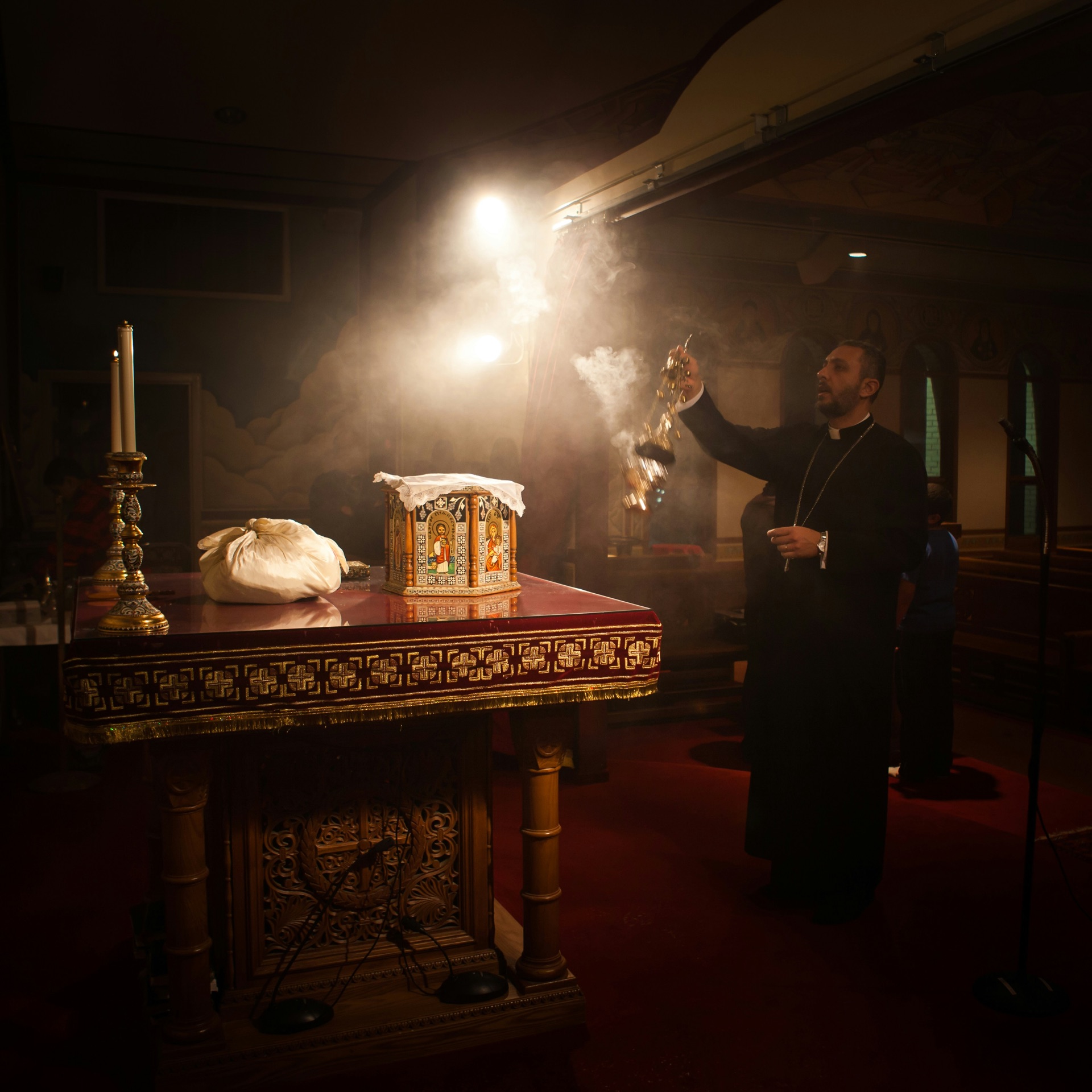
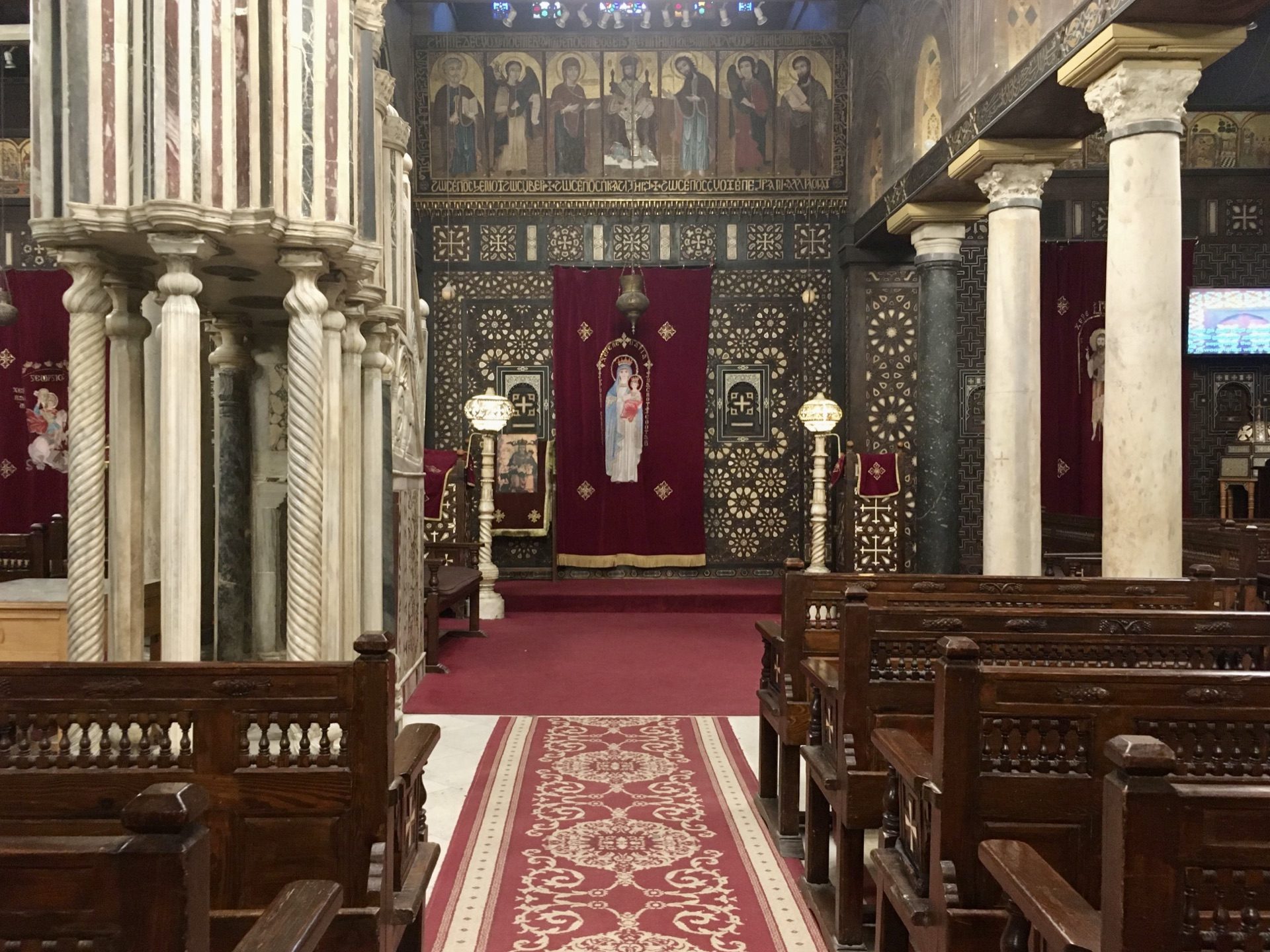
Liturgy keeps Coptic alive: Kyrie-like refrains in the language of the Pyramid Texts' descendants, in melodies some musicologists trace to temple chant.
The desert revival
Since the 1970s university graduates have refilled the ancient monasteries of Wadi Natrun and the Red Sea — a monastic renaissance that made monks of engineers and a pope (Shenouda III) of their generation.
1971 — today
Martyrs' era, modern chapter
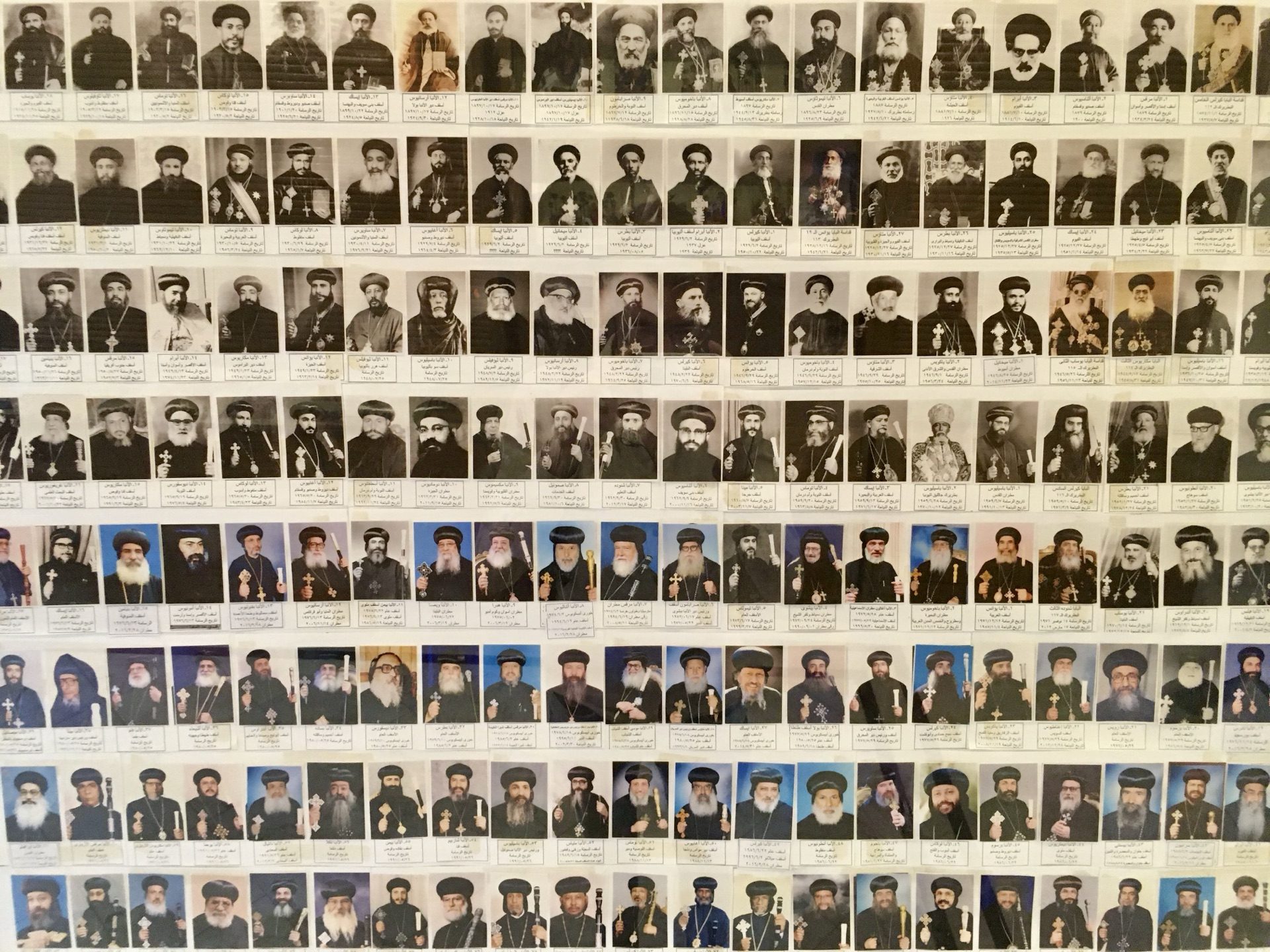
The modern community has lived between achievement and siege. Popes Shenouda III and Tawadros II built the largest church infrastructure in the Middle East — schools, media, a cathedral seating thousands — while sectarian violence supplied new names for the martyrology: the church bombings of Alexandria (2011), Cairo's Botroseya (2016) and Tanta and Alexandria on Palm Sunday 2017; the 21 migrant workers beheaded on a Libyan beach in 2015, canonised within days, their icon now in churches worldwide.
Copts remain woven through every level of Egyptian life — business dynasties, ministers, Boutros Boutros-Ghali at the UN — while facing the grind of church-permit laws, blasphemy cases and village expulsions in Upper Egypt. Emigration has built a diaspora of perhaps two million, whose remittances and cathedrals (Sydney, New Jersey, Toronto) now sustain the mother church. The calendar still counts the Era of the Martyrs; the community still adds to it, and still grows.
We date our years from a persecution, and we are still counting.The Coptic calendar — Anno Martyrum, the Era of the Martyrs
Geography
Where they live
Coptic Egypt follows the Nile: strongest in Cairo and the Upper Egyptian governorates of Minya, Asyut and Sohag.
Through time
Timeline
- c. 42 ADSt Mark in Alexandria. Tradition dates the church's founding to the evangelist and the cobbler Anianus.
- 284The Era of the Martyrs begins. Diocletian's persecution becomes year one of the Coptic calendar.
- c. 270–356Anthony in the desert. Egyptian hermits invent Christian monasticism; Pachomius writes the first rule.
- 451Chalcedon. The Copts reject the council's formula — the birth of Oriental Orthodoxy.
- 641The Arab conquest. Egypt enters the Islamic world; the long demographic ebb begins.
- 1971–2012Shenouda III. Monastic revival, Sunday Schools movement, diaspora cathedrals — and rising sectarian strain.
- 2011–17The years of the bombs. Alexandria, Botroseya, Palm Sunday, Libya's beach: hundreds of new martyrs.
- TodayOne Egyptian in ten. The region's largest minority by an order of magnitude — building, burying, and staying.
One Egyptian in ten
Estimated population
Egypt has published no religious census since 1986; 10% of ~106 million is the standard estimate, church claims run higher and official hints lower. The diaspora is led by the USA, Canada and Australia.
View as table
| Where | Estimate |
|---|---|
| Egypt | ≈10 million |
| Libya & Sudan | ≈100,000 |
| Diaspora | ≈2 million |
What they gave the region
Egypt's second calendar
Coptic gifts begin with the calendar Egyptian farmers still plant by — the Coptic months govern the Nile countryside's agricultural year regardless of faith. Monasticism, invented in their desert, reshaped world Christianity from Ireland to Ethiopia; Coptic textile art fills the world's museums; and modern Egypt's economy, cinema and public life carry the community's imprint from the Sawiris business dynasty to beloved screen stars and a UN Secretary-General, Boutros Boutros-Ghali.
Even the language endures as a gift: it unlocked the Rosetta Stone, and its words survive inside Egyptian Arabic — the fellah's vocabulary of field, water and bread is full of ancient Egyptian carried by Coptic mouths.
Looking forward
Building faster than leaving
The Coptic future is a race between construction and emigration. The church builds at unprecedented scale — cathedrals, satellite channels, a new capital's basilica consecrated by the state itself — and the state's official embrace has never been warmer, even as village-level discrimination and mob violence persist and church-permit law remains a grievance. Two million diaspora Copts now fund and increasingly influence the mother church.
Demography favours endurance: ten million people do not vanish. The question is texture — whether Copts remain woven through every Egyptian street and profession, or retreat into a parallel world of church institutions. Two millennia of practice at being Egypt's second calendar suggests the weave holds.
The emblem
The cross on the wrist
The equal-armed cross in a circle echoes the form most often tattooed on Coptic wrists — identity written on the body. The four dots stand in the old manner for the evangelists, and the ring for the eternity the desert fathers went looking for.