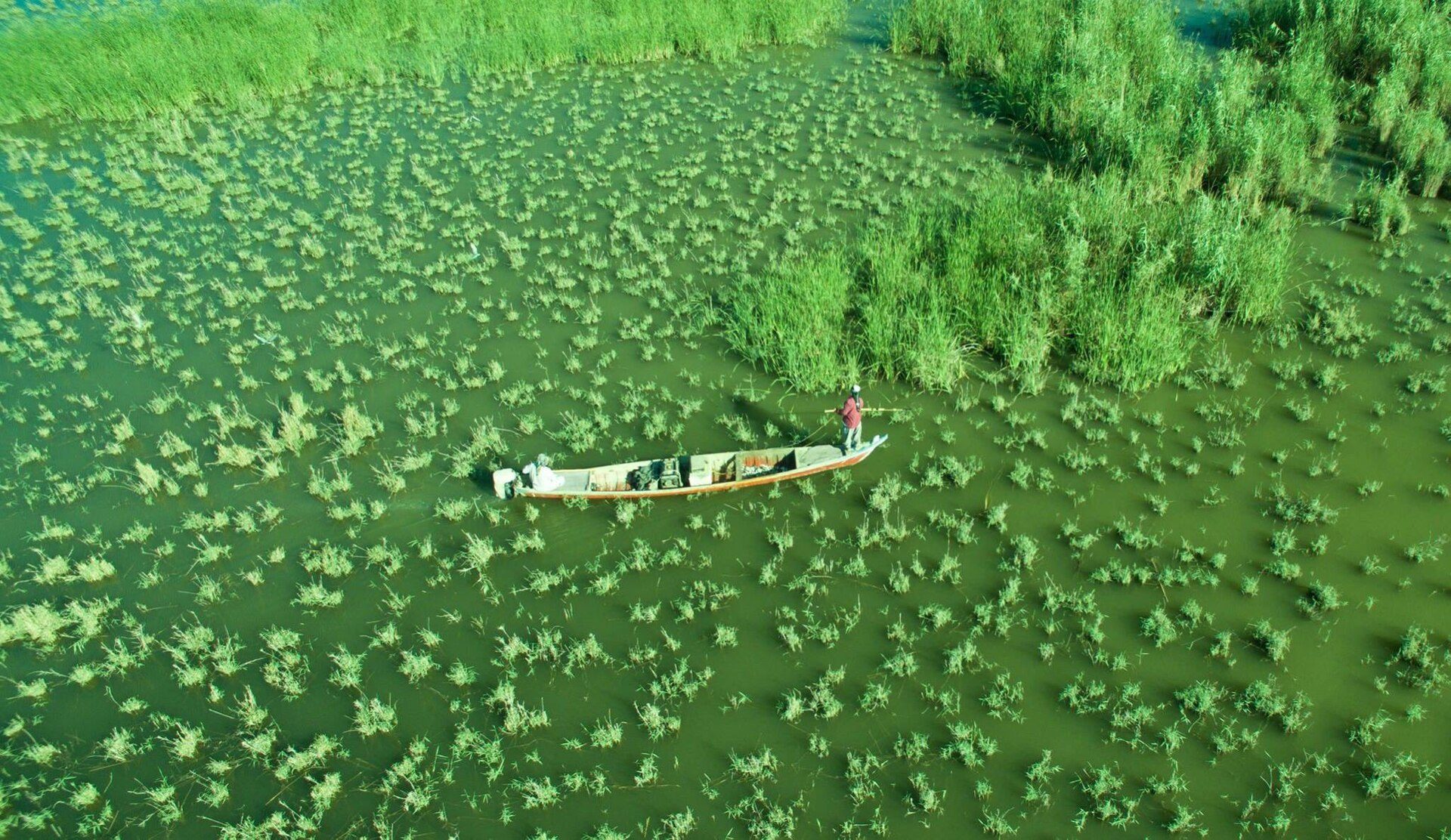
Legend & origins
A world of light, a world of exile
In the beginning, Mandaean scripture teaches, there was the World of Light — and every human soul is a spark of it, exiled into a body, homesick for a country it has never seen. Religion is the map of the way back.
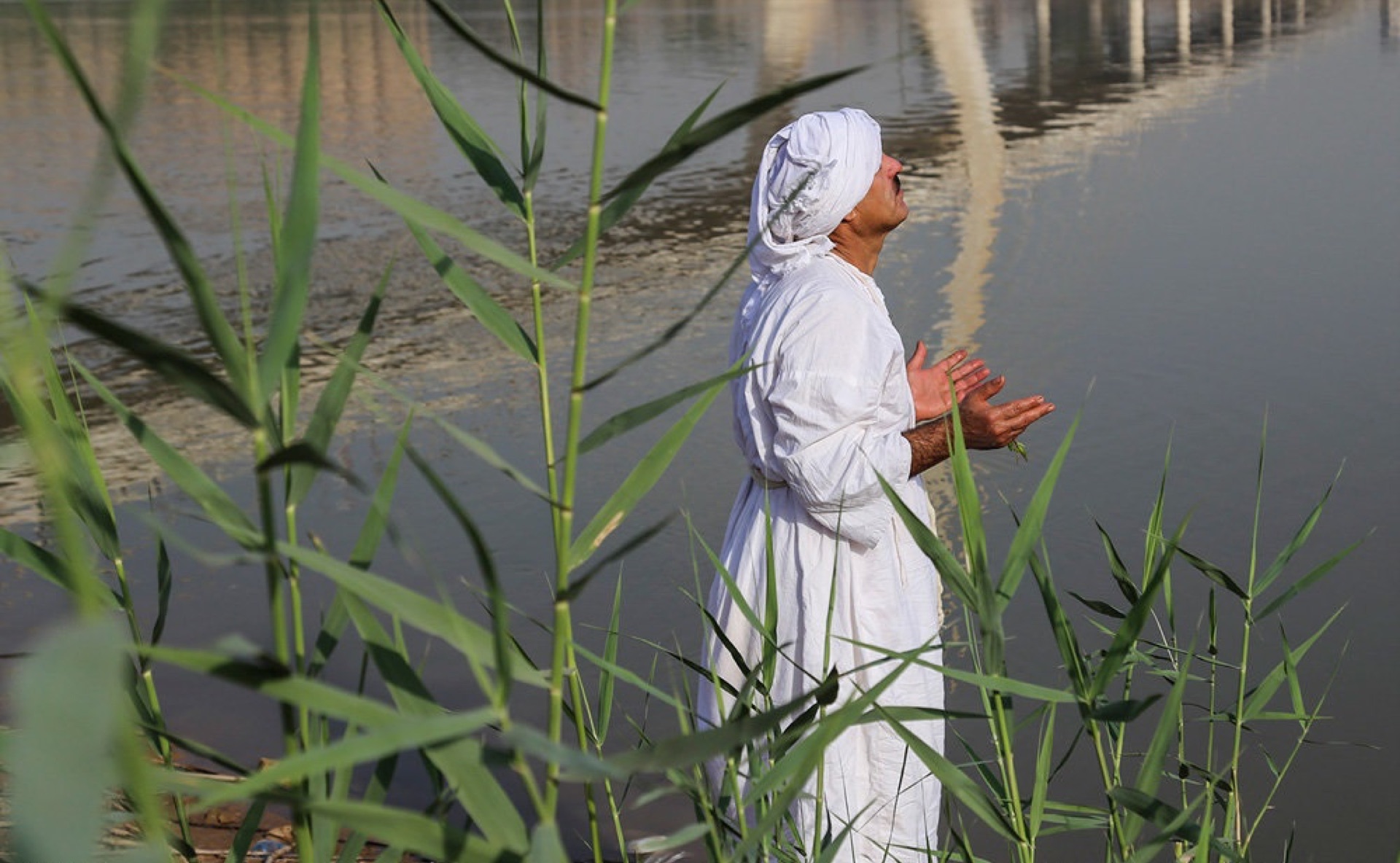
The guide on that road is water. Flowing water — yardna, living water — descends from the World of Light, and to enter it is to touch home: hence baptism not once but every Sunday, robed in white, from birth to the eve of death. The great teacher of the way is John the Baptist, honoured above Jesus; the scripture is the Ginza Rabba, “the Great Treasury,” written in Mandaic, an Aramaic dialect with its own luminous alphabet in which each letter is held to be a power.
Most scholars trace the community to Aramaic-speaking baptising sects of the Jordan valley in the first centuries AD, who migrated east to the Parthian rivers — which would make the Mandaeans the last unbroken thread of the baptist movement from which Christianity itself emerged. The faith is strictly pacifist — a Mandaean may not carry a weapon even in self-defence — and accepts no converts. Both principles, noble in peace, became fatal vulnerabilities in war.
What sets them apart
A faith with a river for an altar
Everything in Mandaean life bends toward water and light — and away from violence. No other living religion keeps these commitments in quite this combination.
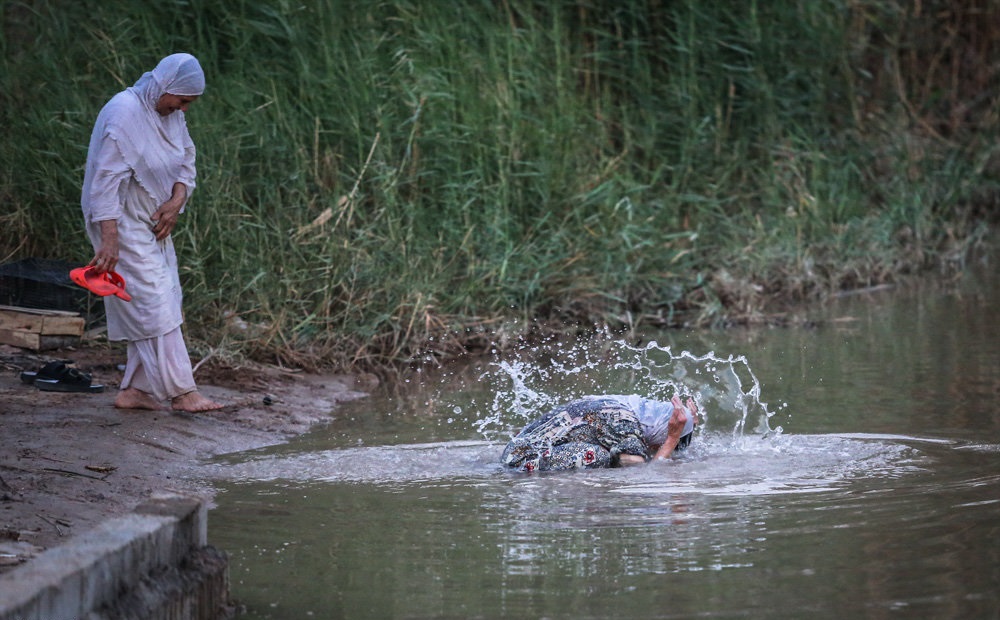
Weekly baptism
Masbuta is not a rite of entry but the standing rhythm of the faith: every Sunday, every believer, always in flowing water. Diaspora congregations consecrate cold northern rivers to keep it.
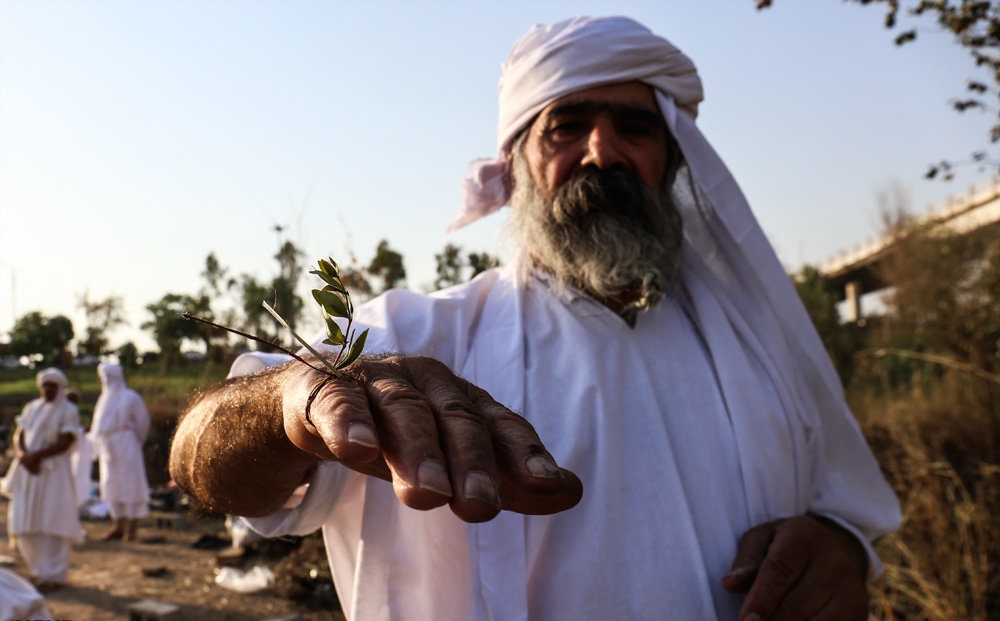
The drabsha
An olive-wood cross draped with white silk and myrtle raised at every ceremony — older than Christian symbolism in Mandaean use: the cloth is the light of the World of Light across the four directions.
Absolute pacifism
Carrying weapons is forbidden outright. Traditionally gold- and silversmiths instead — Baghdad's riverside jewellery quarter was largely Mandaean within living memory.
A priesthood of scribes
Tarmida and ganzibra priests must copy the scriptures by hand as part of initiation; the 1831 cholera killed every serving priest, and the line was rebuilt from two literate novices.
2003 — today
Two decades from homeland to diaspora
In 2003 nearly all the world's Mandaeans lived where they had always lived: Baghdad, Basra and the river towns, with the Ahvaz community across the border in Iran. Visible, prosperous and unarmed by creed, they were perfect targets when order collapsed. Kidnapping, forced conversion and murder emptied the community with astonishing speed: perhaps nine in ten Mandaeans have left Iraq since 2003.
Whole congregations reassembled in Sydney, Stockholm and Worcester, Massachusetts — cities where priests now consecrate rivers far colder than the Tigris, and where purpose-built indoor pools of flowing water keep the Sunday rhythm alive. Exile threatens what violence could not: dispersed and intermarrying, the community fears losing Mandaic, its thin priesthood, and the river-bound rhythm of its rites within a generation or two.
A faith that cannot fight, cannot convert, and cannot pray without a river.The three constraints that shaped Mandaean history
Geography
Where they live
The Mandaean river world: Baghdad to Basra on the Tigris–Euphrates, Ahvaz on the Karun.
Through time
Timeline
- 1st–2nd c. ADOrigins. Aramaic-speaking baptist sects migrate from the Jordan valley to the Parthian rivers.
- 3rd c.First persecution recorded. The Zoroastrian high priest Kartir lists the Mandaeans among faiths he suppressed.
- 16th c.“Christians of St John.” Portuguese missionaries meet the Mandaeans in Basra and misname them for their reverence of the Baptist.
- 1831The great cholera. An epidemic kills every serving priest; the faith is rebuilt from two literate novices.
- 1990sThe marshes drained. Saddam's campaign against the Marsh Arabs devastates the wetland world of the deep south.
- 2003–Exodus. Targeted kidnappings and killings drive ~90% of Iraqi Mandaeans abroad within a decade.
- TodayA river faith in exile. Sydney is now the largest Mandaean city on earth; UNESCO lists Mandaic as critically endangered.
A community redistributed
Estimated population
Iraq held ≈60,000 Mandaeans before 2003. The worldwide total is commonly given as 60,000–100,000, led by Australia and Sweden.
View as table
| Where | Estimate |
|---|---|
| Iran (Ahvaz & Khuzestan) | ≈8,000 |
| Iraq | ≈5,000 |
| Diaspora | ≈60,000 |
What they gave the region
Goldsmiths of the two rivers
For centuries 'Mandaean' and 'goldsmith' were near-synonyms in Iraq: Baghdad's river-facing jewellery quarter and Amarah's famous silver-niello work — black-inlaid scenes of marsh life prized across the Ottoman world — were community monopolies of skill. Mandaic scholarship also preserved a whole library late antiquity lost elsewhere: the Ginza and its sister texts are among the last living links to the Aramaic Gnostic world that once stretched from Egypt to Persia.
Baptism itself may be the deepest gift: the Mandaeans keep, in unbroken practice, the river-rite world from which John the Baptist stepped into history.
Looking forward
Can a river faith survive without its river?
The community's future is a diaspora experiment. Sydney, Stockholm and Worcester now hold the majority, consecrating rivers and building purpose-built mandis with piped 'living water'; a new generation of priests is being trained abroad for the first time in the faith's history. In Iraq and Iran, small protected communities persist, and Iraq's constitution at least names them.
Everything turns on transmission: Mandaic classes online, digitised scrolls, and the question of whether a faith that cannot convert can loosen endogamy without dissolving. The Mandaeans have rebuilt from a two-novice bottleneck before; their scripture calls the soul a light that finds its way home.
The emblem
The drabsha
Two olive branches bound in a cross, draped with white silk and crowned with myrtle: the drabsha is raised on the riverbank at every baptism. Despite its shape it predates Christian symbolism in Mandaean use — the cloth is the light of the world of light, falling across the four directions.