Legend & origins
A pearl, a peacock, and the birth of the world
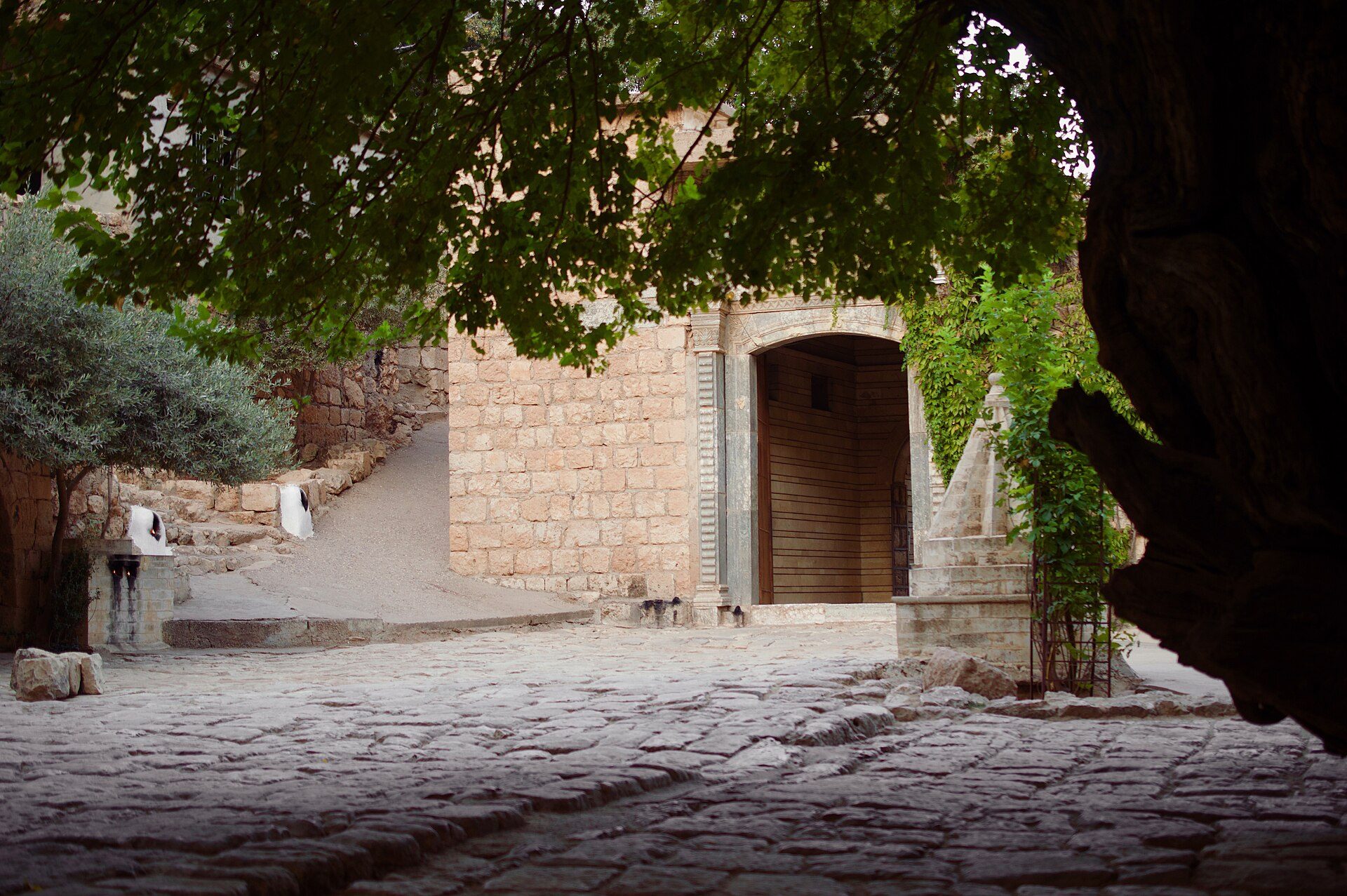
Before the world existed, Yazidi tradition says, God created a pearl, and for forty thousand years it lay in the sea of eternity. When it shattered, the world poured out of it — and the first place its colours touched was the valley of Lalish.
God entrusted the world to seven angels, chief among them Tawûsî Melek, the Peacock Angel, who refused to bow to Adam — not out of pride, Yazidis insist, but out of perfect devotion to God alone. Where outsiders read a fallen angel into this story, Yazidis see the opposite: an angel who passed God's test. That misreading became the ancient slander of “devil-worship” — repeated by Ottoman pashas and revived by ISIS — that has shadowed the community for centuries.
The faith as it exists today took shape in the 12th century, when the Sufi mystic Sheikh Adi ibn Musafir settled at Lalish and his teaching fused with far older Iranian tradition. There is no scripture to convert by and no conversion at all: one is born Yazidi or one is not, within a strict lattice of castes — sheikhs, pirs and murids — that may not intermarry.
What sets them apart
A religion of thresholds and lamps
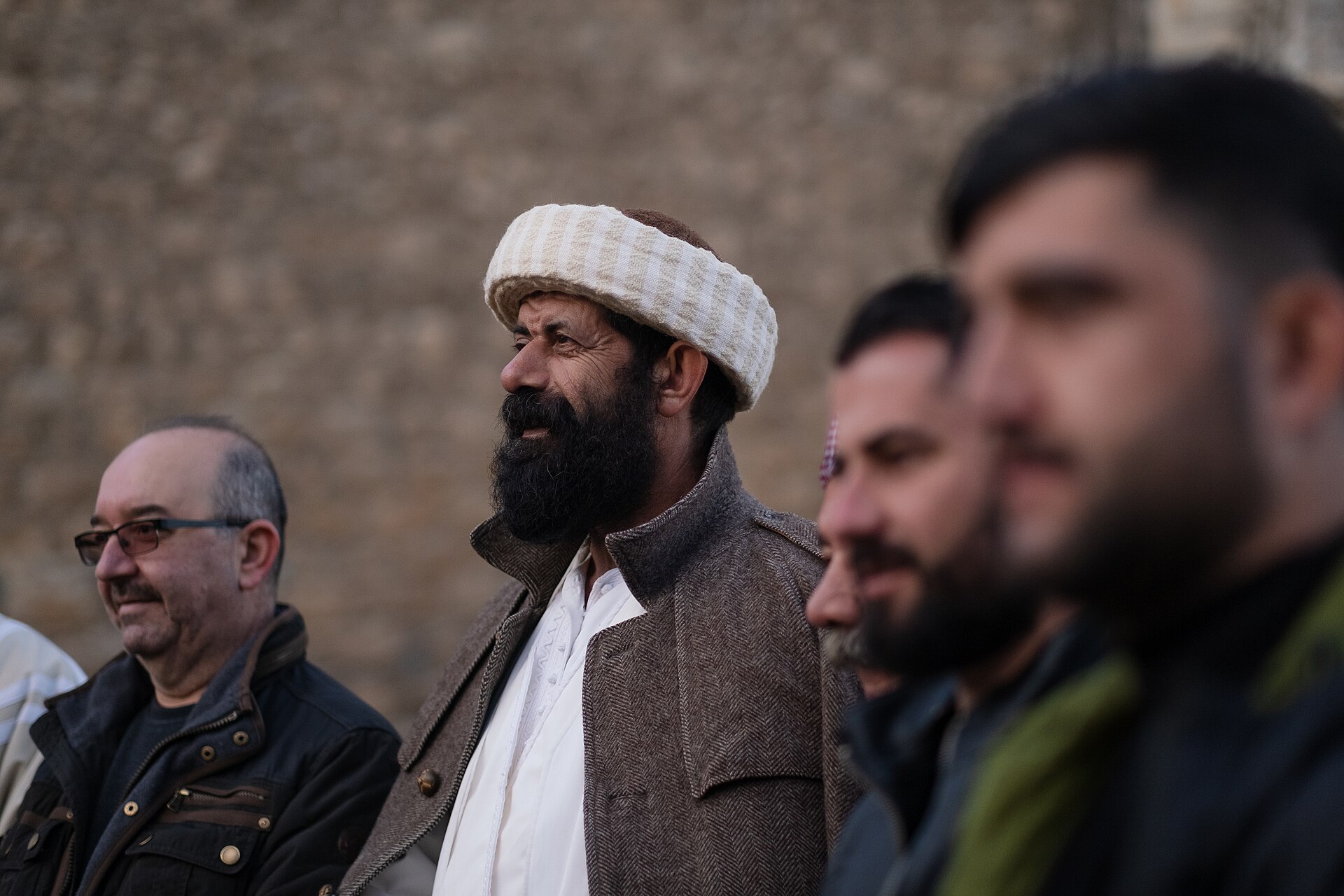
Yazidism is an oral religion of practice — of places honoured, thresholds respected, fires kept. Its distinctiveness lives in daily gestures more than doctrine.
365 lamps of Lalish
Each evening wicks are lit across the sanctuary from olive oil pressed in the valley itself — one flame for every day of the year, tended by families who hold the duty by inheritance.
Barefoot pilgrimage
Every Yazidi should reach Lalish once in life. Pilgrims enter barefoot and step over — never on — the sanctuary's thresholds; knotted cloths inside hold the wishes of strangers, each knot untied releasing another's wish.
The sun and Wednesday
Yazidis pray facing the sun, morning and evening; Wednesday is the holy day, and April's Red Wednesday marks the world's birthday with dyed eggs and torchlight.
Caste and rebirth
Society divides into sheikhs, pirs and murids, which may not intermarry, and souls are believed to return — the community regenerating itself across lifetimes, which is why leaving the faith is felt as leaving the people.
3 August 2014
Sinjar
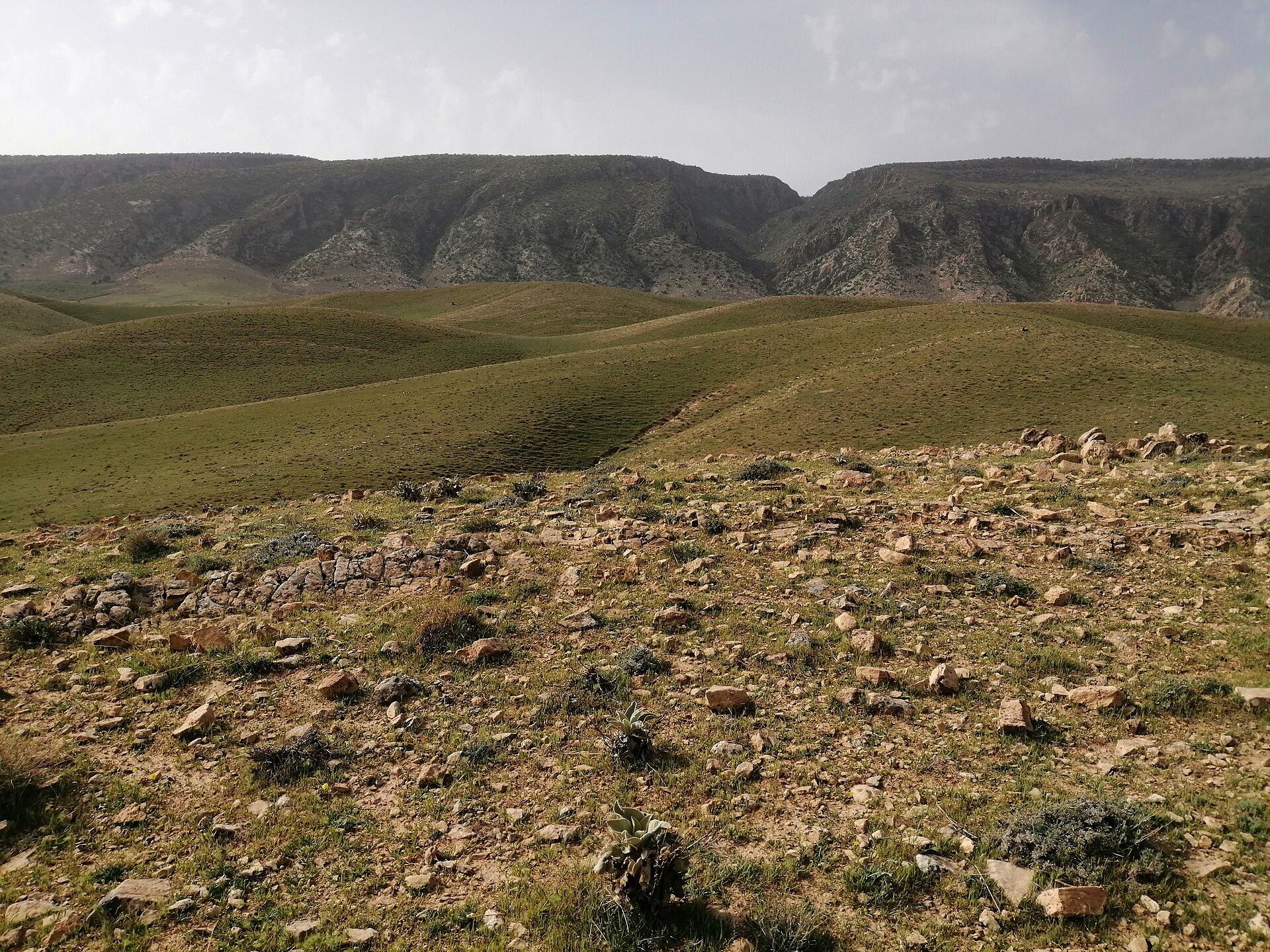
When ISIS overran the Sinjar district in a single day, the community's oldest fear returned in modern form. Roughly 5,000 Yazidis were killed and more than 6,000 women and children were abducted into slavery; some 2,700 remain missing. Tens of thousands fled up Mount Sinjar without water, in August heat, encircled at the summit.
The United Nations and numerous parliaments recognised the campaign as genocide — the 74th persecution, in the community's own counting. A decade on, most of Sinjar's Yazidis still live in displacement camps in the Kurdistan Region; the town remains contested between armed factions and reconstruction has barely begun.
In 2018 Nadia Murad, survivor of the Kocho massacre, received the Nobel Peace Prize for her testimony — the first Iraqi so honoured.
Seventy-four times, our elders say, someone has tried to end us.The firmans — the counted persecutions of Yazidi memory
Geography
Where they live
Yazidi settlement, redrawn after Michael Izady's Gulf/2000 ethnographic cartography (Columbia University; used with permission) and current displacement reporting. Shaded fields mark settlement concentrations, not boundaries; the Armenian and Georgian communities lie beyond this frame.
Through time
Timeline
- 12th centurySheikh Adi settles at Lalish. The Sufi mystic's teaching fuses with older Iranian tradition; his tomb becomes the faith's holiest place.
- 16th–19th c.The firmans. Successive Ottoman and tribal campaigns against the “devil-worshipper” slander devastate Yazidi districts; community memory counts 72 persecutions before the modern era.
- 2007The Qahtaniya bombings. Four coordinated truck bombs kill nearly 800 Yazidis near Sinjar — one of the deadliest terrorist attacks in history.
- 3 Aug 2014The Sinjar genocide. ISIS kills ~5,000, enslaves thousands of women and children, and displaces the entire district.
- 2018Nadia Murad wins the Nobel Peace Prize for her advocacy for survivors of sexual violence in war.
- TodayAn uncertain return. Some 200,000 remain displaced; Germany hosts the largest diaspora, and Lalish still lights its lamps every evening.
Where Yazidis live
Estimated population
Estimates from community organisations and minority-rights reporting, 2020s. The diaspora — Germany above all, plus older communities in Armenia, Georgia and Russia — now approaches the homeland in size.
View as table
| Where | Estimate |
|---|---|
| Iraq | ≈500,000 |
| Syria | ≈10,000 |
| Turkey | ≈5,000 |
| Diaspora | ≈290,000 |
What they gave the region
Keepers of the oldest songbook
Because Yazidism is oral, its qewwals — hereditary reciter-musicians with frame drum and flute — carry one of the region's oldest continuous sacred repertoires, now studied by musicologists as a fossil record of Mesopotamian religious song. Yazidi shrine architecture, with its fluted conical spires, gave northern Iraq's landscape one of its most distinctive silhouettes; and the community's spring festival tradition — dyed eggs, new fires, the world's birthday — preserves rites that echo far beyond its own villages.
Yazidi memory has also become a moral resource for the whole region: Nadia Murad's testimony turned a small community's catastrophe into international law's clearest modern genocide case, and gave all of Iraq's minorities a vocabulary for justice.
Looking forward
Return, or a homeland in Germany?
The community's future hangs on Sinjar. If its reconstruction and demilitarisation ever materialise, a homeland rebuilds; if not, the centre of Yazidi gravity keeps shifting toward Germany, where a community 200,000 strong is building temples, archives and a diaspora public life the homeland never allowed. Baba Sheikh and Lalish still anchor the faith, and cautious reforms — readmitting survivors of ISIS captivity, once unthinkable under purity law — show a tradition bending to survive.
The demographic race is real but not lost: Yazidi birth rates are high, the young are organised, and the sanctuary has outlived seventy-four persecutions. The seventy-fifth chapter, for once, may be written by Yazidis themselves.
The emblem
The spire of Lalish
For the Yazidis the emblem is the fluted cone of Lalish — twelve ridges of sun-baked stone rising to a gilded finial, said to catch the first ray of the morning sun. The spire appears wherever Yazidis build: a shape that means home.