Legend & origins
Hayk's arrow and Ararat's ark
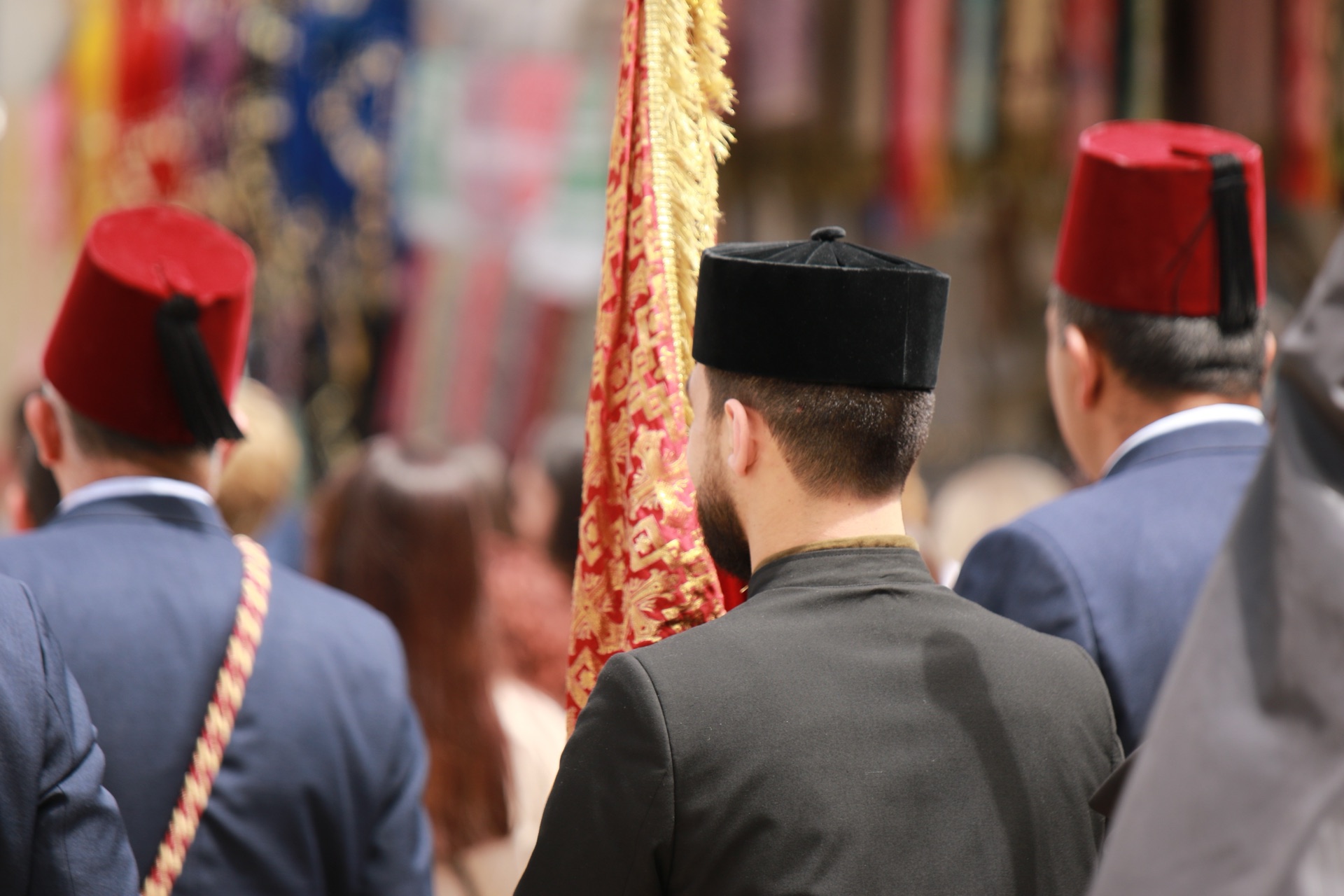
Armenian legend begins with an arrow: the giant Hayk, refusing tyranny in Babylon, marched his household north to the mountains and felled the tyrant Bel with a single shot. His people call themselves Hay and their land Hayastan to this day — and above it stands Ararat, where the ark came to rest.
History made the legend's mountain-refuge literal. In 301 AD, tradition holds, Gregory the Illuminator converted King Tiridates III, and Armenia became the first state to adopt Christianity — a decision that welded faith to nationhood permanently. A century later the monk Mesrop Mashtots invented the Armenian alphabet expressly to translate scripture; the letters themselves are venerated, and calligraphy remains a national art.
For two millennia Armenians were also the Middle East's connective tissue: merchants of New Julfa financing Safavid Persia, architects and photographers of Ottoman Istanbul, printers of Aleppo — a quarter in every city from Smyrna to Isfahan. It was that entire world, not only a homeland, that 1915 destroyed.
What sets them apart
A nation held together by an alphabet
Scattered for centuries, Armenians built portable institutions — script, church, school, press — that could survive anywhere and forget nothing.
The alphabet as relic
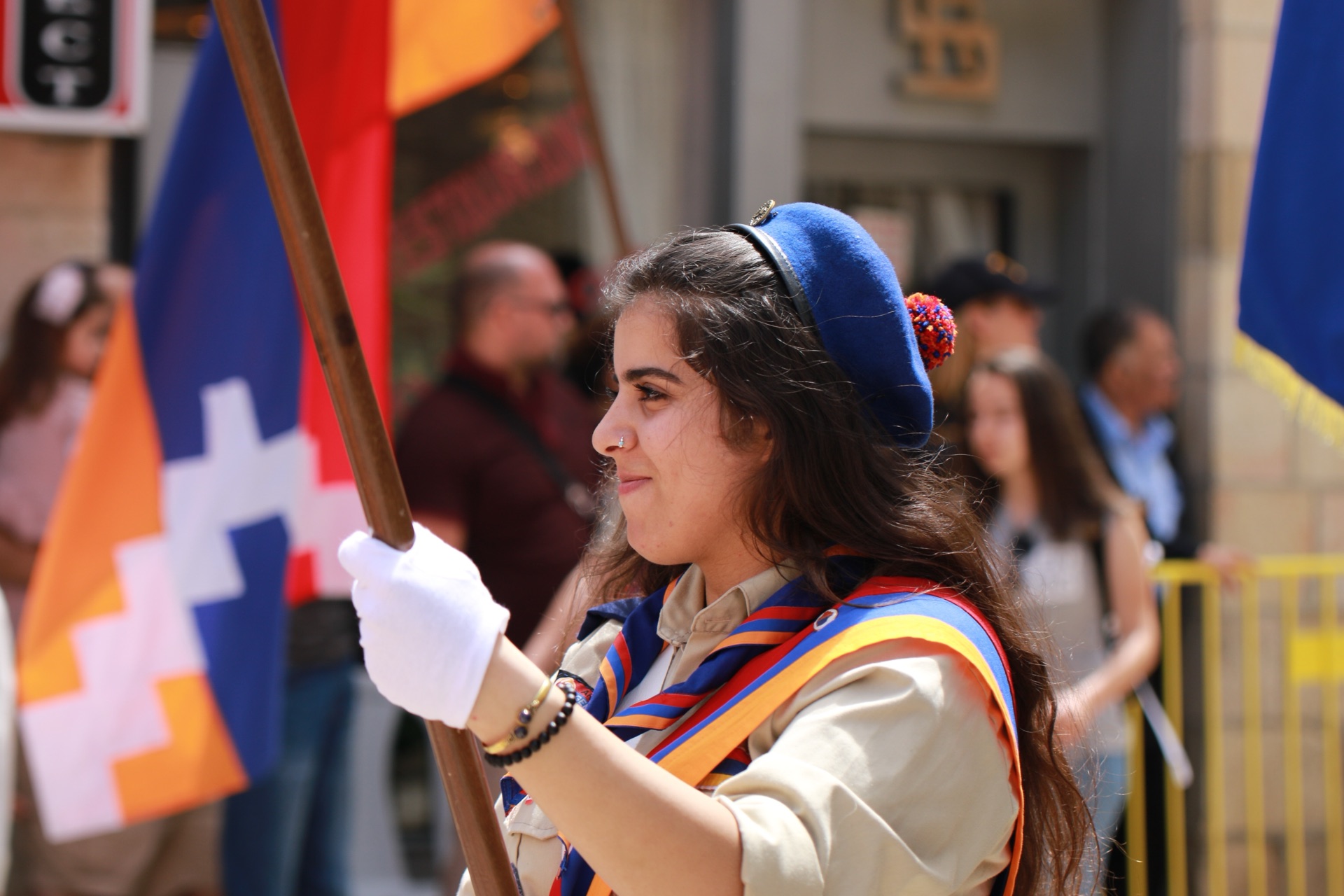
Mesrop's 38 letters, invented in 405 AD for scripture, are treated with a reverence other nations give to flags; 'Translator's Day' is a church feast, and diaspora schools exist above all to transmit the script.
Four hierarchies, one church
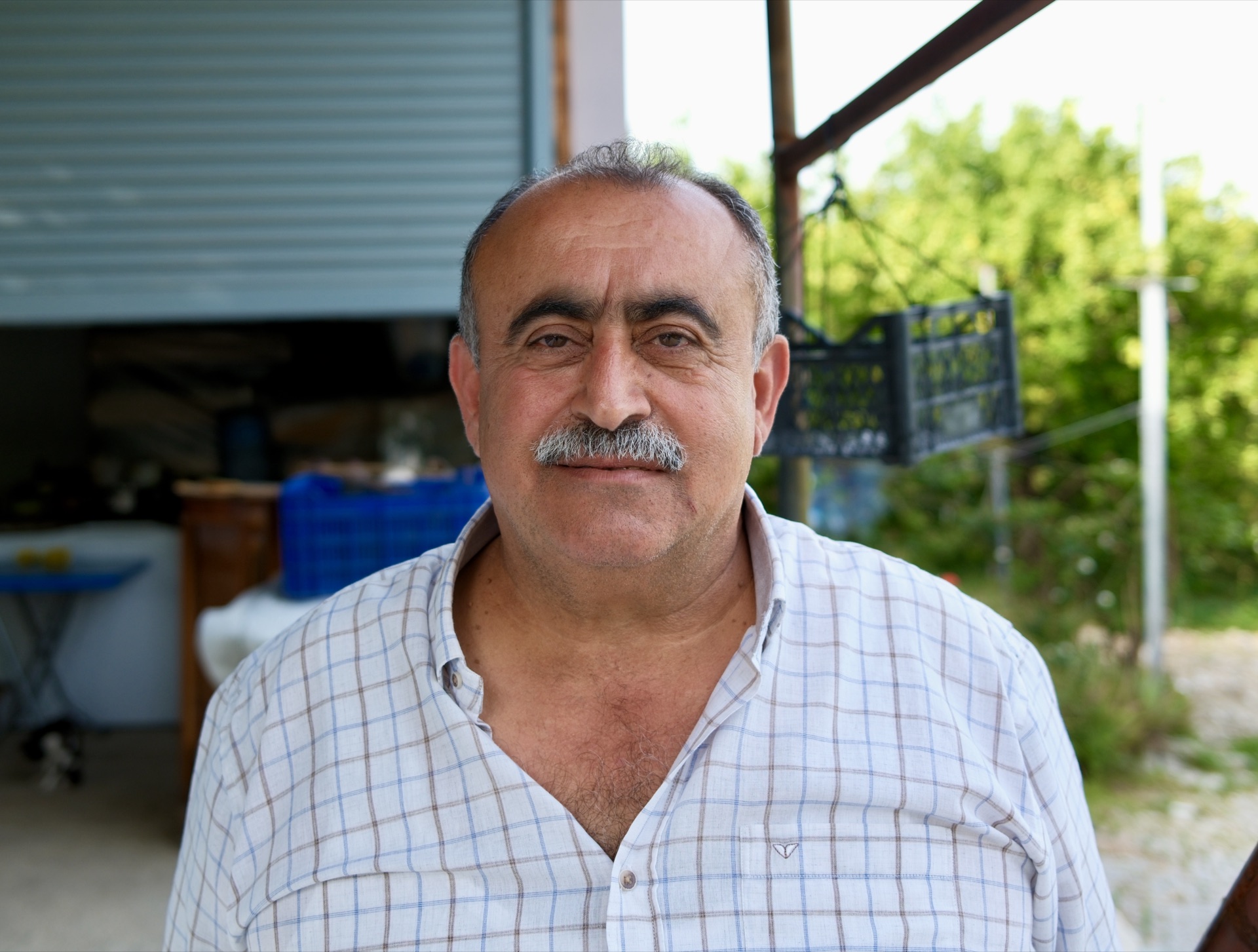
The Apostolic Church runs on a geography of exile: catholicosates at Etchmiadzin and in Lebanon (Antelias), patriarchates in Jerusalem and Istanbul — a structure that maps the community's history of dispersion.
Khachkars
The carved cross-stones — no two alike, UNESCO-listed — mark Armenian presence from Isfahan to Jerusalem: memory made permanent in stone lacework.
April 24
The date of the 1915 arrests of Istanbul's Armenian intellectuals is the diaspora's binding commemoration — the day every community, however small, gathers.
1915 — today
After the catastrophe, the communities
The genocide of 1915–23 killed as many as 1.5 million Armenians and emptied Anatolia of a three-thousand-year presence. The survivors' routes became today's map: death marches ended at Aleppo, so Aleppo became the diaspora's mother city; French Mandate resettlement built Bourj Hammoud in Beirut; older communities in Iran, Jerusalem and Istanbul absorbed what remained. Each has since lived its host country's history — Lebanon's civil war, Iran's revolution, and in Syria after 2011 the destruction of Aleppo's Armenian quarter, which halved the region's most historic community in a decade.
Turkey's remaining Armenians — some 60,000, almost all in Istanbul — negotiate the hardest position: heirs of the catastrophe living in the state that denies it, a tension made lethal by the 2007 assassination of editor Hrant Dink, whose funeral drew a hundred thousand Turks chanting 'We are all Armenians.' In Jerusalem, a community of under 2,000 defends its quarter — a quarter of the Old City — against property deals and political pressure. Small numbers everywhere; institutions, everywhere, far larger than the numbers.
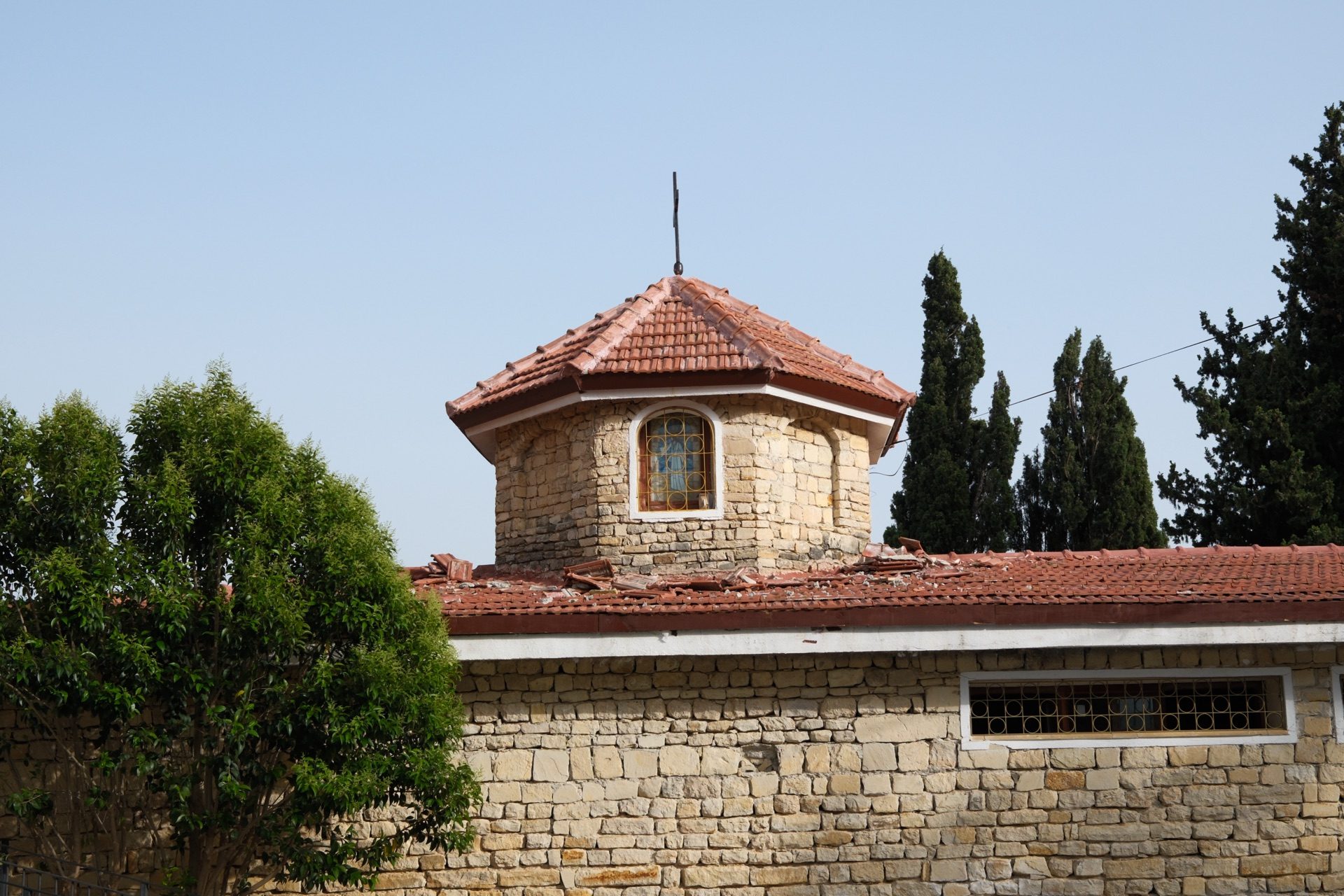
We are all Hrant Dink. We are all Armenians.Chanted by 100,000 mourners, Istanbul, January 2007
Geography
Where they live
The Armenian communities of the Middle East — remnants and resettlements of the world that existed before 1915.
Through time
Timeline
- 301 ADThe first Christian nation. Gregory the Illuminator converts King Tiridates III; faith and nation fuse.
- 405The alphabet. Mesrop Mashtots creates the Armenian script; the 'golden age' of translation follows.
- 1604New Julfa. Shah Abbas transplants Julfa's merchants to Isfahan; Armenian trade networks span Amsterdam to Manila.
- 1915The genocide. Up to 1.5 million killed; the Armenian world of Anatolia is annihilated.
- 1920s–40sRebuilding in exile. Aleppo, Beirut, Jerusalem and Tehran absorb the survivors; schools and presses reopen within years.
- 2007Hrant Dink assassinated. The Istanbul editor's murder galvanises Turkish–Armenian reckoning — and its limits.
- 2011–Syria's war. Aleppo's historic community is halved; many flee to Armenia itself — diaspora reversing into homeland.
- TodaySmall numbers, large presence. ≈250,000 across the region sustain churches, schools and quarters far older than the states around them.
The communities that remain
Estimated population
Middle East figures are community estimates after a decade of Syrian war losses. The worldwide nation — Armenia (~3 m) plus the global diaspora — approaches 9–10 million.
View as table
| Where | Estimate |
|---|---|
| Lebanon | ≈100,000 |
| Iran | ≈70,000 |
| Türkiye | ≈60,000 |
| Syria | ≈30,000 |
| Jerusalem & Palestine | ≈2,000 |
| Diaspora & Armenia | ≈9 million |
What they gave the region
Builders of everyone's cities
The Armenian gift to the region is its urban fabric. Ottoman Istanbul's imperial architecture is substantially Armenian — the Balyan dynasty built Dolmabahçe Palace itself; the region's photography was pioneered by Armenians (the Abdullah Frères were court photographers to the sultans); Aleppo's fabled cuisine owes its sujuk and its kebab refinements to Armenian kitchens; and from Beirut's jewellers to Tehran's cafés (Iran's first, Armenian-run), the community set standards of craft that outlived every catastrophe.
Armenian presses printed the Middle East's first books in half a dozen languages; Jerusalem's Armenian ceramics tile the Old City's most beloved walls.
Looking forward
Small communities, long leases
The region's Armenian future is one of consolidation: Lebanon's community shrinks with Lebanon itself but keeps its schools and catholicosate; Istanbul's institutions hold steady behind Turkey's glacial normalisation politics; Iran's community remains protected and quietly prosperous. Jerusalem's quarter fights property battles that will decide whether a 1,600-year presence keeps its ground.
The open question is circulation: Armenia's independence gave every diaspora community a second pole, and wars there pull loyalty and money homeward. What endures is the pattern the catastrophe taught — institutions first, numbers second, memory always.
The emblem
The arevakhach
The arevakhach — 'sun-cross', the wheel of eternity with its curving rays — spins on khachkars, church walls and manuscript margins from the Middle Ages to today: the Armenian signature of endless return.