Legend & origins
Forty souls in one room
Alevi legend tells of the Meeting of the Forty — Kırklar Cemi — where Muhammad, returning from his night journey, was admitted to a gathering of forty souls only when he entered not as Prophet but as one of them. Ali was there; a single grape was pressed, all forty drank, and all rose to whirl in ecstasy.
Every cem — the Alevi worship gathering — re-enacts that room: no hierarchy at the door, men and women together, music where others put scripture, and the semah whirl at its heart. The tradition crystallised in medieval Anatolia around the saint Haci Bektash Veli, whose lodge blended Sufi mysticism, Twelver reverence for Ali and the Imams, and older Anatolian and Central Asian currents into something permanently its own.
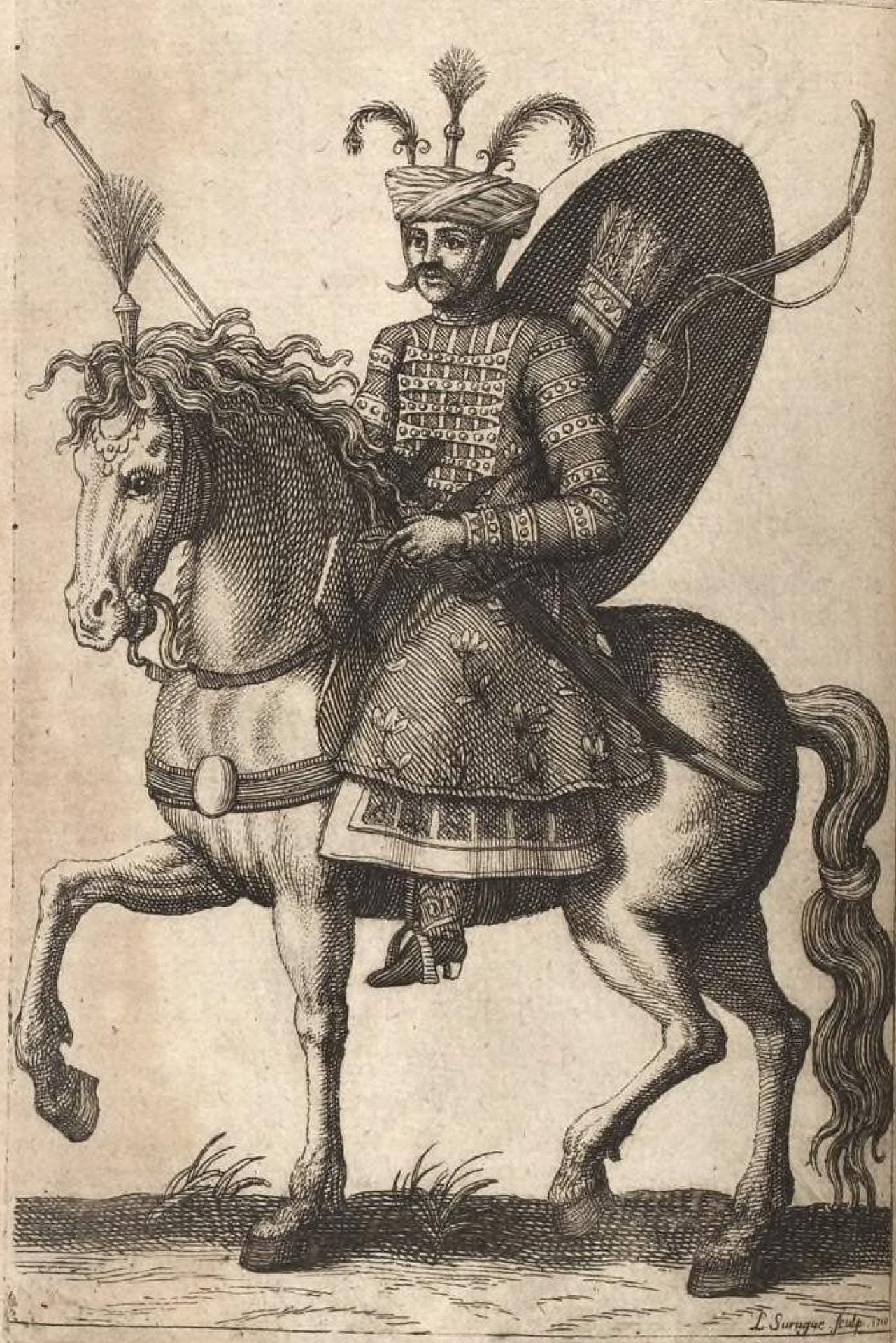
The tradition's formative crucible was the Qizilbash movement: the crimson-capped Turkoman devotees who carried Shah Ismail's Safavid revolution in 1501. When the Ottoman–Safavid wars closed the border, Anatolia's Qizilbash were stranded on the wrong side — and Ottoman orthodoxy treated them as a fifth column of Persia; massacre and forced conversion drove Alevism into the mountains and into secrecy, where villages replaced mosques with the cem house and clerics with hereditary dede lineages. Centuries of dissimulation made discretion itself a Alevi institution.
What sets them apart
Worship without a mosque
Alevism keeps the outer forms of Islam at arm's length — no mosque attendance, no Ramadan fast, no hajj — and pours everything into its own vessel: the cem.
The cem and the dede
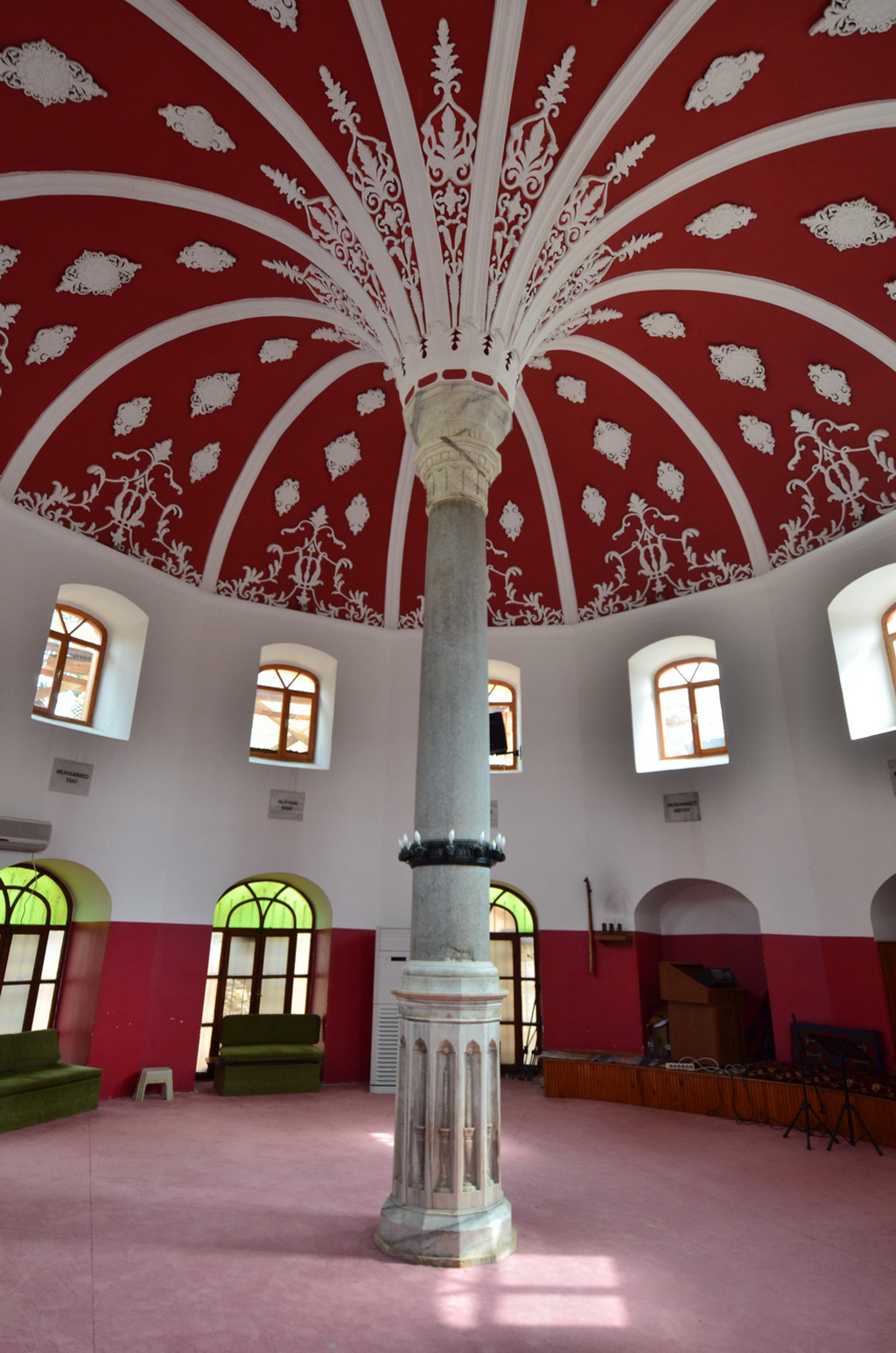
Worship is a seated circle under a hereditary spiritual guide; before prayer can begin, disputes in the community must be aired and resolved — a court of conscience built into the liturgy.
The saz as scripture
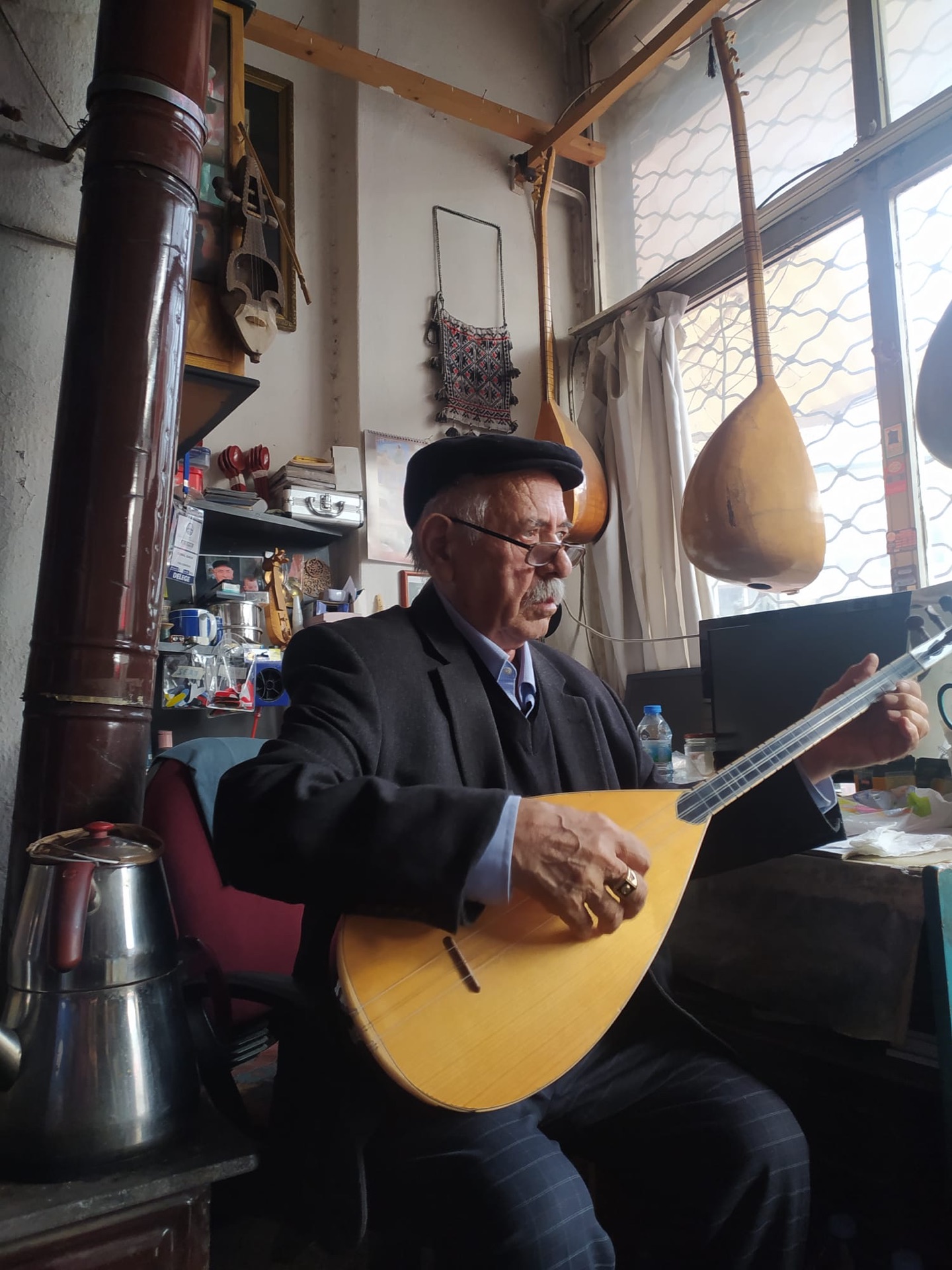
The long-necked bağlama carries the deyiş — hymns of Pir Sultan Abdal, Şah Hatayi and the seven great bards; Alevis say the instrument itself is “the stringed Qur'an.”
Semah
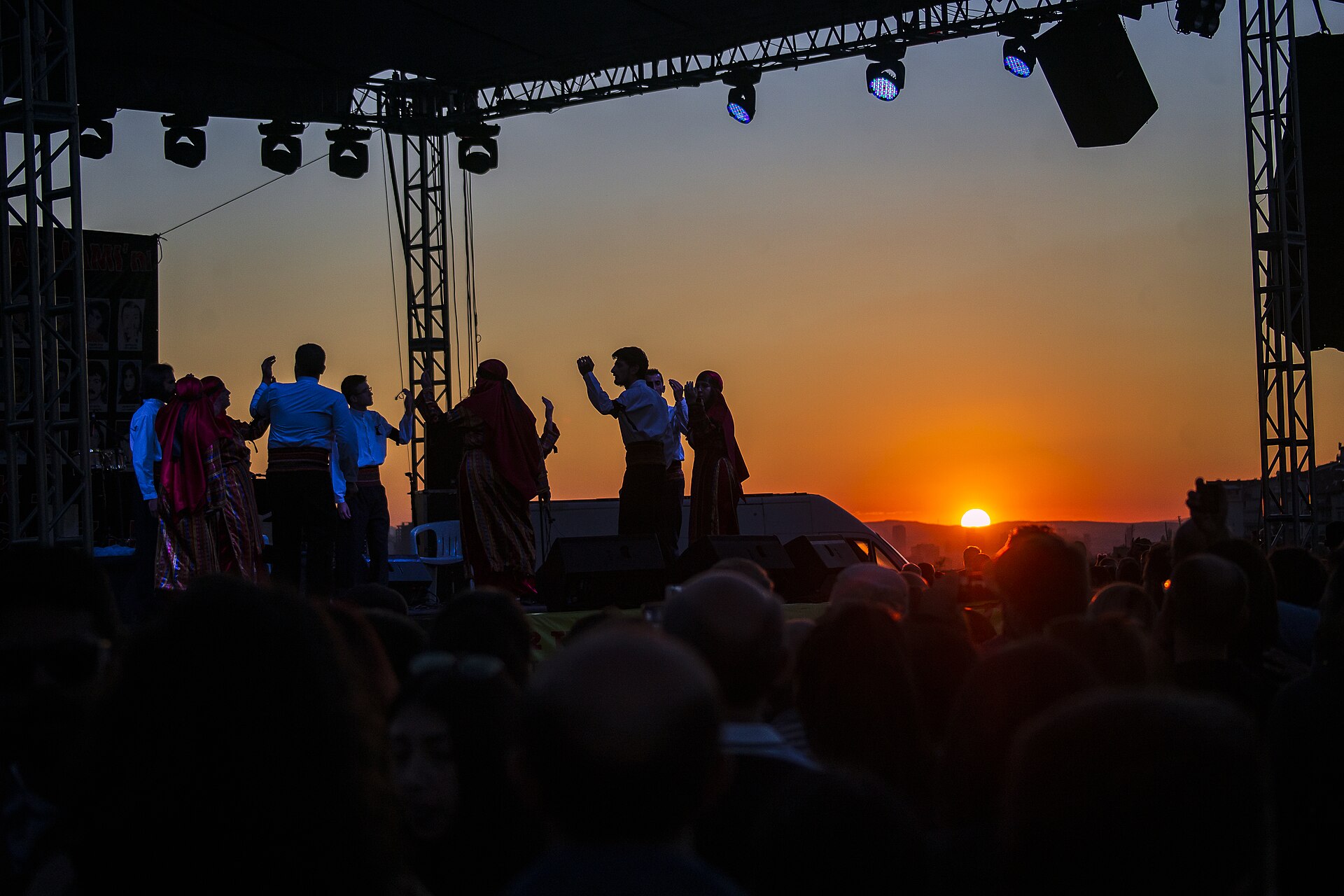
The whirling of women and men together, cranes turning toward truth — banned, mocked, and now the most beloved public symbol of Alevi identity.
Muharrem and Hızır
Twelve days of mourning fast for the Imams and Kerbela; and the midwinter days of Hızır, the deathless helper — the calendar's two poles of grief and hope.
1937 — today
Dersim, Sivas, and the unfinished file
The republic that promised secular equality delivered new wounds: the Dersim operations of 1937–38 killed more than ten thousand Alevi Kurds and Zazas and scattered the survivors; the name itself was erased to Tunceli. Pogroms at Maraş (1978) and Çorum (1980) targeted Alevi neighbourhoods; in 1993, at Sivas, an Islamist mob burned the Madımak hotel during an Alevi cultural festival, killing 35 — on camera, over eight hours, while security forces stood by. Every Alevi demand since carries that footage inside it.
The demands themselves are startlingly modest: legal recognition of the cemevi as a house of worship, an end to compulsory Sunni religion classes, and honesty about the past. Successive governments have offered “openings” and museums; the constitutional status has not moved. Meanwhile migration has made Istanbul, Ankara and Izmir — and Berlin and Cologne — the real capitals of Alevi life, where associations, festivals and satellite channels do what the state will not: keep the cem lit.
Whatever you seek, seek it in yourself — not in Jerusalem, not in Mecca.Haci Bektash Veli, 13th century
Geography
Where they live
The Alevi geography of Anatolia: a mountain heartland and a migrated urban majority. Alevism spans Turkish, Zaza and Kurmanji speakers.
Through time
Timeline
- 13th centuryHaci Bektash Veli. The saint's lodge at Sulucakarahöyük becomes the tradition's anchor; Anatolian Islam takes its heterodox turn.
- 16th centuryThe Kızılbaş persecutions. Ottoman–Safavid war makes Anatolia's Alevis suspects; massacres drive the faith underground.
- 1826The Bektashi ban. The order tied to the destroyed Janissaries is outlawed; lodges close or go quiet.
- 1937–38Dersim. Aerial bombing and deportation kill 10,000+ in the Alevi Kurdish mountains; the name is erased from the map.
- 1978–80Maraş and Çorum. Nationalist pogroms kill hundreds in Alevi quarters.
- 1993The Sivas massacre. 35 die in the Madımak hotel fire; the trial's amnesties become a second wound.
- TodayRecognition pending. Cemevis serve millions without legal status; the European diaspora funds and broadcasts the revival.
Anatolia's second confession
Estimated population
No Turkish census asks; estimates span 10–20 million (10–25% of the population), spanning Turkish, Zaza and Kurmanji speakers. Germany hosts the largest diaspora, with Alevism officially recognised in several federal states.
View as table
| Where | Estimate |
|---|---|
| Türkiye | ≈12 million |
| Diaspora | ≈1.3 million |
What they gave the region
Turkey's conscience and its soundtrack
Strip Alevi contributions from Turkish culture and half the songbook goes silent: the aşık tradition of Pir Sultan Abdal and Karacaoğlan, the bağlama itself, and modern voices from Âşık Veysel to the protest bards of the 1970s are all Alevi bequests. The semah shaped Turkish stage dance; Bektashi humour — the wry, authority-puncturing Bektashi joke — is a national genre; and Hacı Bektaş's 'whatever you seek, seek it in yourself' became every Turkish schoolchild's one line of mysticism.
Politically, Alevis have been republican Turkey's most reliable constituency for secularism and pluralism — the community with the most to lose when either fails.
Looking forward
The cemevi question
Alevism's future runs through one word: recognition. Legal status for cemevis, an end to compulsory Sunni religion classes, and honesty about Dersim and Sivas remain the unmoved agenda; each election cycle brings 'openings' that stall. Meanwhile the community modernises itself: urban cemevis run like congregations, dede training becomes formal education, and Germany — where Alevism is a recognised religion taught in state schools — exports standards home.
Assimilation is the quieter risk: intermarriage and secular drift thin the villages' knowledge. But a tradition that survived four centuries underground knows how to wait — and the saz keeps recruiting.
The emblem
The twelve-rayed star
Twelve for the Twelve Imams: the teslim taşı, the twelve-fluted stone medallion worn by Bektashi initiates, is Alevism's oldest badge. The circle at its heart is the cem itself — the community facing inward, complete.