The road
Two teas, ten conversations, thirty rejections
From Dohuk in northern Iraq I set out for Lalish, the holiest place on earth for the Yazidis. Up to now I had only known this minority from the news — and unfortunately not in a good way.
Yazidis are neither Muslim nor Christian. So who are they exactly? Extremists call them devil worshippers — where on earth does that idea come from? And more importantly: how are they doing now? Is Yazidi morale broken after the horrors of only five years ago? Would I find any joy left at all, any hope?
Getting a ride out of central Dohuk turns out to be tricky. Fifteen minutes of walking, they tell me, and I would reach a decent spot to start hitchhiking. But Google Maps' travel times do not apply in Iraq. Every ten metres someone stops you out of curiosity, or a huddle of tea-drinking men waves you over for a glass. Two teas, ten conversations, thirty rejections and forty-five minutes later, I finally make it to a good place to stick out my thumb.
The lift
A rifle under the passenger seat
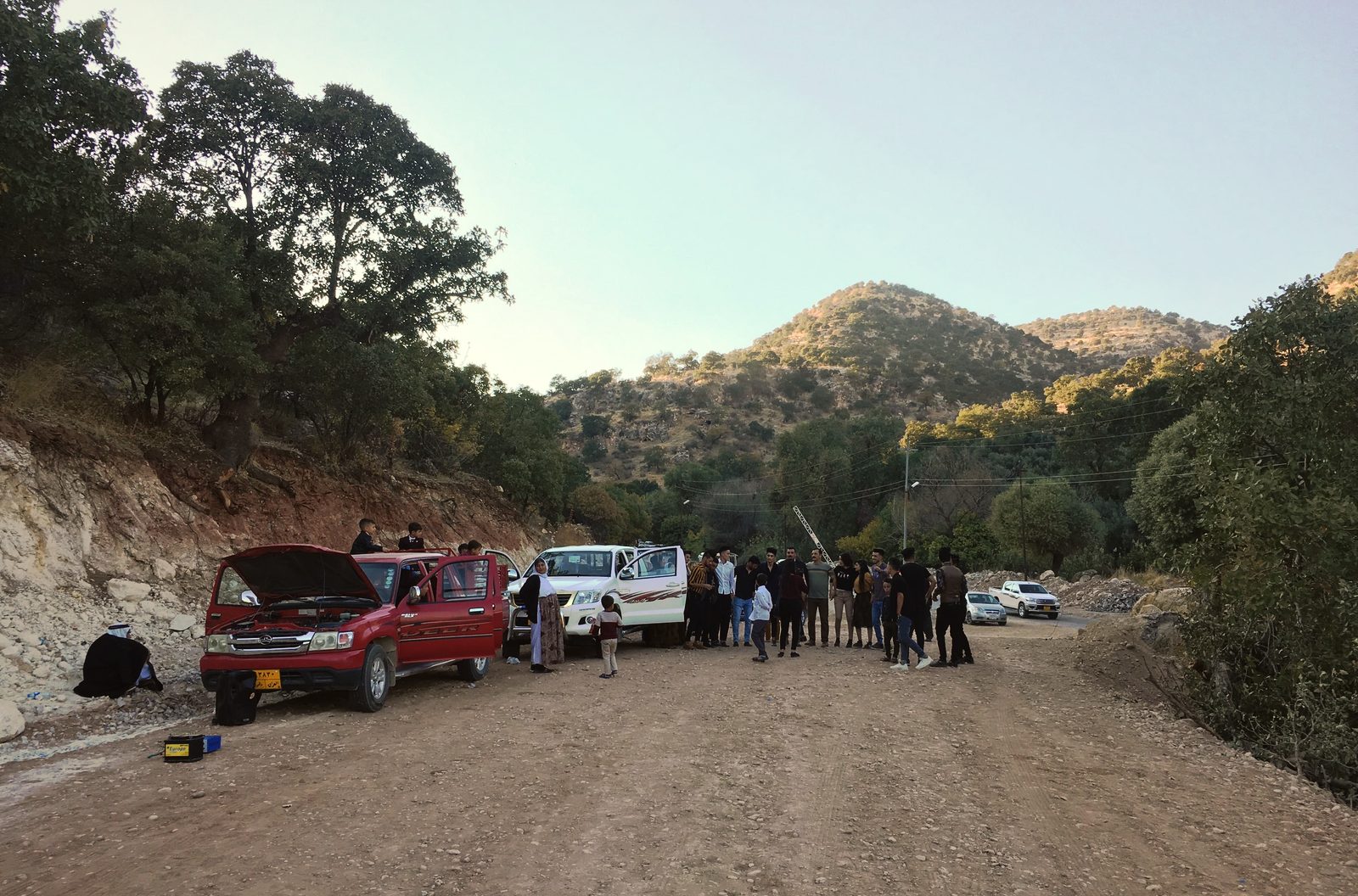
As usual in Iraq, I don't have to wait long. The first car pulls over within minutes. We introduce ourselves while I make room for my feet — and as I shove some object aside with my boot, I discover it is a folded-up rifle. “Peshmerga?” I ask the man. He nods. Back in the Netherlands I might get nervous about people carrying weapons in the car. Here in Iraq, you are rather relieved when the good guys have one within reach.
He speaks barely any English, so we hold an improvised conversation with hands and feet — an art I have become quite skilled at by now. “Where to?” he asks. “Lalish,” I answer. “Ok,” he says. A matter-of-fact confirmation that he is going to take me there, even though it turns out to mean a half-hour detour.
Kurdistan, late afternoon
Oil fields and checkpoints
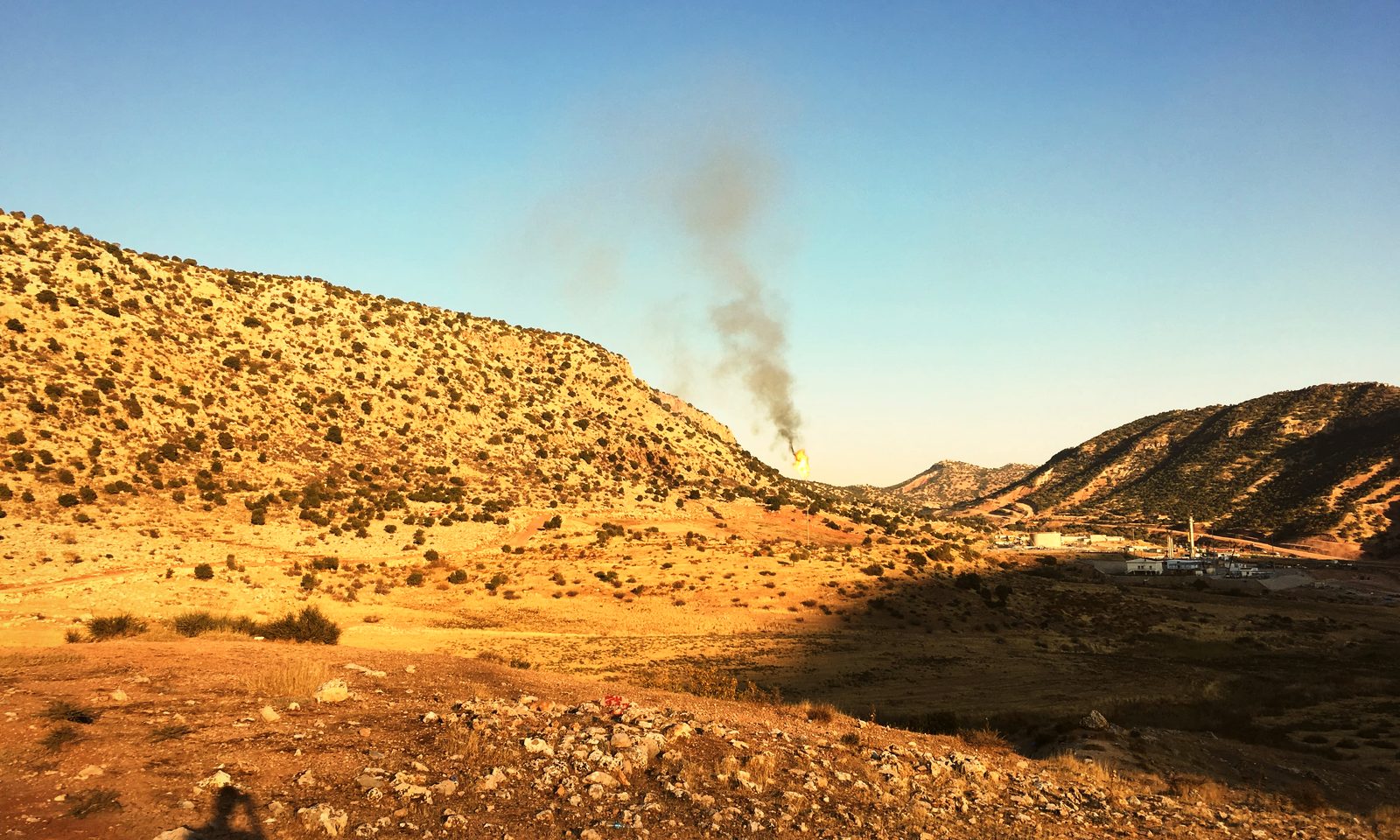
The road runs out past the last of Dohuk's suburbs, into hills the colour of beaten brass. Gas flares stand burning over the fields; Peshmerga checkpoints wave us through with a hand out of the window. This is the landscape the Yazidis have lived in for as long as anyone can remember — dry, folded, mineral. And until very recently, a front line.
Arrival
The fluted cones
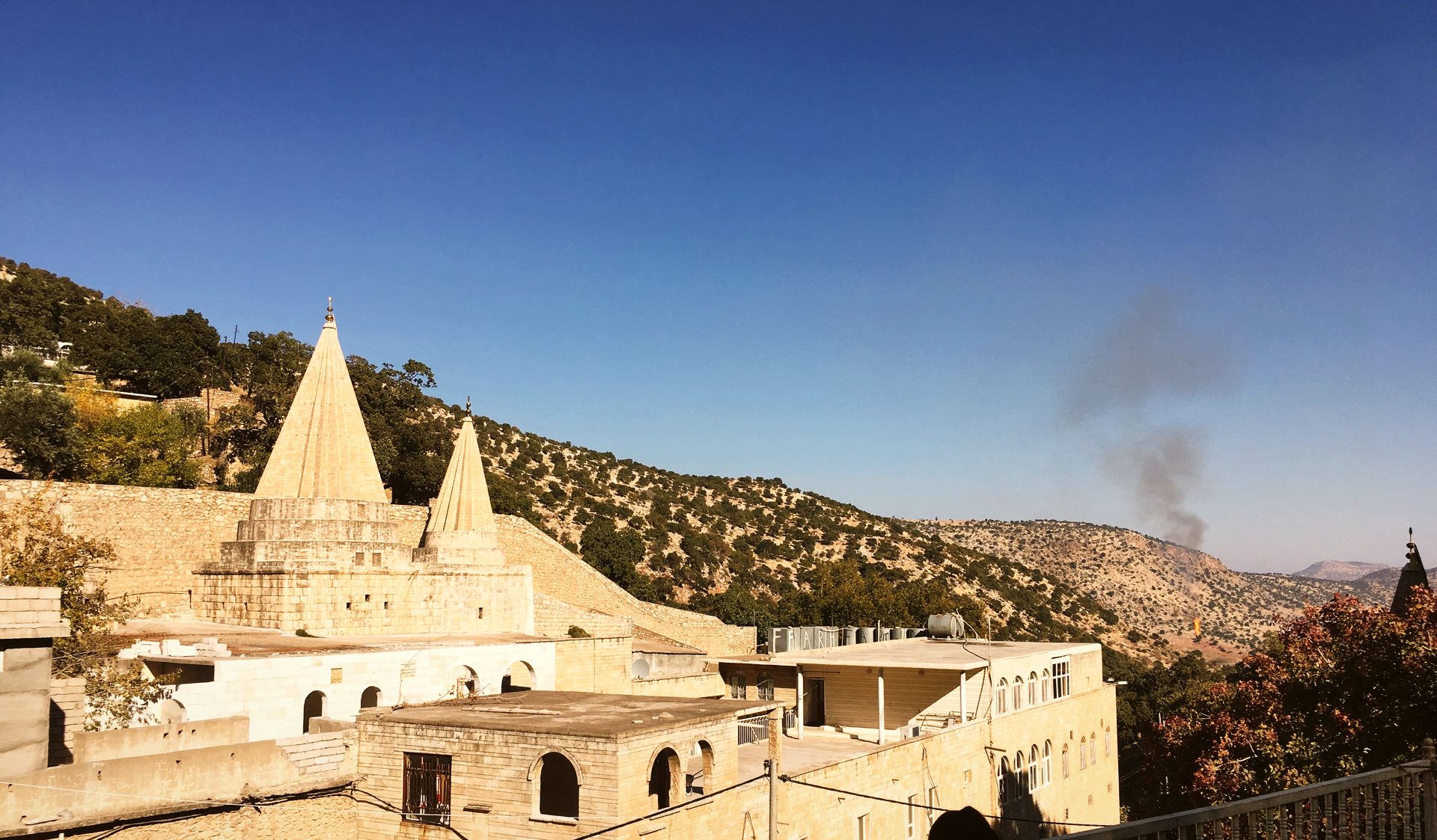
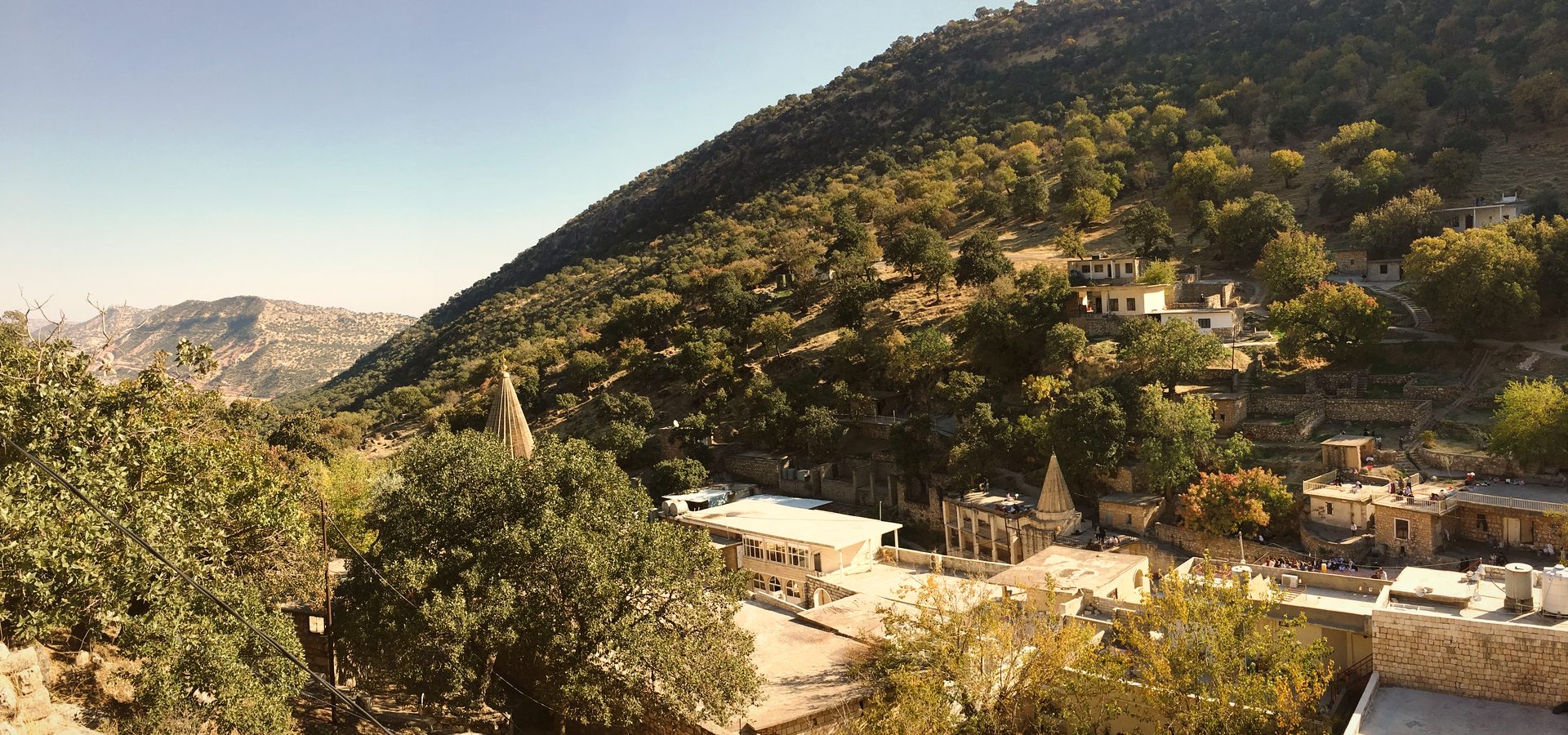
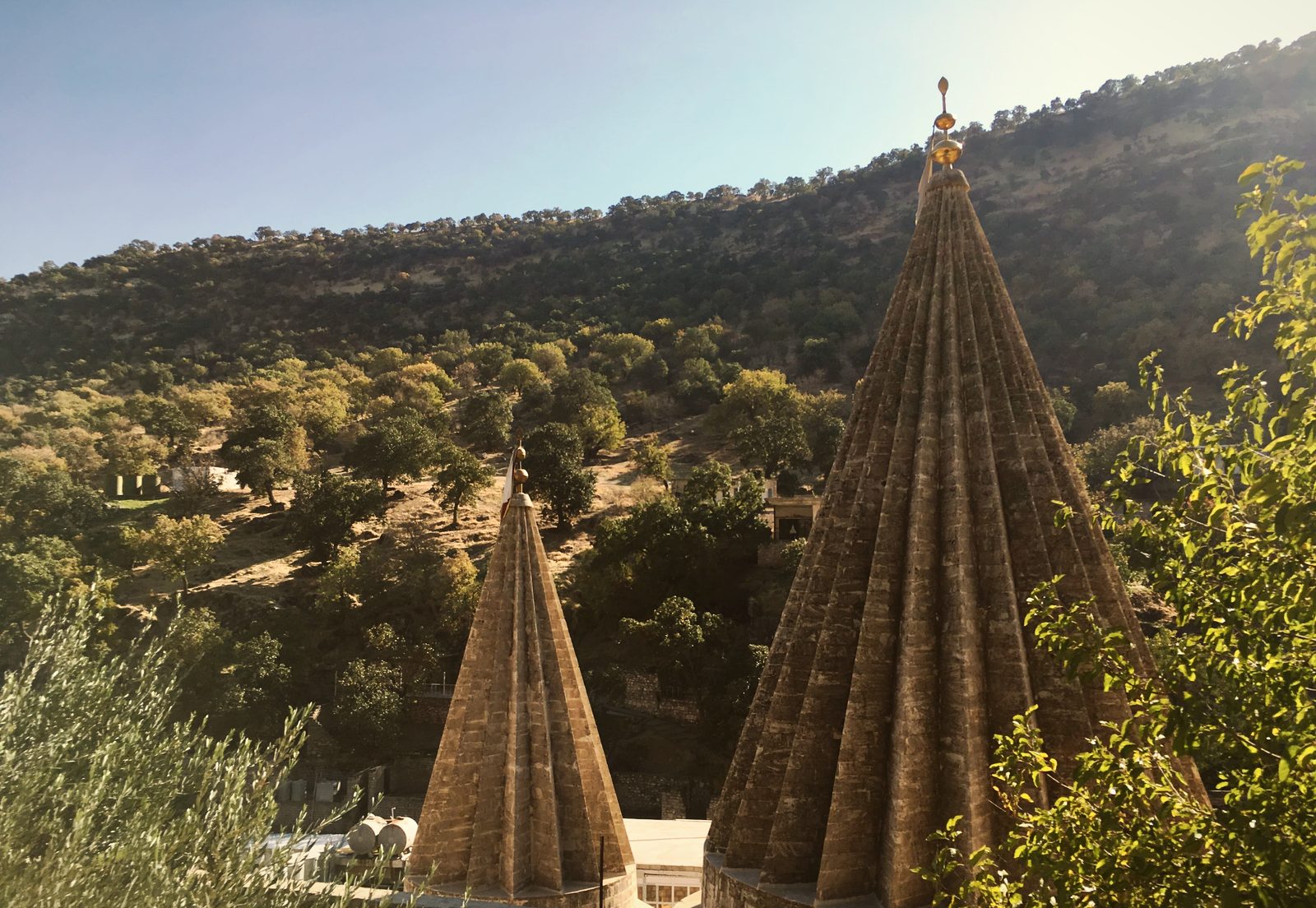
My ride drops me off at the gate. Rising up from the sand-coloured, temple-like buildings are those strange fluted, cone-shaped spires that mark every Yazidi holy site — ribbed like a folded fan, each one crowned with a gilded tip that catches the afternoon sun.
By Yazidi tradition, Lalish is roughly four thousand years old. Considerably older than Islam and Christianity, then, and older than most of what surrounds it. Every Yazidi is expected to make the pilgrimage here at least once in their life.
A field guide to a misunderstood faith
Neither Muslim, nor Christian
Yazidis believe in one God, who created the world and handed its stewardship to seven holy beings. Chief among them is Tawûsî Melek, the Peacock Angel.
From the outside, Yazidism looks like a weave of Islam, Christianity and much older Iranian tradition. But it is very much its own thing, passed on orally, without a scripture to convert anyone with. In fact there is no conversion at all: you are born Yazidi or you are not. Marriage stays within the community, and within its castes. Keep that up for a few centuries and a religion turns into a people — which is why most Yazidis today describe themselves as an ethnic group as much as a faith.
In their mythology, the Peacock Angel descended to earth, and the seven colours of the rainbow turned into a peacock that flew around the world to bless it. A rainbow is the sign of that blessing. And his final resting place became Lalish.
The seven mysteries
Heft sirr
God entrusted the world to seven holy beings. Their names and their ranking shift between Yazidi traditions; the pre-eminence of the Peacock Angel does not.
- Tawûsî MelekThe Peacock Angel
- Şêx Sin
- Şêx Şems
- Fexredîn
- Sicadîn
- Nasirdîn
- Şêx Obekr
Drawn as emblems, not as portraits: Yazidism is an oral faith and does not depict its holy beings.
The libel
Not a fallen angel
Tawûsî Melek does bear a superficial resemblance to Lucifer, the fallen angel of the other monotheistic religions: he too refused to bow down to Adam. And it is precisely for this reason that Yazidis are so often, and so wrongly, branded devil worshippers.
But the difference is the whole point. In Yazidism he did not fall, and he is not evil. His refusal was not pride but the perfection of loyalty — he would bow to God and to nothing else. He is understood as an eternal light, an emanation of God himself. The slander has followed the community anyway, and by Yazidi count it has helped produce seventy-four separate campaigns of persecution. The most recent one came in 2014.
He is not a fallen angel. He is an eternal light — and where he came to rest, they built Lalish.On Tawûsî Melek, the Peacock Angel
August 2014 · Sinjar
The seventy-fourth
- 3 Aug 2014ISIS enters Sinjar. Yazidi villages in north-western Iraq are overrun. Men are executed in the fields; women and children are loaded onto trucks.
- 4–6 AugFifty thousand on a mountain. Tens of thousands flee up Mount Sinjar. No water, no food, summer heat above 40°C, and ISIS closing the ring around them.
- 7–13 AugThe airlift. Iraqi, US, UK and Australian aircraft drop water and food onto the mountain; American jets bomb the units encircling it.
- Mid-AugThe corridor. Kurdish fighters and Western special forces open safe corridors off the mountain. Tens of thousands walk out.
- 2014–19The reckoning. Some 5,000 Yazidis are killed and about 7,000 women and girls abducted and enslaved. At the time of my visit, roughly 3,000 are still missing.
Where the Yazidis are now
Estimated population, 2019
Estimates only; no reliable census of Yazidis exists and the figures are contested. Casualty figures follow UN estimates; a 2017 household survey in PLOS Medicine proposed a lower range (≈3,100 killed, ≈6,800 abducted). Germany now hosts the largest Yazidi community outside Iraq.
The geography
Sixty kilometres, two different worlds
Lalish sits barely sixty kilometres from Mosul, and about the same from the Sinjar massif. The dashed line is the route tens of thousands walked off the mountain in August 2014 — toward the camps around Dohuk, where many still live.
Holy ground
Holy ground is not soft ground
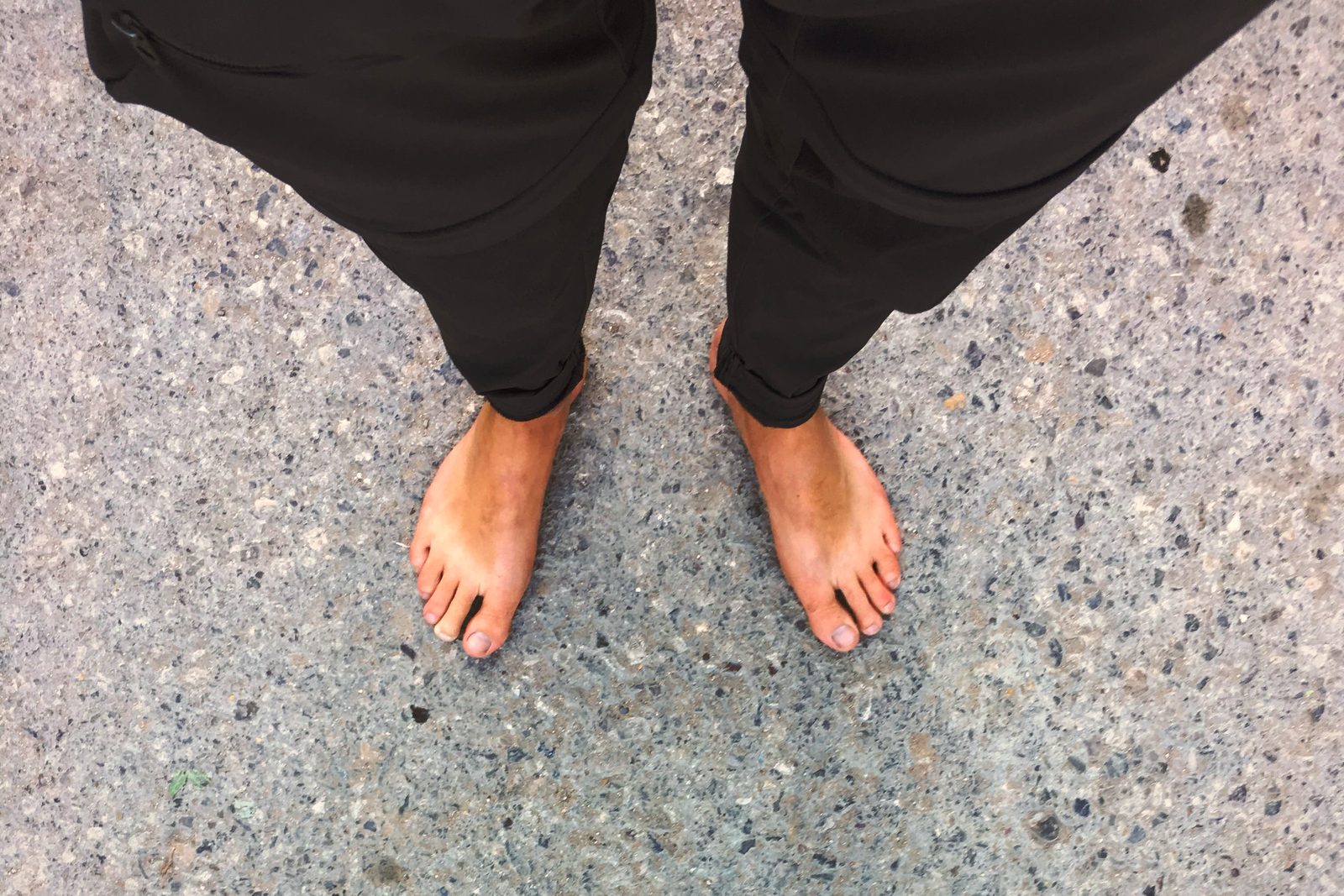
At my first steps towards the gate, people make clear that my shoes have to come off. This is holy ground. Holy ground, however, is not soft ground — luckily I had built up a decent layer of callus over the past months of travelling.
And Lalish is not small. So there I go, walking barefoot through dust and gravel, watching very carefully where I put my feet.
The gate
Red ivy on the sanctuary wall
It happens to be a public holiday in Iraq, which means the sanctuary is filling up with Yazidis from all over the region. Autumn ivy has gone scarlet across the stone; families climb the steps underneath it in their holiday clothes.
Among all those Yazidis, one tall blond Dutchman rather stands out. Every couple of minutes someone flags me down for a selfie or a chat.
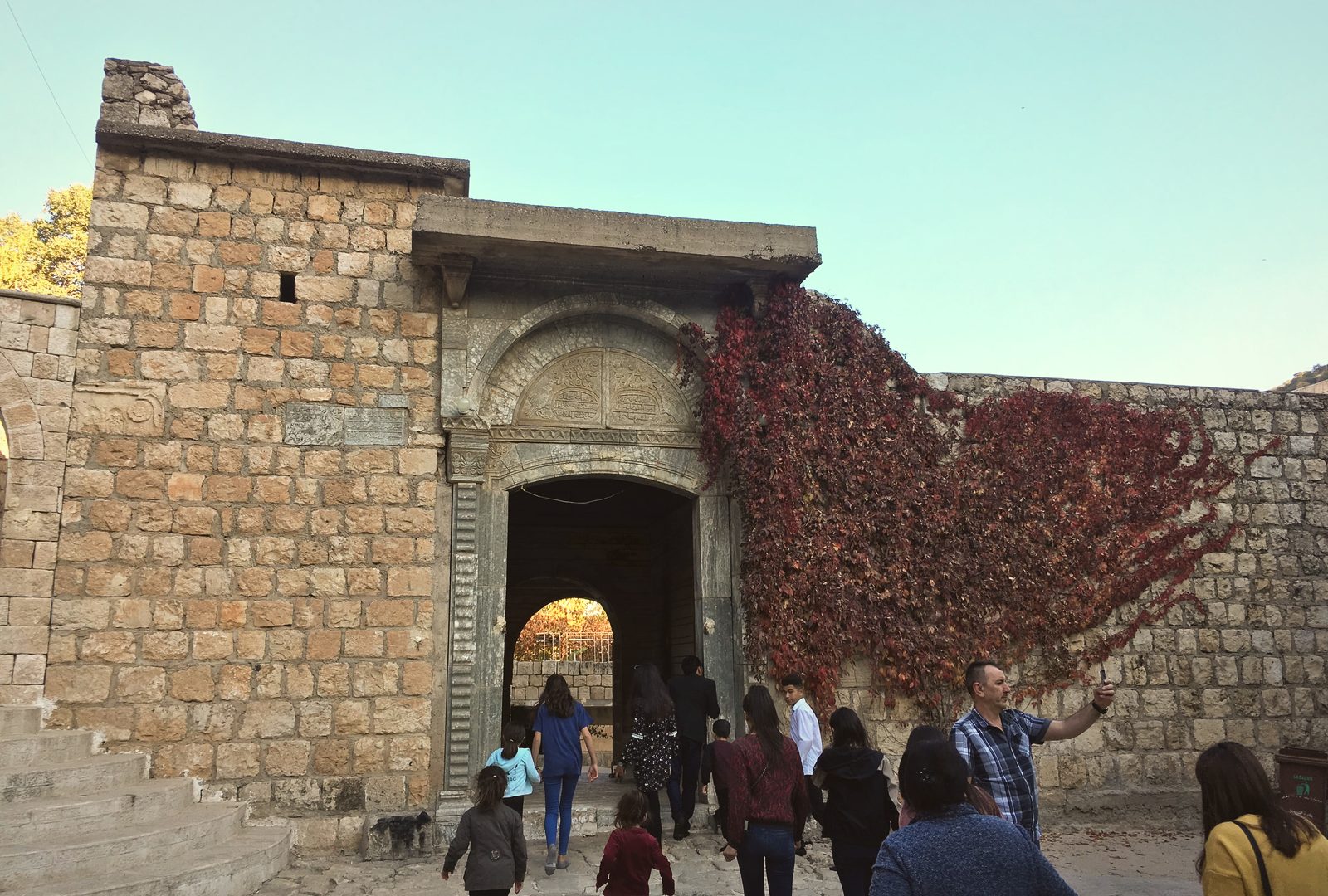
A public holiday
Not a broken community
Because of the horrors of the recent past, I had expected to find a depressed, traumatised community here. Nothing could be further from the truth — at least on the surface. The people in the streets of Lalish are cheerful, curious and friendly. Not for one second do they make me feel like an outsider who has come to gawk. What I feel is a warm welcome.
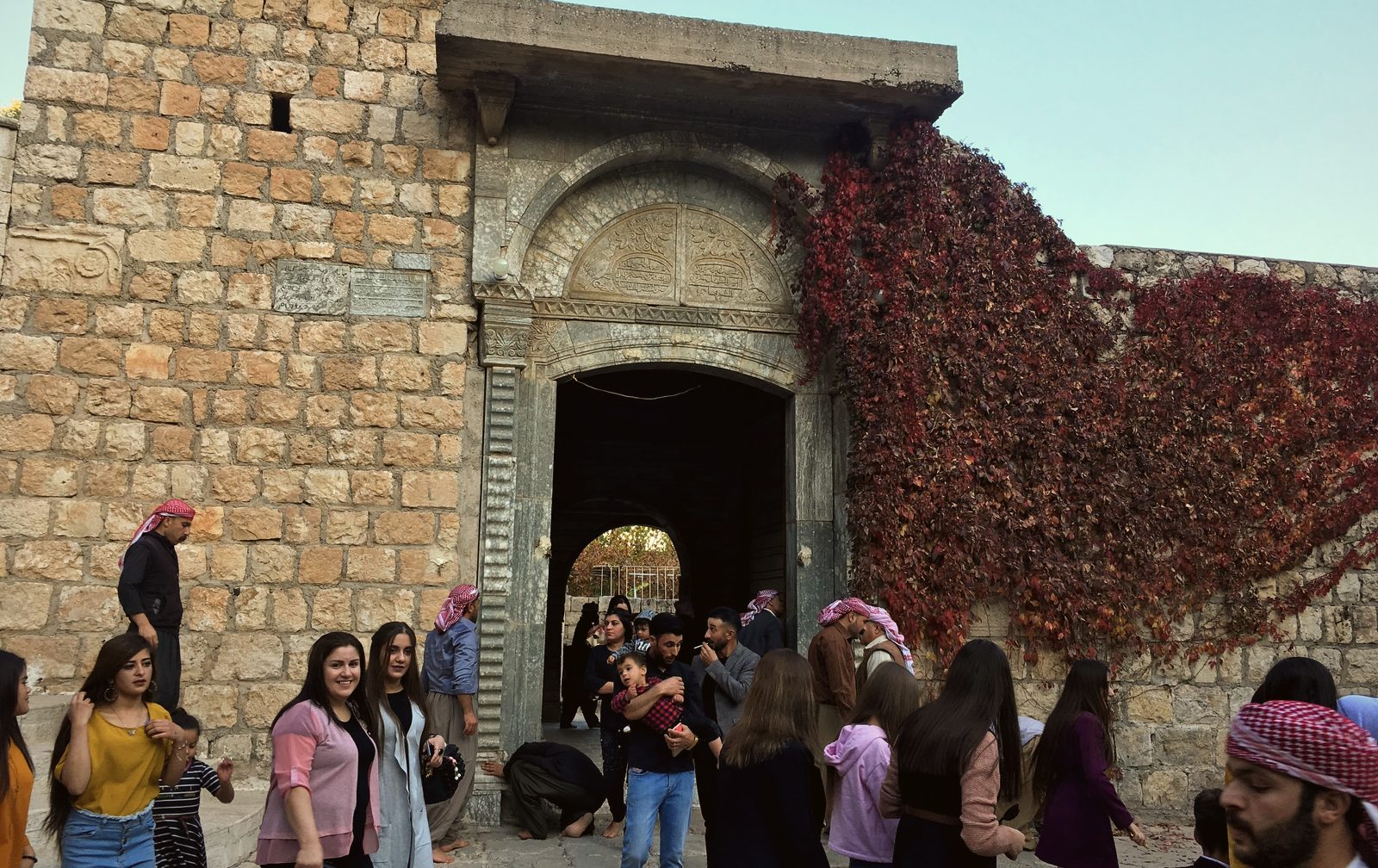
Inside
Tar, clay and candlelight
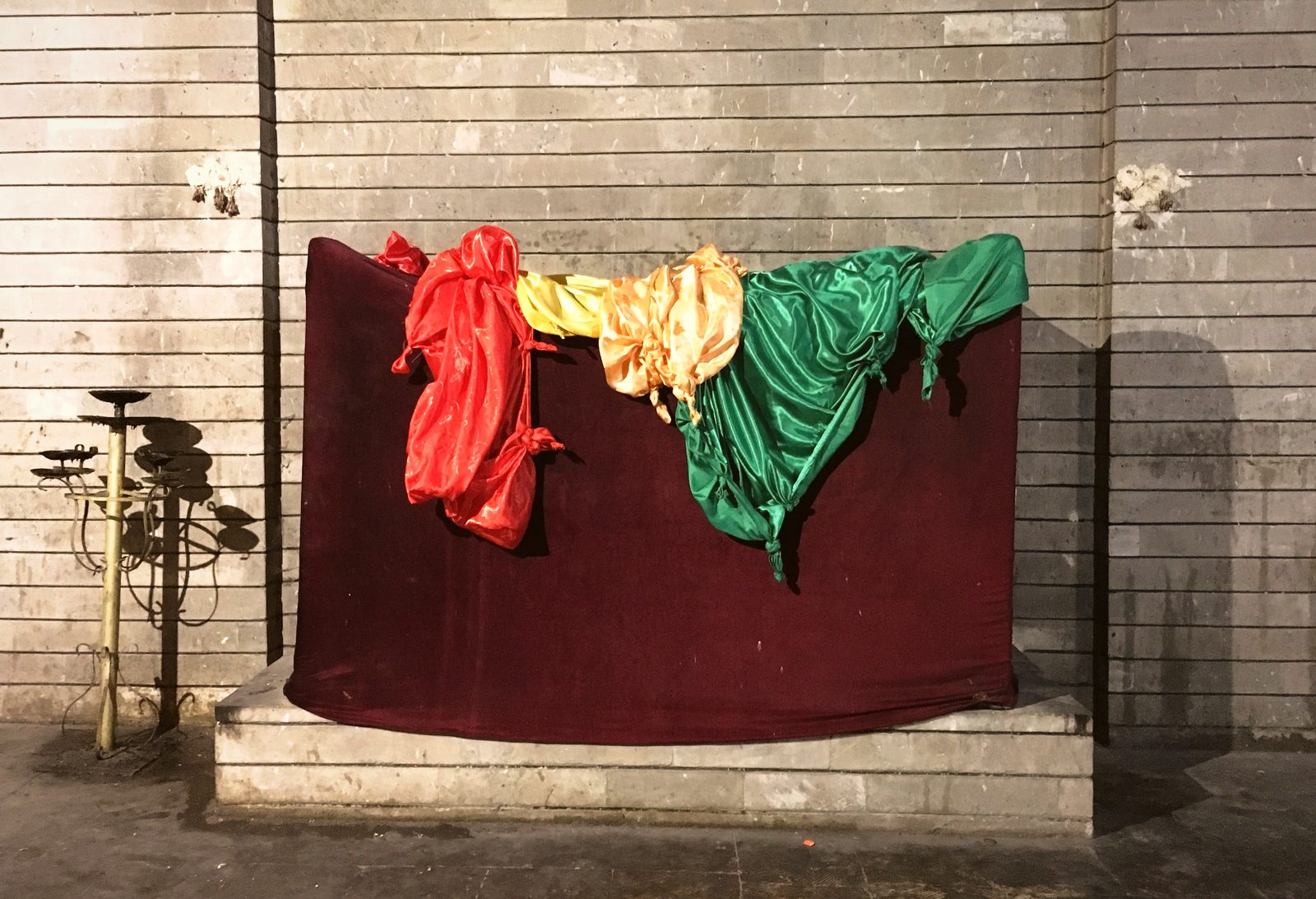
Deeper into the temple I enter a dark, damp, narrow tunnel, its floor filled with tar and earthenware pots half sunk into it. Each room leads on to another; from the outside I had never expected the complex to be anywhere near this big. The place feels tangibly, physically old — sacred in a way you feel through the soles of your feet. Candles burn everywhere.
I try to copy the rituals of the people around me, without the faintest idea what I am supposed to be doing. A few temple guardians explain very little — but they do make very clear where I am supposed to leave money. Every chamber has at least one spot that has to be papered with banknotes, and there are a great many chambers.
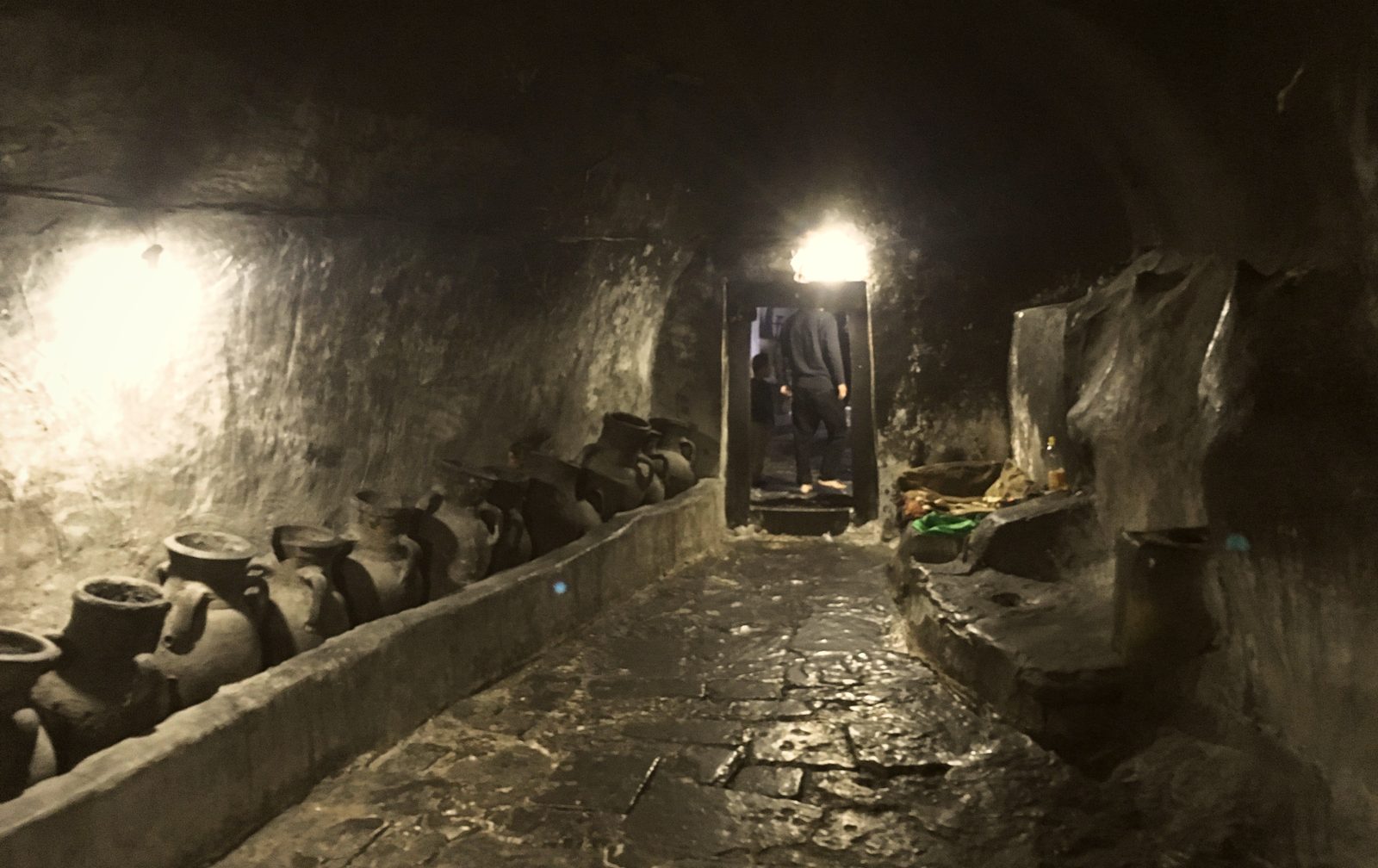
An unexpected audience
The man in white
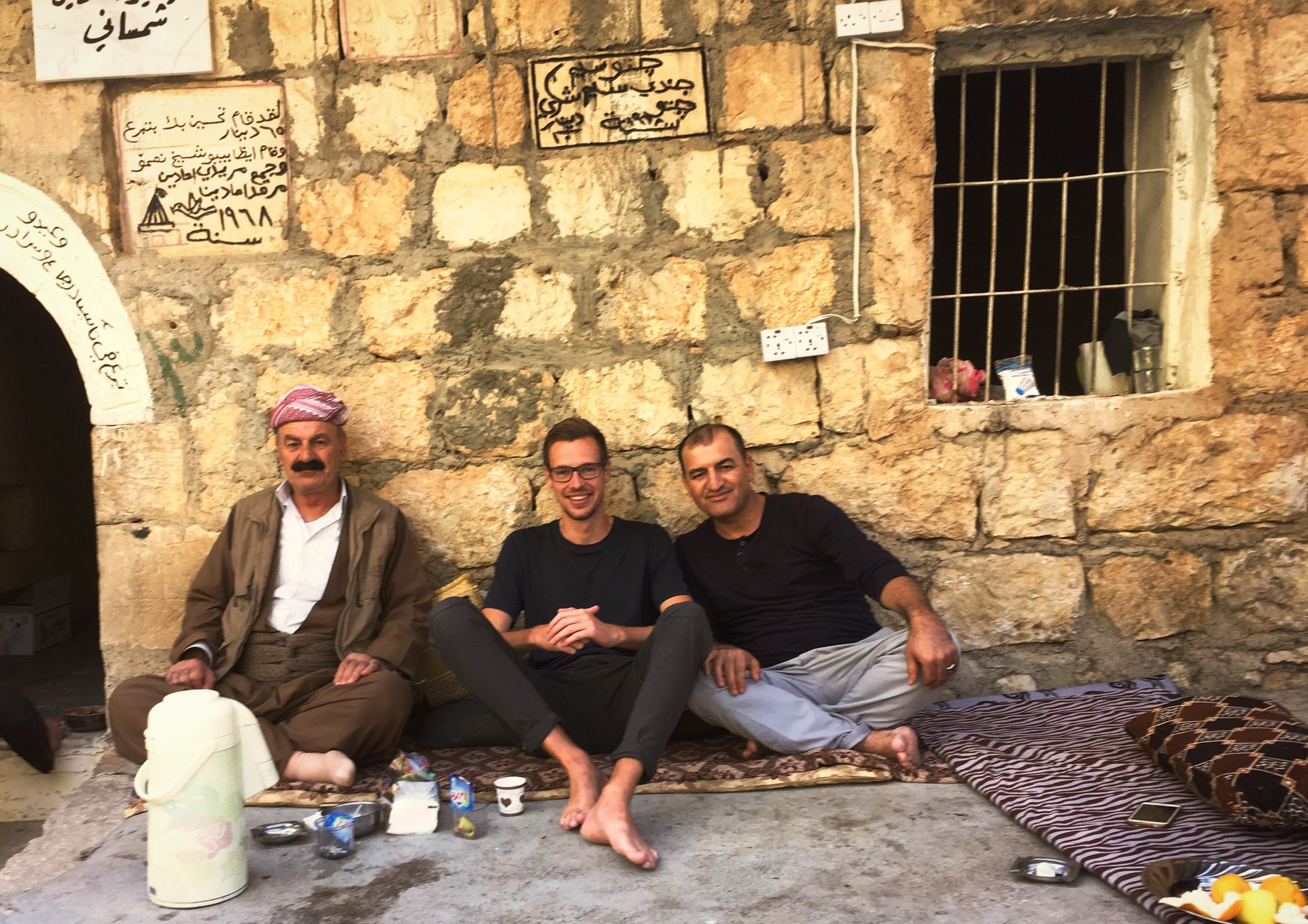
Sitting outside the temple, letting the strange experience sink in, I am beckoned over by a guard on a balcony above me. He asks who I am and whether I would like something to eat and drink, then leads me into an adjoining room — where I come face to face with an imposing man in white robes.
This turns out to be the office of Baba Chawish, the resident custodian of Lalish and one of the most important spiritual figures of the faith. I only find this out afterwards; at the time I have no idea. Next to me sits a man who has flown in from Germany for his parents — an old, frail Yazidi couple who fled northern Syria a few weeks earlier. They seem elated simply to be here. Baba Chawish takes his time with every single person in the room.
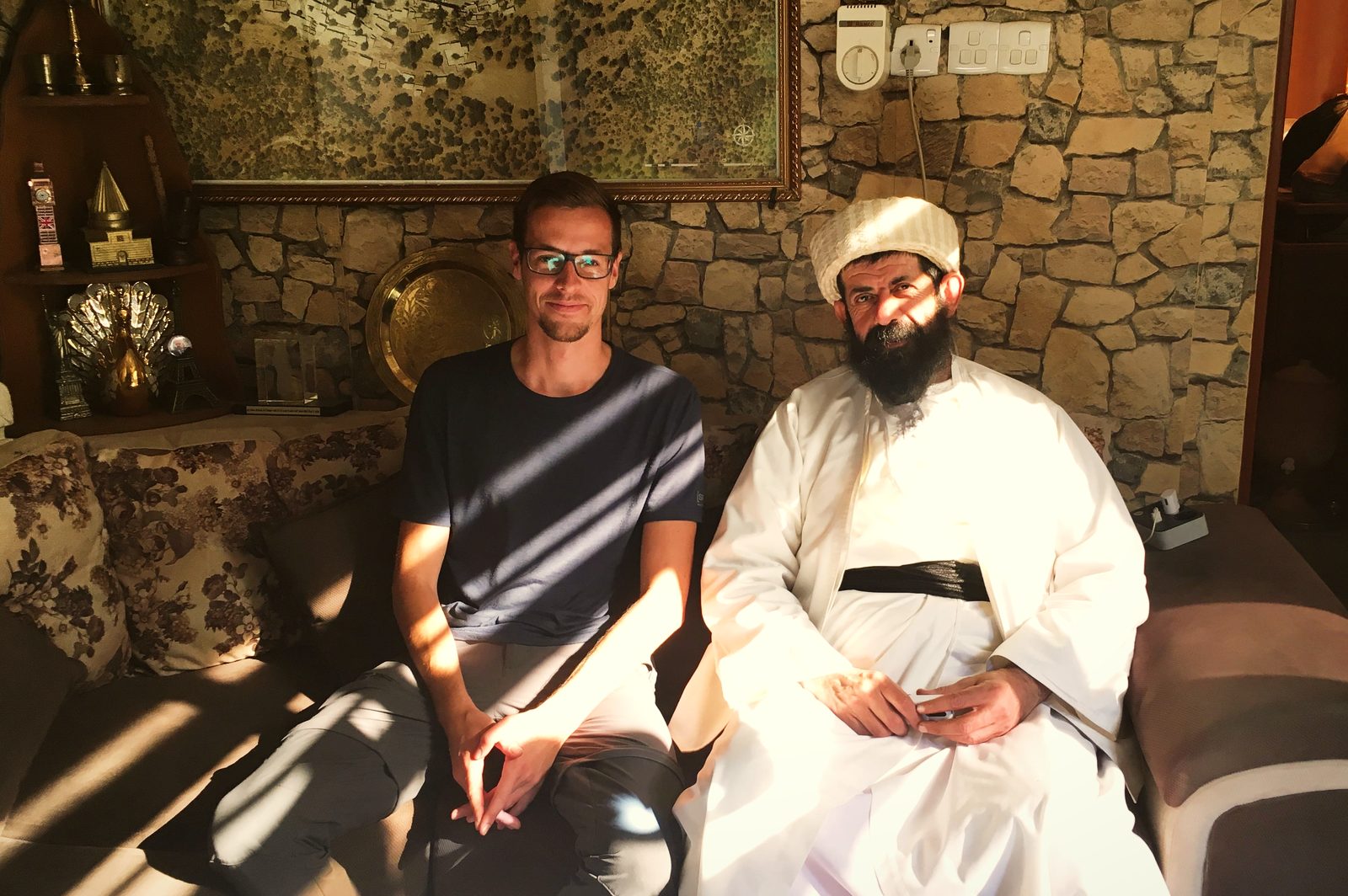
What lunch means here
No acceptable way to decline
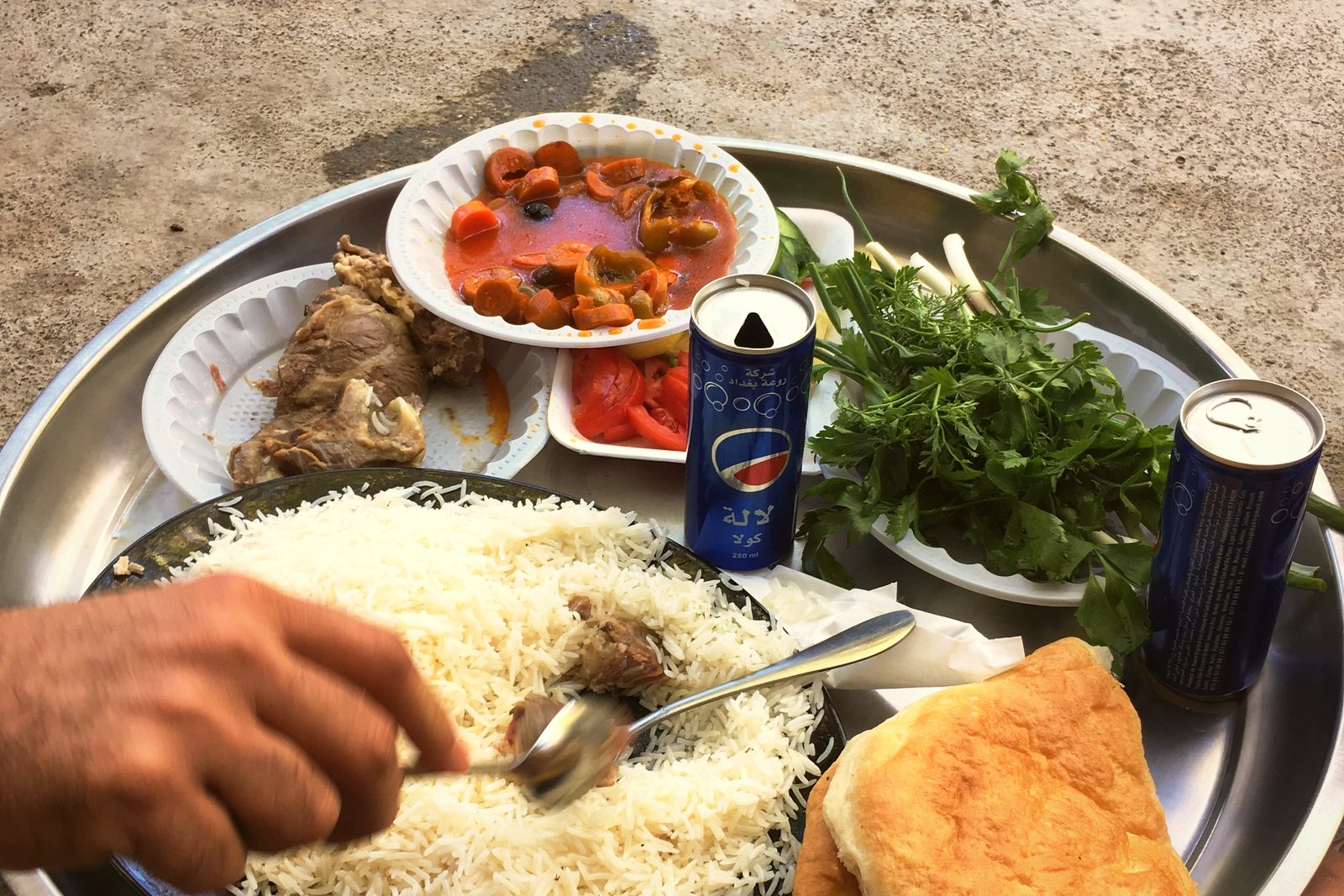
Rice, stew, bread, herbs — and a steady pressure to eat more of all of it. Several of the young women in this family turn out to live in Germany; in fluent German they tell me which city they live in and what they do there.
The next family I sit down with complains about exactly this: the exodus of their people, above all to Germany. If the migration continues, they say, there will be almost nobody left in the homeland. With some 200,000 Yazidis in Germany against maybe four to five hundred thousand in Iraq, I understand the point. But who could blame them for trading an unstable Iraq for a safe Germany?
What we did not talk about
Instead, we talk about the future
With none of these families do I start a conversation about the genocide and the enslavement of their community. The trauma is too fresh, and it feels improper to open that box — unless they bring it up themselves, which they never do.
So instead we talk about the future. And why not? Life goes on. The teenagers of the second family tell me about their ambitious study plans, and we practise a bit of English. They also tell me about a special pillar in Lalish: whoever can get their arms all the way around it will find luck in love. The pillar turns out to be no match for a pair of lanky Dutch arms. My hands meet far past the wrists, the whole room cheers, and that, apparently, is the love sorted.
The trauma is too fresh. It feels improper to open that box — unless they raise it themselves, and they never do.On what we did not talk about
Leaving
A sideways polonaise
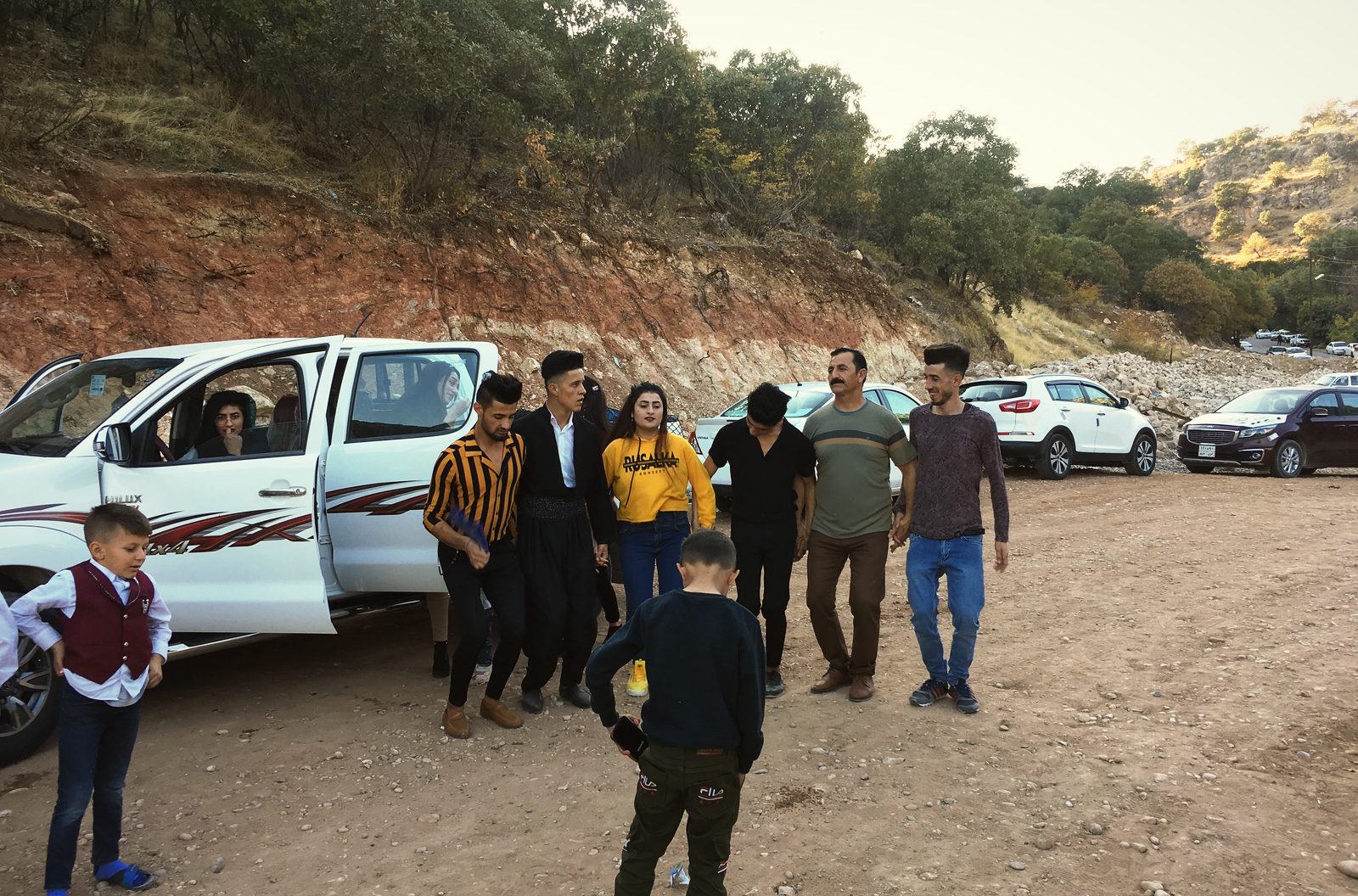
After a few more encounters the well runs dry and it is time to head back to Dohuk. I leave the sanctuary and put my shoes back on. Just outside Lalish a group has gathered; cheerful music blasts out of a car's speakers while they perform the buoyant Kurdish line dance — a kind of sideways polonaise, only far more rhythmic. My hopeless attempts to join in only add to the exuberance.
The ride home
Staring into the no-man's-land
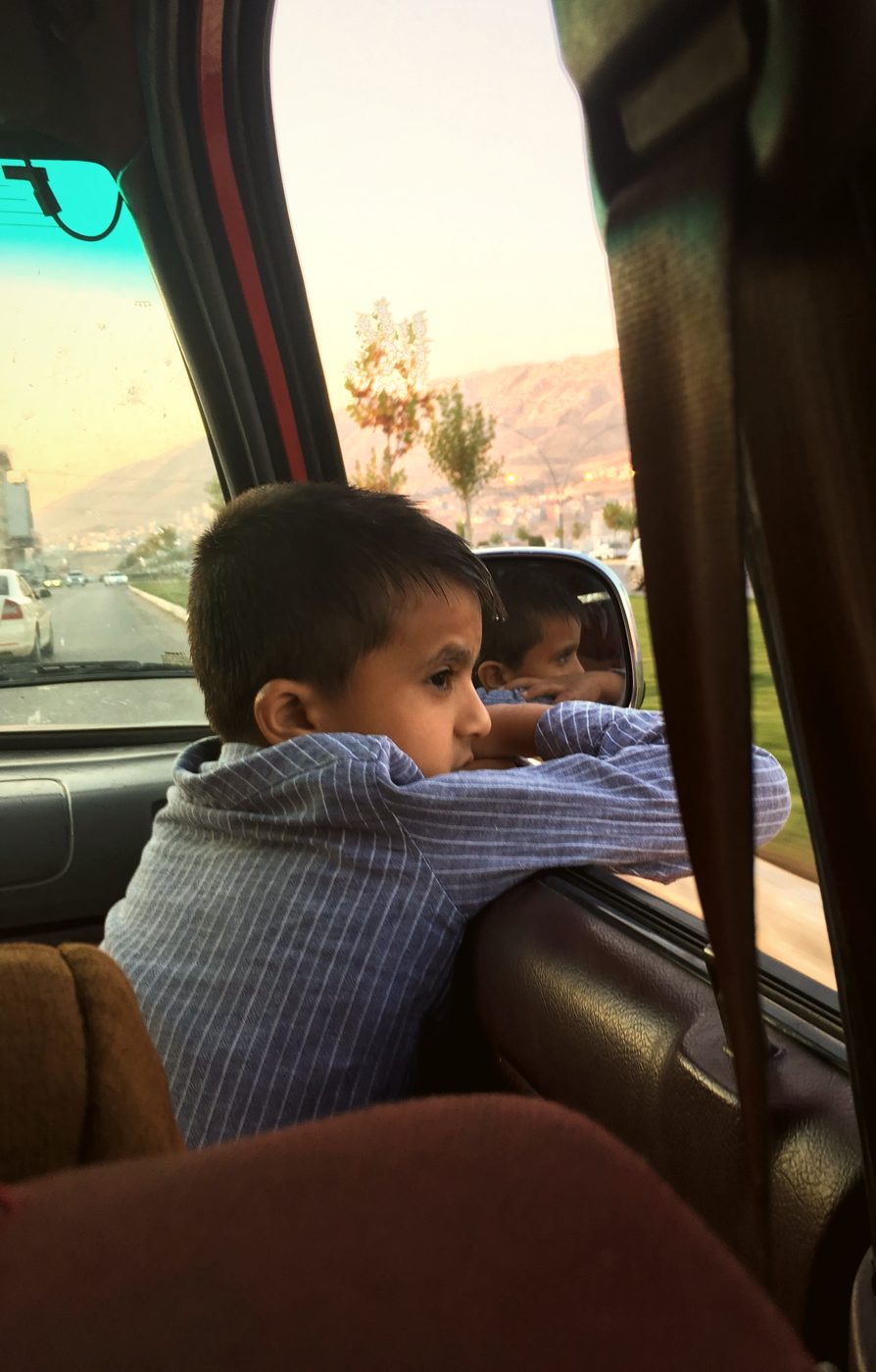
Outside Lalish I quickly catch a ride with a father and his son. As we pass oil fields and Peshmerga checkpoints, the boy hangs out of the window and stares out over the landscape like an old wise man. And so I stare ahead too, thinking about the Yazidis.
That unique, mysterious and tormented minority. Above all, what I found was a warm community that still knows how to find hope.